Kurzinfo
Ein hartgesottener römischer Statthalter, dessen politische Vorsicht und Brutalität ihn zu einem dauerhaften Sinnbild kompromittierter Autorität machten.
Gesprächseinstiege
Lebensweg
Das Andenken an Pilatus wurde von Autoren wie Josephus und Philo bewahrt und durch das christliche Gedächtnis, das sich auf den Tod Jesu konzentrierte, umgeformt. Über Jahrhunderte wurde er zu einem Symbol moralischer Ausflucht und staatlicher Macht, beschworen in Glaubensbekenntnissen, Kunst und Literatur.
Tiberius starb 37, und Caligula wurde Kaiser, bevor der Fall des Pilatus eindeutig entschieden werden konnte. Antike Quellen unterscheiden sich über sein weiteres Schicksal, doch der politische Wechsel ließ ihn wahrscheinlich ohne starke Schutzpatrone und ohne klare Rückkehrperspektive ins Amt zurück.
Josephus berichtet von einer samaritanischen Bewegung, die sich am Berg Garizim versammelte und die Pilatus als möglichen Aufstand deutete. Seine Truppen griffen an, töteten und verhafteten viele; daraufhin beschwerten sich samaritanische Führer bei Vitellius, dem Statthalter Syriens.
Vitellius befahl Pilatus nach Rom, um sein Vorgehen zu erklären, was zeigt, wie provinzielle Gewalt eine kaiserliche Überprüfung auslösen konnte. Die Rückberufung beendete eine etwa zehnjährige Präfektur und machte deutlich, dass selbst harte Administratoren für die Stabilität geopfert werden konnten.
Römische Präfekten waren auf die Jerusalemer Priesterschaft angewiesen, um lokale Angelegenheiten zu verwalten und Feste geordnet zu halten. Pilatus arbeitete mit Eliten wie Kaiphas zusammen, nutzte ihren Einfluss und stellte zugleich sicher, dass Roms Steuern und Erlasse zuverlässig umgesetzt wurden.
Nachdem Sejan 31 hingerichtet worden war, gerieten Beamte aus seinem Umfeld unter Verdacht und mussten ihre Loyalität beweisen. In Judäa regierte Pilatus vermutlich vorsichtiger und balancierte harte Durchsetzung mit dem Risiko aus, dass Beschwerden Tiberius erreichen konnten.
Philo berichtet, Pilatus habe in Jerusalem vergoldete Schilde aufstellen lassen, die Tiberius ehrten, was lokale Führer erzürnte. Eine Delegation wandte sich an den Kaiser, und Pilatus wurde angewiesen, die Schilde nach Cäsarea zu entfernen, eine öffentliche Rüge seiner Urteilskraft.
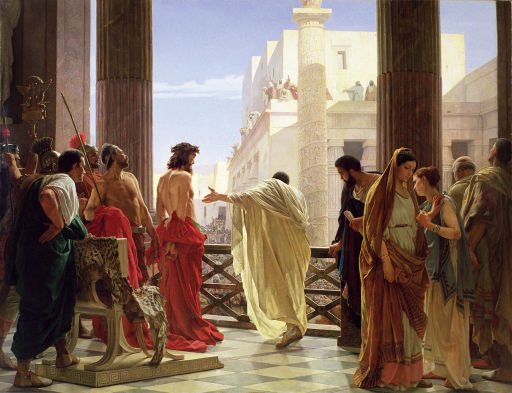
Die Evangelien schildern Pilatus, wie er Jesus befragt und Anklagen abwägt, die als Aufruhr gegen Caesar formuliert waren. Unter dem Druck lokaler Führer und der Dynamik der Menge genehmigte er die Kreuzigung, eine römische Strafe zur Abschreckung politischer Aufständischer.
Die Verwaltung des Pilatus ließ die Hinrichtung durch Kreuzigung außerhalb Jerusalems vollstrecken, vermutlich an einem öffentlichen Ort zur maximalen Abschreckung. Die Aufschrift „Jesus von Nazaret, König der Juden“ demonstrierte römische Autorität und verhöhnte konkurrierende Königsherrschaftsansprüche.
Während der Amtszeit des Pilatus zog Jerusalem zu Pessach riesige Menschenmengen an und war von apokalyptischen Hoffnungen durchzogen. Er stützte sich auf die Führung der Hohepriester, um die Stadt zu stabilisieren, während römische Truppen für den Fall von Aufruhr oder Rebellion bereitstanden.
Pilatus leitete Geld aus der Tempelkasse um, um ein Aquädukt zu bauen, das die Wasserversorgung Jerusalems verbessern sollte. Josephus berichtet, er habe getarnte Soldaten eingesetzt, um Demonstrationen zu zerschlagen, wodurch ein Bauvorhaben zum politischen Skandal wurde.
Tiberius ernannte Pilatus zum Präfekten über Judäa, eine unruhige Provinz unter römischer Militärkontrolle. Er berichtete über den syrischen Legaten und war zuständig für Besteuerung, Sicherheit sowie die Aufsicht über lokale Eliten in Jerusalem und Cäsarea.
Kurz nach seiner Ankunft ließ er Legionsstandarten mit kaiserlichen Bildern nach Jerusalem bringen und verletzte damit das jüdische Bilderverbot. Demonstrierende stellten ihn in Cäsarea zur Rede; er gab nach, was frühe Reibungen zwischen römischer Symbolik und lokalem Recht offenlegte.
Sein Aufstieg hing von kaiserlichen Patronagenetzen ab, die mit Kaiser Tiberius und einflussreichen Hofkreisen verbunden waren. Spätere Überlieferungen bringen ihn mit dem Einfluss des Sejan in Verbindung, dessen Gunst Ritter häufig in heikle Provinzposten beförderte.
Als Angehöriger des Ritterstandes stieg er wahrscheinlich über Posten auf, die militärisches Kommando und bürokratische Aufgaben verbanden. Ein solcher Dienst schulte ihn in Disziplin, Besteuerung und Kontrolle von Menschenmengen in kulturell vielfältigen Provinzen des Reiches.
Pilatus wurde vermutlich in Italien in die Pontier hineingeboren, eine Familie mit Verbindungen zum römischen Ritterstand. Seine frühe gesellschaftliche Stellung eröffnete ihm militärische und administrative Laufbahnen im kaiserlichen System unter Augustus und später Tiberius.