En bref
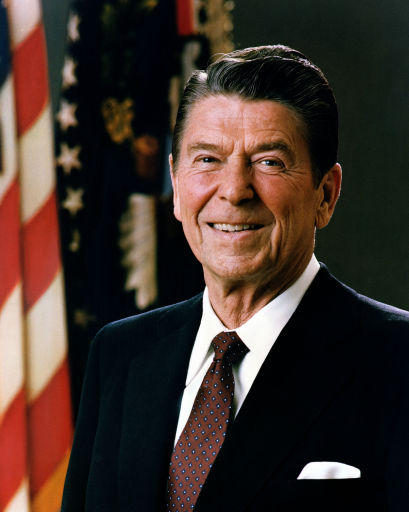
Dirigeant charismatique de la guerre froide, il a remodelé le conservatisme américain, communiqué un optimisme durable et accru la pression sur l’Union soviétique.
Sujets de conversation
Parcours de vie
Né de John Edward « Jack » Reagan et de Nelle Clyde Wilson Reagan dans une petite ville du Midwest. Les récits et la foi de sa mère ont nourri son optimisme, tandis que les difficultés de son père l’ont confronté très tôt à l’adversité.
À Eureka College, dans l’Illinois, il étudie l’économie et la sociologie tout en s’épanouissant dans le débat et la politique étudiante. Il s’engage aussi au théâtre et dans le sport, affinant une présence publique sûre d’elle qui marquera plus tard ses discours.
Après son diplôme d’Eureka College, il occupe des postes à la radio dans l’Iowa, commentant des rencontres sportives avec une narration vivante. Le contexte de la Grande Dépression renforce sa conviction dans la résilience et un optimisme pragmatique.
Il se rend en Californie pour un essai caméra et signe rapidement un contrat avec Warner Bros., lançant sa carrière au cinéma. Hollywood l’introduit dans la culture nationale, où il apprend le rythme, le ton et l’art de toucher un large public.
Il épouse Jane Wyman alors que sa carrière d’acteur prend de l’ampleur dans le système des studios. Leur mariage, ensuite fragilisé par les carrières et la politique, se termine par un divorce, marquant un tournant personnel sous le regard du public.
Nommé officier dans l’armée américaine, il est affecté à la First Motion Picture Unit, où il produit des films d’instruction et de soutien au moral. Sans être déployé à l’étranger, l’effort de propagande de guerre influence sa vision de la liberté et du message politique.
À la tête du syndicat des acteurs, il affronte de rudes conflits sociaux et la politique tendue du début de la guerre froide. Sa coopération avec les enquêtes anticommunistes et son expérience de dirigeant syndical l’orientent vers une position plus dure face à l’Union soviétique.
Il épouse Nancy Davis, qui devient pendant des décennies sa conseillère la plus proche et sa confidente. Leur partenariat influence sa discipline, son emploi du temps et son image, et le rôle de Nancy devient particulièrement visible lors de ses campagnes nationales.
En animant « General Electric Theater », il parcourt des usines et s’adresse aux salariés sur la productivité et les valeurs civiques. Les conférences en entreprise et la rhétorique de la guerre froide accélèrent son passage de démocrate favorable au New Deal à républicain conservateur.
Il prononce une allocution télévisée en soutien à Barry Goldwater, mettant en avant sa clarté, son humour et son assurance idéologique. Le discours galvanise les donateurs conservateurs et le place comme figure montante du Parti républicain avec une stature présidentielle.
Il bat le gouverneur sortant Pat Brown et arrive au pouvoir au milieu de tensions sur les droits civiques, la fiscalité et les protestations universitaires. Gouverneur, il défend la rigueur budgétaire et une ligne plus ferme sur l’ordre public, influençant la gouvernance conservatrice moderne.
La Californie connaît de grandes manifestations sur les campus, notamment autour de People’s Park près de l’université de Berkeley. Son administration soutient des politiques axées sur l’ordre public et coopère avec les autorités de l’État, devenant un symbole national des guerres culturelles.
Il défie le président Gerald Ford pour l’investiture républicaine, plaidant pour une orientation conservatrice plus affirmée. Bien qu’il échoue, la campagne construit une coalition militante durable qui alimente sa victoire de 1980.
Il bat Jimmy Carter sur fond d’inflation, de crise des otages en Iran et de doutes généralisés sur la puissance américaine. Sa coalition réunit conservateurs économiques, partisans d’une ligne dure face à l’Union soviétique et conservateurs sociaux, entraînant un réalignement politique durable.
Le 30 mars, John Hinckley Jr. lui tire dessus devant le Washington Hilton, le blessant grièvement. Il survit à une opération d’urgence à l’hôpital universitaire George Washington et use ensuite de son humour pour rassurer une nation ébranlée.
Lorsque l’organisation des contrôleurs aériens lance une grève illégale, il leur ordonne de reprendre le travail puis licencie plus de 11 000 grévistes qui refusent d’obtempérer. Cette décision marque un nouveau rapport de force dans les conflits sociaux et l’affirmation de l’autorité exécutive.
Il qualifie l’Union soviétique d’« empire du mal » et propose l’Initiative de défense stratégique, un programme de recherche antimissile destiné à modifier les calculs stratégiques. Ces initiatives accentuent la pression de la guerre froide tout en suscitant des débats chez les alliés et les scientifiques.
Il promulgue la loi accordant un statut légal à des millions de personnes sans papiers tout en sanctionnant les employeurs embauchant sciemment des travailleurs non autorisés. Le compromis reflète une négociation bipartisane, mais laisse contestées les questions d’application et de migrations futures.
Des enquêtes révèlent des ventes d’armes secrètes à l’Iran et le détournement de fonds vers les Contras nicaraguayens, impliquant des conseillers de haut rang comme Oliver North et John Poindexter. Il subit une forte pression sur le contrôle, la supervision et la responsabilité de la politique étrangère.
Après un passage spectaculaire de la confrontation à la négociation, il signe avec le dirigeant soviétique Mikhaïl Gorbatchev le traité sur les forces nucléaires à portée intermédiaire. L’accord élimine une catégorie entière de missiles et réduit les tensions en Europe.