Quick Facts
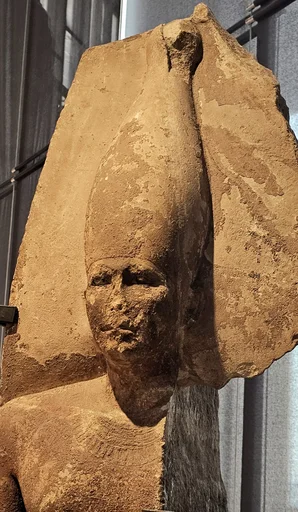
Warrior pharaoh who transformed Egypt into an imperial power, conquering Nubia and centralizing royal authority through sweeping administrative reforms.
Conversation Starters
Life Journey
Born to Pharaoh Senusret II and Queen Khenemetneferhedjet I. His birth continued the strong royal lineage of the Twelfth Dynasty during the height of the Middle Kingdom.
Began intensive military and administrative training as crown prince. Learned the arts of warfare, diplomacy, and governance that would define his reign.
Ascended to the throne upon the death of his father Senusret II, becoming the fifth pharaoh of the Twelfth Dynasty. Immediately began planning military campaigns.
Led his first major military campaign into Nubia. Pushed Egyptian borders further south than any previous pharaoh, establishing Egypt's dominance over the region.
Ordered the construction of a chain of massive fortresses along the Nile in Nubia, including Buhen and Semna. These fortresses secured Egyptian control of trade routes.
Launched a second devastating campaign into Nubia, crushing resistance and extending Egyptian control. His victories were commemorated in boundary stelae.
Initiated sweeping administrative reforms that centralized power in the royal court. Began systematically reducing the hereditary power of provincial nomarchs.
Conducted a third military campaign to Nubia, establishing the southern border at Semna. Erected stelae declaring harsh terms for Nubians crossing the boundary.
Completed the elimination of the nomarch system, replacing hereditary provincial governors with appointed officials loyal to the crown. This transformed Egyptian governance.
Led a fourth campaign to Nubia, further securing Egyptian interests. His military achievements made him legendary among later Egyptians and Greeks.
Ordered the expansion of a canal at the First Cataract to facilitate military and commercial navigation. This engineering project improved access to Nubia.
Began construction of his pyramid complex at Dahshur. The pyramid was built with a mudbrick core and limestone casing, representing the architectural style of his era.
Conducted military operations in Canaan, demonstrating Egyptian power projection beyond Africa. His campaigns secured trade routes and political influence in the Levant.
Appointed his son Amenemhat III as co-regent, following the family tradition established by his grandfather. This ensured a smooth succession.
Died after approximately 39 years of reign, leaving Egypt at the height of its Middle Kingdom power. His military conquests and administrative reforms transformed Egypt into a centralized empire.
Buried in his pyramid complex at Dahshur. His reign was remembered as a golden age, and he was later deified and worshipped in Nubia as a god of war.