Quick Facts
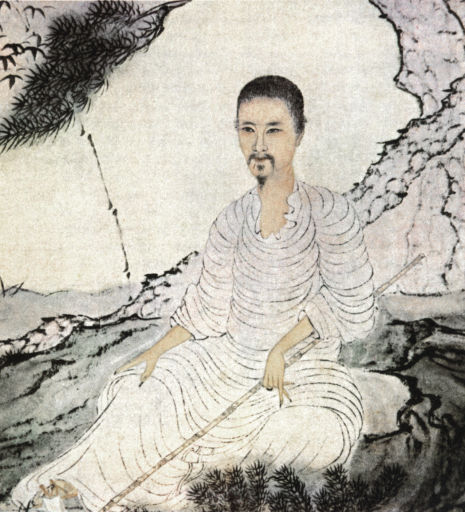
A Ming prince turned monk, he reinvented Chinese painting with daring brushwork, theory, and eccentric independence.
Conversation Starters
Life Journey
Born as Zhu Ruoji, a descendant of the Ming imperial house, in a China nearing dynastic collapse. His earliest identity was shaped by court lineage and the looming violence that would soon remake the empire.
After Beijing fell and the Qing takeover began, Ming princes and relatives were hunted or displaced across the south. The child’s survival depended on secrecy and flight amid civil war and shifting loyalties.
To avoid the fate of other Ming descendants, he entered a Buddhist monastery and adopted monastic training. The monastery offered protection, education in classics, and a disciplined environment for ink practice and copying models.
He took on the persona of a wandering monk-artist, later using names such as Shitao and Daoji. Multiple sobriquets expressed shifting self-conceptions as he balanced spiritual aspiration with artistic ambition.
He traveled through the prosperous Lower Yangtze region, studying older masters and contemporary trends. In markets and temples, he encountered collectors, monks, and scholars who valued expressive ink beyond orthodox court taste.
Immersed in the traditions of Yuan literati painting and late-Ming individuality, he copied, compared, and argued with the past through brushwork. This period honed his sharp contrasts, broken ink textures, and surprising compositional turns.
Shitao’s paintings circulated among Jiangnan connoisseurs who admired originality and boldness. His mix of poetic inscriptions, calligraphy, and unorthodox brush methods distinguished him from the more conservative Orthodox School painters.
He increasingly painted landscapes as dynamic journeys rather than static views, using shifting perspectives and abrupt scale changes. Poems and inscriptions anchored scenes in personal feeling, linking geography to memory and spiritual searching.
Networks of Buddhist clergy and literati provided lodging, introductions, and commissions as he moved between temples and cities. These relationships helped preserve his paintings and encouraged his theoretical writing about creativity and rules.
Yangzhou’s salt-merchant wealth created a lively market for painting, calligraphy, and poetry. Shitao found patrons open to novelty, allowing him to experiment with dramatic washes, angular strokes, and daring emptiness in composition.
He frequently signed works with the sobriquet 'Bitter Gourd Monk' (Kugua Heshang), turning self-fashioning into a creative tool. The persona framed his art as both playful and severe, distancing him from official Qing identity.
He articulated theories about originality, nature, and method, insisting that rules must be transformed rather than obeyed. The famous notion of the 'Single Brushstroke' presented creation as a unified act linking mind, hand, and world.
He traveled to the Qing capital to compete in a crowded artistic world of court taste and elite collecting. In Beijing he negotiated patronage carefully, maintaining an outsider’s stance while displaying extraordinary technical range.
Amid the influence of Orthodox painters aligned with Dong Qichang’s lineage theories, Shitao defended personal vision. His paintings and inscriptions challenged the idea that mastery required strict imitation of approved ancient models.
Disillusioned with capital politics, he returned to the south where travel and temple life felt more authentic. He treated painting as cultivation, using ink’s accidents and density changes to mirror awakening and doubt.
In later years his brushwork became increasingly audacious, with abrupt contours, heavy wet ink, and unexpected blank passages. These paintings fused landscape, calligraphy, and philosophy into a single performance of mind and energy.
His ideas about the 'Single Brushstroke' and the transformation of rules circulated in notes and conversations with patrons and fellow monks. The blend of practice and theory strengthened his posthumous reputation as a major innovator.
He died recognized by a circle of collectors and friends who preserved his paintings, poems, and sayings. Later generations would elevate him as a leading 'Individualist' master of early Qing art and a vital voice in painting theory.