Kurzinfo
Ein einbeiniger kanadischer Marathonläufer, dessen landesweiter Lauf die Krebs-Spendenbewegung grundlegend veränderte und bis heute anhaltenden nationalen Zusammenhalt inspirierte.
Gesprächseinstiege
Lebensweg
Als Sohn von Rolly und Betty Fox wuchs er in einem eng verbundenen Zuhause auf, in dem Ausdauer und Dienst an der Gemeinschaft geschätzt wurden. Seine frühen Jahre in British Columbia prägten eine bodenständige, naturverbundene Widerstandskraft, die er bis ins Erwachsenenalter mitnahm.
Die Familie Fox ließ sich in Port Coquitlam nieder, wo er lokale Schulen besuchte und sich schnell im Mannschaftssport engagierte. Der Umzug brachte ihn in eine unterstützende Gemeinschaft, die später seine Spendenziele mit großer Entschlossenheit mittrug.
Er trainierte beharrlich, um einen Platz in den Schulbasketballteams zu bekommen, und blieb oft länger, um Technik und Kondition zu verbessern. Trainer und Mitschüler bemerkten seinen starrköpfigen Arbeitseifer, der später seine öffentliche Mission prägte.
Nach starken Knieschmerzen diagnostizierten Ärzte ein Osteosarkom und begannen umgehend mit einer dringenden Behandlung unter den Bedingungen der Krebsmedizin der 1970er Jahre. Die Nachricht veränderte seine Zukunftspläne und brachte ihn mit Mitpatienten zusammen, deren Schicksale seine Empathie vertieften.
Um die Ausbreitung des Krebses zu stoppen, amputierten Chirurgen sein rechtes Bein, und während der Genesung lernte er, mit einer Prothese zurechtzukommen. Er sah, wie andere Patienten Chemotherapien durchstanden, und fasste den Entschluss, für bessere Forschungsgelder und neue Hoffnung zu kämpfen.
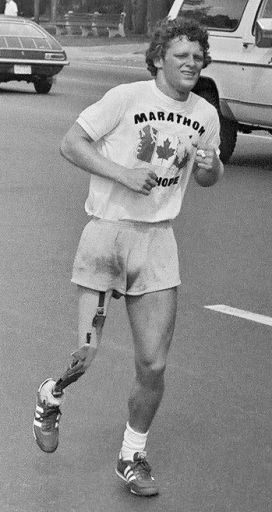
Während der Rehabilitation übte er das Gehen und Laufen mit einer Prothese und entwickelte dabei einen charakteristischen Hopser-Schritt-Rhythmus. Die körperliche Anstrengung wurde zur täglichen Disziplin und verwandelte Schmerz und Frustration in einen konkreten Plan zum Handeln.
Er studierte Kinesiologie an der Simon Fraser University, wodurch sich sein Verständnis für Training und Ausdauer vertiefte. Das Campusleben erweiterte zudem sein Netzwerk und half ihm, sich eine Spendenaktion im nationalen Maßstab vorzustellen.
Inspiriert von Geschichten anderer amputierter Sportler und von den Bedürfnissen, die er in Krankenhausstationen sah, entwarf er einen Lauf von Küste zu Küste. Er wollte einen Dollar pro Kanadier sammeln und formulierte die Mission zugleich als persönlich und als national.
Er tauchte sein künstliches Bein in den Atlantik und begann nach Westen zu laufen, womit er den sogenannten Marathon der Hoffnung startete. Die ersten Tage waren einsam und kalt, doch trotz geringer Öffentlichkeit hielt er strikt an seinem täglichen Ziel fest.
Während er Neufundland durchquerte, organisierten kleine Orte Frühstücke, Spendendosen und Begrüßungen am Straßenrand, die Moral und Finanzierung stärkten. Die wachsende Hilfsbereitschaft bestätigte seinen Glauben, dass gewöhnliche Kanadier die Sache gemeinsam tragen würden.
Lange Autobahnabschnitte in Québec forderten ihn durch Sprachbarrieren, Verkehr und die Erschöpfung der täglichen Distanzen. Organisatoren und Freiwillige halfen, Veranstaltungen zu koordinieren, und mit wachsender Medienaufmerksamkeit stiegen die Spenden stetig.
In Ontario wuchsen die Menschenmengen, und nationale Sender begannen seine Geschichte zu begleiten, wodurch der Lauf zu einer gemeinsamen öffentlichen Erzählung wurde. Unterstützung von kommunalen Führungspersonen und Schulkindern half, spontanes Geben in organisierte Spendensammlungen zu verwandeln.
Er wurde von Premierminister Pierre Trudeau empfangen, was zeigte, dass der Marathon der Hoffnung zu einer nationalen Angelegenheit geworden war. Das Treffen verstärkte das Bewusstsein für die Notwendigkeit von Krebsforschung und ermutigte Sponsoren und Gemeinden, beizutragen.
Kanada ehrte ihn als Companion des Order of Canada und würdigte damit außergewöhnlichen Dienst und Mut. Die Auszeichnung stärkte das öffentliche Vertrauen in die Kampagne und zog breitere Beteiligung von Institutionen, Unternehmen und Familien an.
Nach anhaltenden Brustschmerzen und Erschöpfung stellten Ärzte fest, dass sich der Krebs auf seine Lungen ausgebreitet hatte, sodass er das Laufen einstellen musste. Er beendete seinen Versuch nahe Thunder Bay, versprach weiterzumachen, wenn es seine Gesundheit zuließe, und rief andere dazu auf, zu helfen.
Ein landesweiter Spendentelethon brachte Prominente, Moderatoren und Freiwillige zusammen, um in seinem Namen Geld für die Krebsforschung zu sammeln. Die Aktion zeigte das Ausmaß des öffentlichen Engagements und machte aus seinem unvollendeten Lauf eine dauerhafte Bewegung.
Gemeinschaften organisierten den ersten Terry Fox Run und schufen damit eine wiederkehrende Möglichkeit, wie Menschen unmittelbar an der Mission teilnehmen konnten. Die jährliche Veranstaltung verankerte seine Botschaft und finanzierte die Forschung weit über sein Leben hinaus.
Er starb nach Monaten intensiver Behandlung, und das Land trauerte um ein Symbol von Entschlossenheit und Großzügigkeit. Würdigungen durch Familien, Schulen und Amtsträger betonten, wie sein Beispiel kanadische Philanthropie und Identität nachhaltig veränderte.