Quick Facts
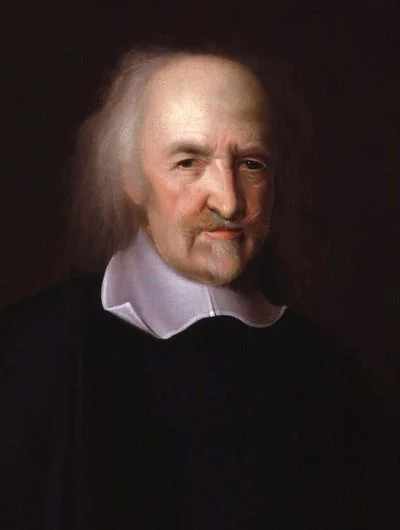
Leviathan" thinker: Social contract secures order, avoiding life "nasty, brutish.
Conversation Starters
Life Journey
Thomas Hobbes was born prematurely in Westport near Malmesbury when his mother heard news of the approaching Spanish Armada.
Hobbes' father, a hot-tempered vicar, fled after assaulting another clergyman outside his church.
Hobbes began his studies at Magdalen Hall, Oxford, preferring instead to study maps and explore classical texts on his own.
Hobbes completed his Bachelor of Arts degree at Oxford. His education provided him with classical languages and philosophy, though he would later develop strong criticisms of scholasticism and university education in general.
Hobbes became tutor to William Cavendish, son of the Earl of Devonshire.
Hobbes accompanied young William Cavendish on an extended tour of France and Italy. This journey exposed him to continental intellectual currents and allowed him to improve his French and Italian while visiting major cultural centers.
Hobbes published his English translation of Thucydides' 'History of the Peloponnesian War,' the first direct translation from Greek.
After a brief period tutoring other families, Hobbes returned to serve as tutor to the young third Earl of Devonshire.
Hobbes embarked on another European journey, spending time in Paris where he met Marin Mersenne and joined his intellectual circle. He developed a passionate interest in geometry and natural philosophy that would shape his later philosophical system.
During his European travels, Hobbes visited the aging Galileo Galilei under house arrest in Florence.
As civil war approached, Hobbes circulated 'Elements of Law, Natural and Politic' defending royal power.
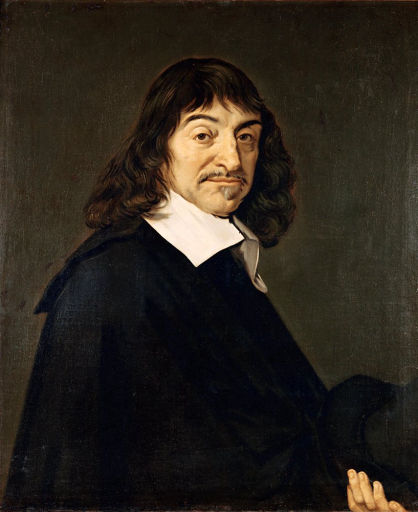
Hobbes wrote a set of philosophical objections to Descartes' 'Meditations on First Philosophy,' engaging in what became a famous disagreement between two of the era's greatest minds. Descartes' dismissive replies began an intellectual rivalry.
Hobbes published 'De Cive' (On the Citizen), presenting his political philosophy in Latin for a European audience. The work outlined his theory of the social contract and the necessity of absolute sovereignty, themes he would expand in 'Leviathan.'
Hobbes was appointed mathematics tutor to the young Prince of Wales, the future King Charles II, who was living in exile with his mother in Paris. This connection would later provide some protection when Hobbes' religious views came under attack.
Hobbes published his masterpiece 'Leviathan,' presenting his materialist philosophy and arguing that a strong sovereign is necessary to escape the 'war of all against all.' The work remains foundational to political...
Hobbes returned to England and made peace with the new Commonwealth government. His willingness to accept any effective sovereign power followed logically from his political theory but disappointed royalist exiles who considered it betrayal.
After the Great Fire of London, Parliament investigated possible causes including atheism. Hobbes, whose materialism had long been controversial, was forbidden from publishing any further works on controversial subjects.
Thomas Hobbes died at Hardwick Hall, having spent his final years under the protection of the Cavendish family.