En bref
Noble andin autochtone qui mena une vaste rébellion anticoloniale, défiant la domination espagnole et inspirant les mouvements d’indépendance ultérieurs.
Sujets de conversation
Parcours de vie
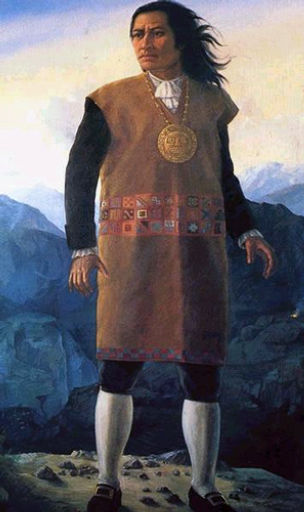
José Gabriel Condorcanqui naquit dans une famille noble andine près de Cusco, revendiquant plus tard une descendance du souverain inca Túpac Amaru. Grandir dans les Andes coloniales espagnoles façonna son sens de l’injustice et sa responsabilité envers son peuple.
Il reçut une instruction l’exposant à la langue espagnole, à la doctrine catholique et aux normes juridiques coloniales, tout en restant ancré dans les traditions communautaires quechuas. Cette formation bilingue l’aida ensuite à négocier avec les autorités et à mobiliser des alliés autochtones.
Jeune noble, il s’impliqua dans l’administration locale et dans des litiges touchant le travail et le tribut imposés aux populations autochtones. Il comprit comment les corregidores et les marchands exploitaient les ventes du repartimiento, alimentant le ressentiment dans toute la région.
Il épousa Micaela Bastidas, qui devint sa plus proche stratège et organisatrice, gérant la logistique et les communications durant le soulèvement. Leur partenariat lia le leadership familial à de vastes réseaux communautaires dans les Andes méridionales.
Grâce aux caravanes de mulets et au commerce régional, il voyagea largement et observa de près le poids des tributs, du travail forcé et des abus d’autorités. Ces itinéraires devinrent plus tard des voies pour les messages, les recrues et les approvisionnements pendant la rébellion.
Il consolida son autorité comme kuraka sur Tungasuca, Surimana et Pampamarca, servant d’intermédiaire entre les communautés autochtones et l’administration coloniale. Cette fonction lui donna légitimité, ressources et une tribune pour contester les abus coloniaux.
Il envoya des plaintes et des requêtes juridiques aux responsables, dénonçant le repartimiento de marchandises et les obligations de travail forcé qui ravageaient les foyers andins. Les réponses lentes et méprisantes le convainquirent que le système ne se réformerait pas de lui-même.
De nouvelles politiques bourboniennes intensifièrent la fiscalité, resserrèrent le commerce et renforcèrent l’appareil répressif dans la vice-royauté du Pérou. Il vit le ressentiment s’étendre parmi les paysans autochtones, les métis et certains créoles, sous le poids de prélèvements plus lourds et de la coercition.
Il se présenta de plus en plus comme héritier d’une légitimité inca, invoquant Túpac Amaru, le dernier Inca exécuté par les Espagnols. Ce nom devint un étendard fédérateur, reliant des griefs locaux à une identité anticoloniale plus vaste.
En novembre 1780, il s’empara du corregidor Antonio de Arriaga, l’accusant d’extorsion et de brutalité sous le régime colonial. Cette arrestation spectaculaire signala la révolte ouverte et suscita un soutien rapide des communautés andines voisines.
Après une confrontation publique, Arriaga fut exécuté, et Túpac Amaru II publia des proclamations condamnant le travail forcé, les tributs excessifs et la corruption des autorités. Il chercha à rassembler des partisans autochtones et non autochtones autour d’une cause commune.
Les forces rebelles vainquirent des troupes dirigées par des Espagnols à Sangarará, renforçant l’élan et le recrutement dans les Andes méridionales. Cette victoire alarma les autorités de Cusco et de Lima, qui préparèrent une contre-insurrection plus dure et une mobilisation accrue.
Des colonnes rebelles avancèrent vers Cusco, cherchant à briser le contrôle espagnol et à provoquer des défections de masse. Micaela Bastidas coordonna les approvisionnements et les avertissements, mais les divisions internes et les renforts ennemis limitèrent la capacité des rebelles à prendre la ville.
Des troupes royalistes et des milices alliées resserrèrent l’étau tandis que des informateurs révélaient les mouvements rebelles et des itinéraires sûrs. Il fut capturé avec des membres clés de sa famille et des chefs, mettant fin au commandement central de la rébellion dans la région de Cusco.
À l’issue d’un procès colonial, il fut exécuté à Cusco avec des proches, dont Micaela Bastidas, lors d’un spectacle public d’une extrême brutalité. Les autorités voulaient terroriser, mais son martyre devint un symbole durable de la résistance et de la libération andines.