Quick Facts
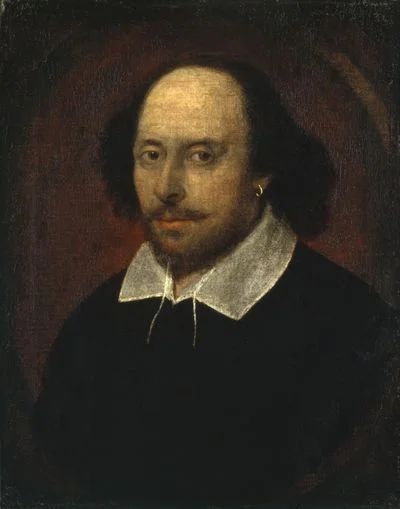
To be or not to be": Shakespeare, master of the human heart.
Conversation Starters
Life Journey
William Shakespeare was born to John Shakespeare, a glove maker and alderman, and Mary Arden, daughter of a prosperous farmer. He was baptized on April 26 at Holy Trinity Church.
Shakespeare likely attended the King's New School in Stratford, where he received a classical education in Latin grammar, rhetoric, and classical literature that would influence his later works.
Shakespeare married Anne Hathaway, eight years his senior, when he was eighteen. The marriage bond was issued on November 28, and their first daughter Susanna was born six months later.
Shakespeare's first child, Susanna, was born and baptized on May 26. She would later marry physician John Hall and become the primary heir to Shakespeare's estate.
Anne gave birth to twins, Hamnet and Judith. Tragically, Hamnet would die at age 11, a loss that may have influenced the pathos in Shakespeare's later tragedies.
Shakespeare established himself in London's theatrical world during the 'lost years.' He began as an actor and playwright, writing early plays like 'The Two Gentlemen of Verona' and 'Henry VI.'
Robert Greene's pamphlet attacked Shakespeare as an 'upstart crow,' providing the first documented reference to Shakespeare as an actor and playwright in London's theatrical scene.
During plague closures of London theaters, Shakespeare published his narrative poem 'Venus and Adonis,' dedicated to the Earl of Southampton. It became enormously popular and was reprinted many times.
Shakespeare became a founding member and shareholder of the Lord Chamberlain's Men, an acting company that would become the most successful in London. This gave him financial security and creative control.
Shakespeare's father was granted a coat of arms, making the Shakespeare family gentlemen. The motto 'Non Sanz Droict' (Not Without Right) reflected the family's elevated social status.
Shakespeare purchased New Place, the second-largest house in Stratford, demonstrating his growing wealth from theater. He maintained connections to his hometown while working in London.
The Globe Theatre opened on the south bank of the Thames, with Shakespeare as part-owner. This iconic venue would premiere many of his greatest plays including 'Hamlet,' 'Othello,' and 'King Lear.'
Shakespeare wrote 'Hamlet,' widely considered the greatest play in the English language. The tragedy explored themes of mortality, revenge, and human nature that continue to resonate today.
When James I became king, the Lord Chamberlain's Men received royal patronage and became the King's Men. Shakespeare and his colleagues now performed regularly at court and enjoyed elevated status.
Shakespeare wrote two of his greatest tragedies, 'King Lear' and 'Macbeth.' These dark masterpieces explored themes of power, madness, and moral corruption with unprecedented psychological depth.
Shakespeare composed 'Antony and Cleopatra,' one of his most ambitious Roman plays. The epic tragedy explored love, politics, and identity across the ancient Mediterranean world.
Shakespeare's 154 sonnets were published, addressing themes of love, beauty, mortality, and time. These poems are considered among the finest in the English language and remain widely studied.
Shakespeare wrote 'The Tempest,' often considered his farewell to the theater. The play's themes of magic, forgiveness, and letting go reflected the playwright's own impending retirement.
The Globe Theatre caught fire during a performance of 'Henry VIII' and burned to the ground. Though rebuilt the following year, Shakespeare had largely retired from the stage by this time.
Shakespeare died on April 23, traditionally believed to be his birthday. He was buried in Holy Trinity Church with an epitaph cursing anyone who moves his bones. He left behind 37 plays and 154 sonnets.