Quick Facts
A fierce one-eyed general famed for loyalty to Cao Cao, steadfast discipline, and relentless frontline courage.
Conversation Starters
Life Journey
Xiahou Dun was born into the prominent Xiahou family in Qiao Commandery, a region that later became a power base for Cao Cao. Raised amid local gentry networks and growing unrest, he learned martial skills and clan obligations early.
The Yellow Turban rebellion destabilized the Eastern Han and militarized many local elites in Yan Province. In this climate, Xiahou Dun's clan organized defenses and prepared for prolonged conflict as imperial authority weakened.
After Dong Zhuo took control of the court at Luoyang, regional forces rallied and warlords rose quickly. Xiahou Dun attached himself to his kinsman and ally Cao Cao, entering the core circle that would anchor Cao Cao’s campaigns.
Coalition armies moved against Dong Zhuo, but rivalries and logistics undermined unity across the Central Plains. Xiahou Dun served as a dependable field commander, helping Cao Cao build discipline and cohesion amid chaotic allied operations.
Yan Province became a contested heartland as banditry and rival warlords pressed into Cao Cao’s territories. Xiahou Dun took on difficult defensive assignments, keeping garrisons steady while Cao Cao fought to retain his base.
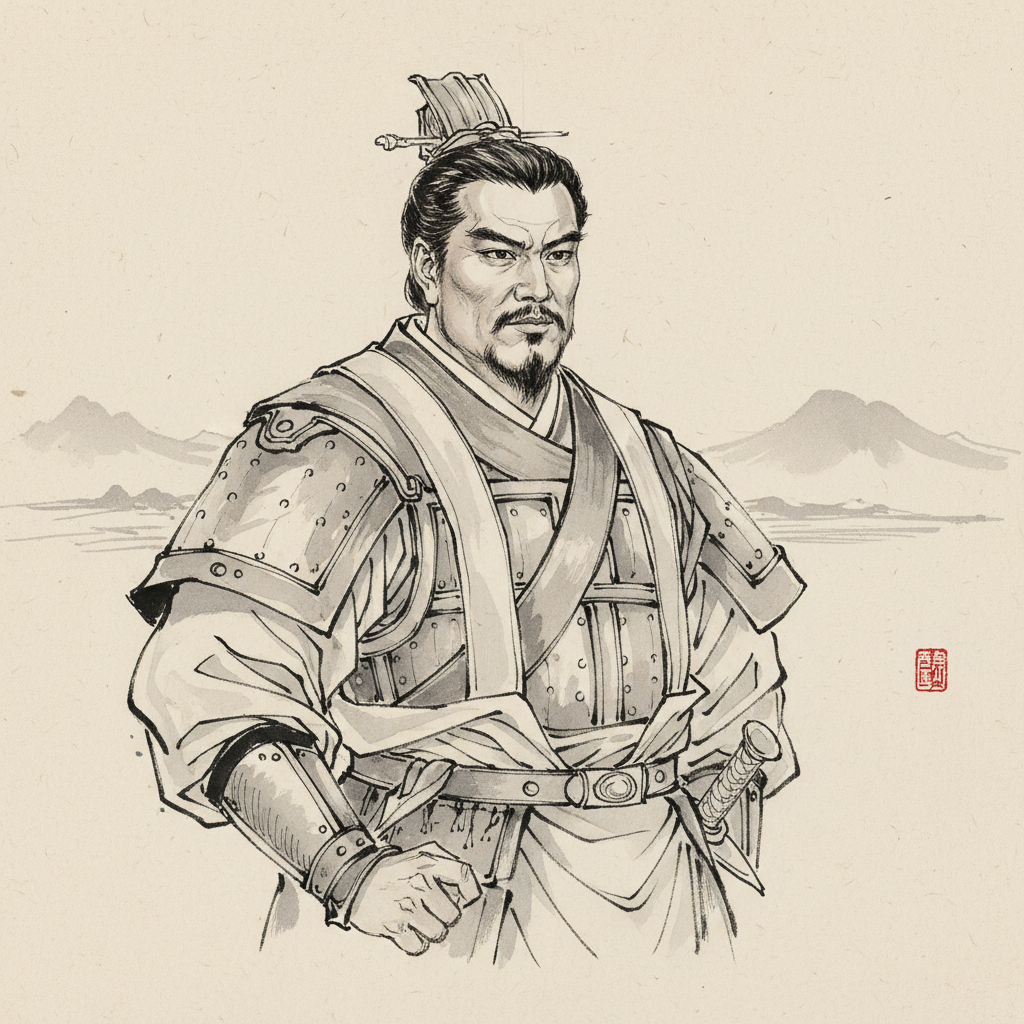
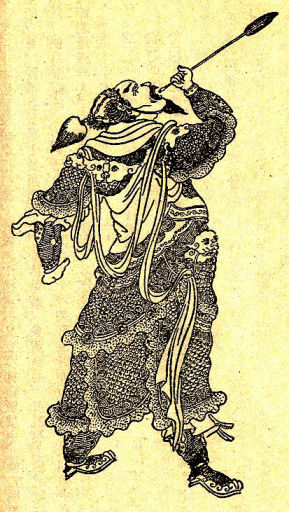
During bitter fighting in Yan Province against Lu Bu’s forces, an arrow struck Xiahou Dun in the eye, creating his enduring epithet 'One-Eyed Xiahou.' Despite the shock and pain, he remained in command and pressed the engagement, hardening his legend.
After the struggle with Lu Bu, Cao Cao focused on consolidating territory and restoring administration. Xiahou Dun was trusted with key posts that required firm discipline, balancing military readiness with the resettlement of war-displaced households.
Cao Cao and Liu Bei jointly moved against Lu Bu, whose stronghold at Xiapi fell after siege and flooding tactics. Xiahou Dun contributed as a senior commander in the broader encirclement, helping tighten control once Lu Bu’s regime collapsed.
At Guandu, Cao Cao faced the far larger forces of Yuan Shao in a decisive contest for northern China. Xiahou Dun helped secure vulnerable routes and rear positions, allowing Cao Cao to concentrate on the pivotal strikes that broke Yuan Shao’s army.
Following Guandu, the north remained unsettled as Yuan Shao’s heirs fought among themselves. Xiahou Dun’s assignments emphasized order, garrison discipline, and supply security, enabling Cao Cao’s administration to extend into newly contested districts.
Cao Cao campaigned against the Wuhuan and allied remnants, pushing deep toward the northeastern frontiers. Xiahou Dun served as a reliable senior commander, supporting operations that reduced steppe-backed threats and strengthened frontier defenses.
Cao Cao’s drive south culminated in the defeat at Red Cliffs against the allied fleets of Sun Quan and Liu Bei. In the aftermath, Xiahou Dun was used where steadiness mattered most, helping maintain order as the northern army regrouped.
As warfare strained granaries and displaced farmers, commanders were expected to govern as much as they fought. Xiahou Dun oversaw local administration, emphasizing tax regularity, repair of defenses, and keeping refugee settlements from becoming bandit havens.
When Emperor Xian granted Cao Cao the title Duke of Wei, the Wei administration formalized ranks and rewards for long service. Xiahou Dun, among Cao Cao’s earliest supporters, received elevated status reflecting both kinship ties and proven command experience.
Cao Cao’s promotion to King of Wei accelerated institutional building, with clearer chains of command and regional responsibilities. Xiahou Dun’s standing rose with these reforms, marking him as a pillar of the Wei military-political establishment.
As Liu Bei secured Hanzhong and Sun Quan moved against Guan Yu in Jing Province, the strategic balance shifted rapidly. Xiahou Dun remained a senior stabilizing figure, helping Wei coordinate defenses and maintain internal order during multi-front pressure.
Xiahou Dun died in the same year Cao Cao passed away, as Wei transitioned into a new political phase under Cao Pi. His death removed one of the oldest pillars of Cao Cao’s coalition, remembered for personal toughness and unwavering loyalty.