Quick Facts
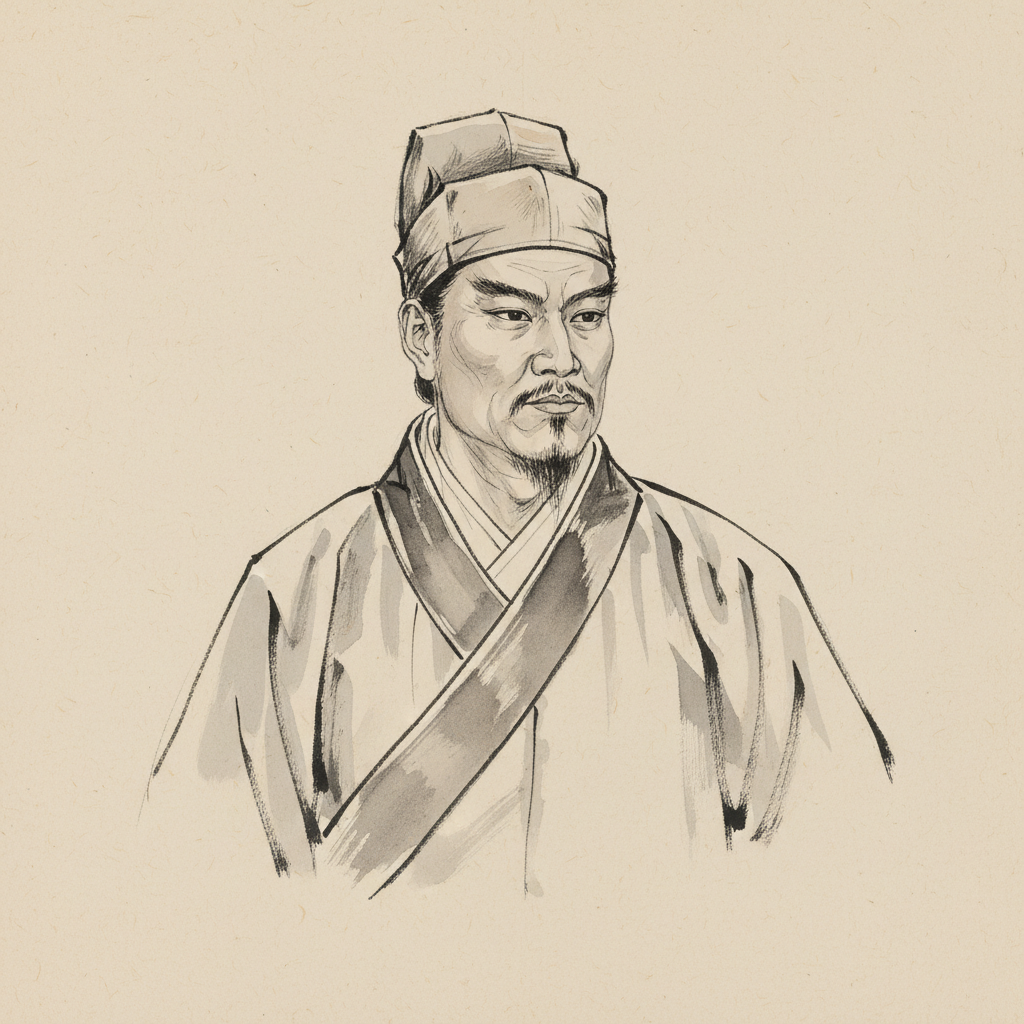
Founder of the Sui dynasty who reunified China, centralized governance, and launched ambitious reforms with stern discipline.
Conversation Starters
Life Journey
Born into the prominent Yang clan amid the fractured politics of Northern China after Northern Wei. His family’s connections in the Guanzhong region positioned him for service under emerging Northern dynasties.
As a teenager, he was drawn into the elite networks that dominated Western Wei and later Northern Zhou. Training in court protocol and frontier governance prepared him for a career where rank and marriage alliances mattered.
Northern Zhou replaced Western Wei, and he rose with the new regime’s military households and bureaucratic patrons. The court’s reliance on capable commanders gave him early opportunities to prove loyalty and discipline.
He married Dugu Qieluo, from the influential Dugu clan, creating a formidable political partnership. Their household became known for strict personal conduct, reinforcing his reputation for austerity at court.
He took on larger command roles as Northern Zhou competed with Northern Qi for dominance in the north. Battlefield experience and supply management demonstrated administrative talent beyond simple martial prowess.
Northern Zhou destroyed Northern Qi, bringing much of Northern China under one court for the first time in generations. He benefited from the redistribution of offices and lands, gaining prestige in the expanded empire.
After Emperor Wu of Northern Zhou died, court politics turned volatile under inexperienced successors. He maneuvered among princes and ministers, presenting himself as the reliable guardian of state order.
He took control as regent for Emperor Jing, facing rebellion from rival generals and princely factions. By decisive purges and rapid mobilization, he secured Chang’an and neutralized competing power centers.
He compelled Emperor Jing to abdicate and declared a new dynasty, taking the title Emperor Wen of Sui. Through rituals, edicts, and careful appointments, he framed the transfer as restoring legitimate imperial unity.
He ordered construction and expansion of the capital at Daxing, redesigning administrative wards and palace precincts. Central offices were tightened to curb aristocratic autonomy and improve tax and labor oversight.
New legal codes and stricter audits targeted corruption and the private power of great clans. He emphasized frugality at court and sought predictable revenues to support granaries, troops, and public works.
Sui forces absorbed Western Liang, removing a buffer state and tightening control over strategic corridors. The court then planned a massive campaign against Chen, assembling ships, troops, and logistics for the Yangtze.
He authorized a coordinated offensive using northern armies and river fleets to break Chen defenses. Generals advanced toward the Yangtze crossings, aiming to seize Jiankang and end centuries of north–south division.
Sui troops captured Jiankang, and Chen Shubao was taken prisoner, marking the end of the Chen dynasty. Reunification allowed standardized administration, taxes, and transport policies across north and south China.
He sponsored Buddhist institutions and ceremonies, presenting the dynasty as morally grounded and cosmically favored. Monks and temples received recognition as the court sought social cohesion after reunification’s upheavals.
Tensions among princes and ministers grew as questions of succession sharpened at the capital. Court intrigue, coupled with harsh discipline, strained relationships and created openings for rivals to influence the heir.
He died as the empire transitioned to his successor amid rumors and political uncertainty. His reign left strong institutions and a unified state, but also precedents of severe control that later rulers struggled to manage.