Quick Facts
A steadfast retainer whose ruthless self-sacrifice turned loyalty into an enduring moral legend of the Warring States.
Conversation Starters
Life Journey
Yu Rang was born during the fracturing of the Jin aristocracy, when powerful lineages competed for land and offices. In northern China, old Zhou norms weakened, and retainers increasingly sought patrons among rival clans.
As a young shi, Yu Rang learned etiquette, rhetoric, and the martial skills expected of household retainers. The rising culture of personal service and contractual loyalty offered ambitious men a path to status through a lord’s favor.
Yu Rang lived through the era when Han, Zhao, and Wei tightened control over Jin’s territories and armies. Political life revolved around coalition warfare, hostage diplomacy, and ruthless bargaining among the great ministerial families.
The Zhao leader, later known as Zhao Xiangzi, strengthened alliances and logistics around Jinyang. For Zhi Bo’s retainers, Zhao’s rise signaled an approaching showdown that would determine who dominated the remnants of Jin.
Zhi Bo escalated pressure on Han and Wei and demanded territory from Zhao, deepening resentment among the other great houses. Yu Rang supported his lord’s ambitions, convinced that decisive power would secure order amid chaos.
Zhi, Han, and Wei forces besieged Zhao’s stronghold at Jinyang, attempting to break Zhao Xiangzi’s resistance. The siege became infamous for its cruelty and engineering, including efforts to flood the city and starve its defenders.
Han and Wei suddenly switched sides and joined Zhao, crushing Zhi Bo and annihilating the Zhi lineage. Chroniclers report that Zhi Bo’s body was desecrated, making the defeat not only political but a profound dishonor to his followers.
After the Zhi destruction, Yu Rang refused to accept a new patronage arrangement and instead vowed revenge for his slain lord. He framed his mission as repayment for recognition, elevating private loyalty above survival or public praise.
Yu Rang disguised himself and infiltrated near Zhao Xiangzi’s residence, seeking a moment to strike. He was detected and captured, but his frank explanation of loyalty impressed Zhao, who released him rather than execute him immediately.
To conceal his identity, Yu Rang altered his appearance in drastic ways, a detail emphasized in later moral storytelling. The physical transformation symbolized his willingness to destroy his own life and reputation to fulfill a single obligation.
Yu Rang waited in concealment along Zhao Xiangzi’s path, hoping to kill him during travel when guards were less concentrated. Zhao’s horse reportedly shied at the hidden danger, alerting the entourage and leading to Yu Rang’s arrest.
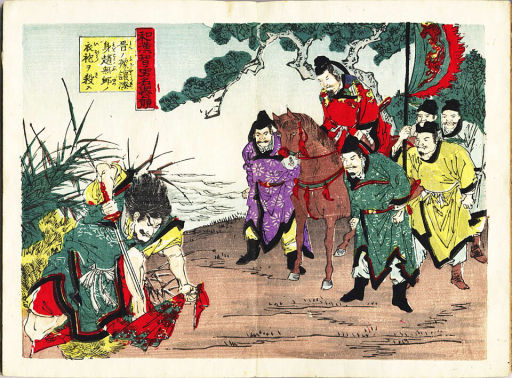
Brought before Zhao Xiangzi, Yu Rang asked to strike the ruler’s robe to complete his duty in ritualized form. Zhao granted the request, and Yu Rang stabbed the garment, turning a failed killing into a public display of unwavering intent.
After fulfilling the symbolic act, Yu Rang chose death rather than live without achieving revenge for Zhi Bo. His suicide fixed his story as an exemplar in later Chinese moral discourse, debated as both noble fidelity and destructive obsession.
Yu Rang initially served lesser nobles, gaining experience in household discipline and political caution. Sources later portray him as talented but overlooked, sharpening his desire to find a lord who truly recognized his worth.
Yu Rang joined the powerful Zhi lineage, which was expanding its influence inside Jin’s ruling structure. He came to admire Zhi Bo (Zhi Yao), whose patronage of capable men contrasted with more complacent aristocrats.
Zhi Bo treated Yu Rang with marked respect, and Yu Rang answered with absolute commitment to repay that recognition. In a period when allegiance could shift quickly, he adopted a stricter ideal: a man should die for the one who understands him.