Quick Facts
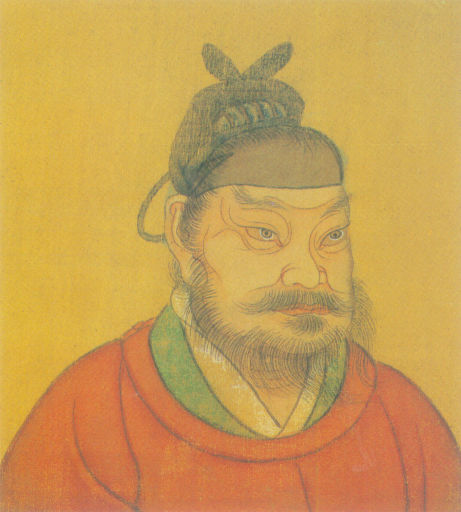
A disciplined Northern Zhou emperor who centralized power, subdued rivals, and launched the conquest that reunited northern China.
Conversation Starters
Life Journey
Born as Yuwen Yong into the Xianbei-led Yuwen clan that dominated Western Wei politics. His family stood at the center of the military aristocracy in Chang'an, where steppe and Chinese institutions mixed uneasily.
The Yuwen regime replaced Western Wei with the Northern Zhou, placing real authority in the hands of the clan and its commanders. As a young prince, Yuwen Yong grew up amid succession tensions and powerful regents in the capital.
After the short reigns of Emperor Ming and fragile court balances, Yuwen Yong ascended the throne as Emperor Wu. Senior figures at court expected a pliant ruler, but he quickly signaled a personal determination to govern.
Real power initially remained with the formidable regent Yuwen Hu, who had engineered previous successions. Emperor Wu learned to survive court intrigue, conceal intentions, and build a loyal inner circle within the palace bureaucracy.
Emperor Wu quietly promoted capable commanders and civil officials, balancing Xianbei nobles with Chinese literati administrators. By distributing honors and appointments carefully, he prepared the ground to challenge entrenched regency power.
He worked to tighten imperial oversight of frontier forces and elite units tied to aristocratic households. The court’s military machine, shaped by the fubing-style militia system, became more responsive to direct imperial orders.
Northern Qi controlled the rich northeast, and its capital at Ye was a constant strategic pressure point. Emperor Wu studied borders, logistics, and rival factionalism, aiming to break Qi’s strength through planned, staged offensives.
He employed envoys, informants, and calculated marriage and title politics to weaken opponents’ alliances. By managing relations with neighboring powers and steppe groups, he reduced the chance of a two-front crisis during future campaigns.
Emperor Wu pushed appointments that tied provincial administration more closely to the center, limiting the autonomy of great clans. Tax and labor demands were organized to sustain prolonged war preparations without total fiscal collapse.
In a decisive palace move, Emperor Wu eliminated the regent Yuwen Hu, ending the era of regental domination. The action reshaped court politics overnight, transferring real authority to the throne and rewarding loyal supporters.
Following Yuwen Hu’s death, Emperor Wu moved swiftly to neutralize remaining factions tied to the old power structure. He reasserted imperial prerogatives over military appointments and court ritual, stabilizing the succession line.
He refined administrative routines, supply chains, and command hierarchies to sustain campaigns against a major state. Court councils and ministries were pressured to deliver grain, horses, and arms for coordinated multi-year operations.
Northern Zhou forces increased pressure along key passes and river corridors linking Guanzhong to the North China Plain. Emperor Wu coordinated generals and logistics to exploit Northern Qi’s internal instability and battlefield missteps.
As the war dragged on, Emperor Wu enforced strict discipline on officers and curtailed profiteering to keep armies fed. His court maintained unity through rewards, punishments, and careful messaging about the dynasty’s mission.
Northern Zhou successes undermined Northern Qi morale and fractured its elite leadership. Emperor Wu pressed advantages with coordinated sieges and rapid maneuvers, aiming to seize the political heartland rather than border fortresses alone.
Northern Zhou forces took Ye, a decisive blow that effectively destroyed Northern Qi as a competing dynasty. The conquest brought vast territory and population under Northern Zhou control, unifying northern China under Emperor Wu.
Emperor Wu faced the delicate task of absorbing Northern Qi elites without provoking rebellion or undermining his own supporters. He redistributed offices, re-registered households, and reorganized troops to secure newly won provinces.
Emperor Wu died unexpectedly after achieving the strategic goal of northern unification, leaving unfinished plans for broader consolidation. The throne passed to his son, Emperor Xuan, amid lingering tensions within the court and aristocracy.