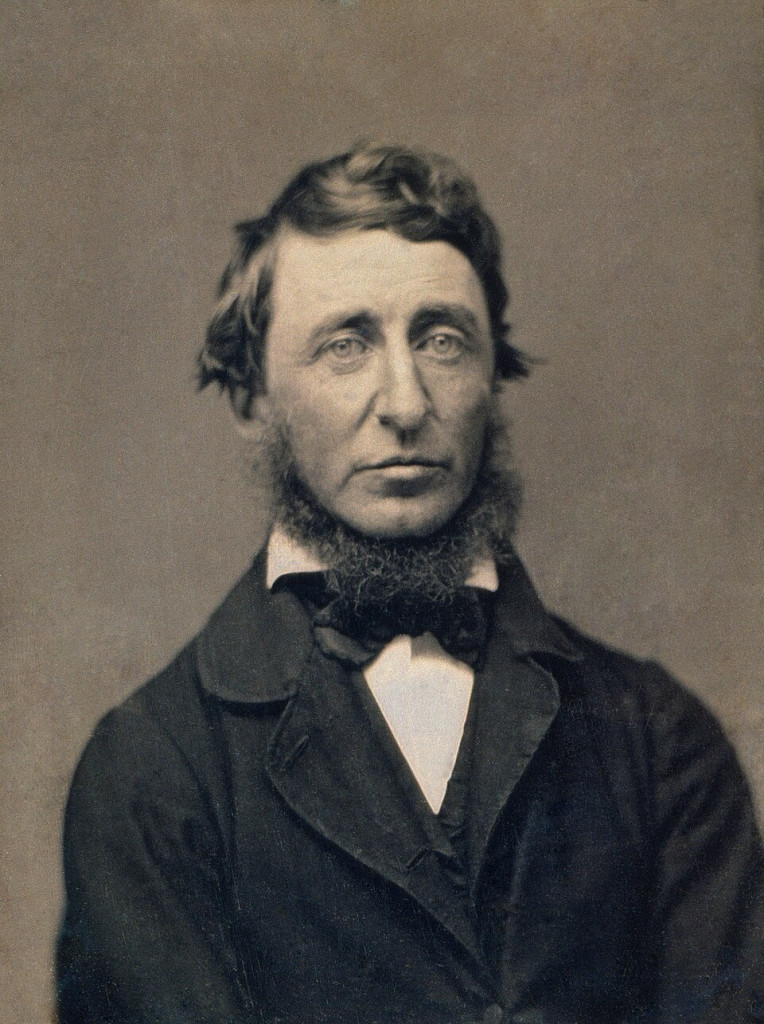
Kurzinfo
The philosopher who wrote 'Walden' and advocated for civil disobedience.
Gesprächseinstiege
Lebensweg
Henry David Thoreau was born to John and Cynthia Thoreau. His father was a pencil maker, and the family lived in a modest home in Concord, a town known for its intellectual and literary community.
Thoreau began his formal education at Concord Academy, where he excelled in his studies and developed a deep appreciation for nature and literature. The school's progressive curriculum fostered his intellectual growth.
Thoreau entered Harvard University, where he studied a wide range of subjects including Greek, Latin, and philosophy. He was influenced by the Transcendentalist ideas that were prevalent among his professors and peers.
Thoreau graduated from Harvard with a degree in literature. Despite his academic success, he chose not to pursue a conventional career, instead focusing on his own philosophical and literary pursuits.
Thoreau briefly taught at the Concord Center School but resigned after a few weeks due to his opposition to corporal punishment. He then worked as a surveyor and pencil maker, while continuing to write and explore nature.
Thoreau met Ralph Waldo Emerson, who became a mentor and friend. Emerson's influence was significant, introducing Thoreau to Transcendentalist ideas and encouraging his writing and philosophical explorations.
Thoreau's first published work, a poem titled 'Sympathy,' appeared in The Dial, a Transcendentalist journal. This marked the beginning of his literary career and his association with the Transcendentalist movement.
Thoreau moved to Staten Island to live with the family of Emerson's brother, William. During this time, he attempted to find a teaching position in New York but ultimately returned to Concord.
Thoreau became a regular contributor to The Dial, publishing essays, poems, and reviews. His writings began to gain recognition, and he developed a reputation as a thoughtful and original voice in American literature.
Thoreau moved to a small cabin he built on the shores of Walden Pond, near Concord. He lived there for two years and two months, an experience that would inspire his most famous work, 'Walden.'
Thoreau wrote 'Resistance to Civil Government,' later known as 'Civil Disobedience.' This essay, inspired by his night in jail for refusing to pay a poll tax, argued for the moral duty to resist unjust laws and governments.
Thoreau left his cabin at Walden Pond and returned to Concord, where he continued to write and reflect on his experiences. The time spent at Walden Pond profoundly influenced his philosophy and writing.
Thoreau published his first book, 'A Week on the Concord and Merrimack Rivers,' which combined natural history, philosophy, and personal reflection. The book, though not widely popular at the time, laid the groundwork for his later works.
Thoreau began working as a surveyor, a profession that allowed him to spend time in nature and provided a steady income. His detailed maps and notes on the landscape of Concord are still valued for their accuracy and insight.
Thoreau's essay 'Civil Disobedience' was published in the journal Aesthetic Papers. The essay gained significant attention and has since become a foundational text in the philosophy of nonviolent resistance.
Thoreau published 'Walden; or, Life in the Woods,' a reflection on simple living in natural surroundings. The book, based on his experiences at Walden Pond, became a classic of American literature and a cornerstone of environmental philosophy.
Thoreau began to show symptoms of tuberculosis, a disease that would eventually claim his life. Despite his declining health, he continued to write and engage in his naturalist pursuits.
Thoreau published 'The Maine Woods,' a collection of essays describing his trips to the forests of Maine. The book celebrated the beauty and wildness of the region and further established his reputation as a naturalist and environmentalist.
Thoreau died of tuberculosis at his home in Concord. His legacy as a philosopher, essayist, poet, and naturalist endured, influencing generations of thinkers and writers in the realms of environmentalism, civil rights, and personal freedom.