En bref
A visionary Silla monarch who strengthened Buddhism, patronized learning, and defended her kingdom through turbulent seventh-century politics.
Sujets de conversation
Parcours de vie
Born Princess Deokman, likely in Seorabeol, as a daughter of King Jinpyeong of Silla and Queen Maya. Growing up within Silla’s bone-rank aristocracy, she received court education and learned ritual politics central to royal legitimacy.
As a young princess at Seorabeol court, she was trained in state ceremonies, etiquette, and aristocratic negotiation. Exposure to Buddhist institutions and elite clans taught her how religion and politics intertwined in Silla governance.
With King Jinpyeong lacking a surviving male heir, court factions debated succession within strict bone-rank rules. Deokman’s intelligence and political judgment helped her emerge as a plausible successor despite resistance from some nobles.
She cultivated support among leading clans that dominated Silla’s council politics and military offices. By balancing rival aristocratic interests, she reduced the risk of a contested accession when King Jinpyeong’s health declined.
Court messaging increasingly treated Deokman as the intended heir, reinforcing continuity in a volatile regional environment. Envoys and temple networks helped project her legitimacy through ritual patronage and diplomatic signaling.
After King Jinpyeong’s death, she became Queen Seondeok, the first reigning queen of Silla. Her accession tested Silla’s political order, requiring careful management of nobles and military leaders to prevent fragmentation.
Seondeok expanded royal patronage of Buddhism, supporting monks and temple building tied to state protection ideology. By aligning the throne with influential monasteries, she reinforced legitimacy and mobilized resources for public works.
Facing periodic shortages and regional unrest, her court emphasized granary management and relief practices to stabilize the populace. These policies aimed to reduce noble exploitation and maintain tax flows needed for defense.
Her reign is closely associated with state-backed temple projects at Hwangnyongsa, a major Buddhist center near the capital. Such monuments signaled Silla’s spiritual protection and projected prestige to Baekje, Goguryeo, and Tang envoys.
Seondeok pursued ties with Tang, seeking diplomatic leverage against Baekje and Goguryeo pressures. Exchanges of envoys and court gifts helped integrate Silla into the broader East Asian order shaped by Emperor Taizong’s ascendancy.
Later tradition links her era to the Cheomseongdae observatory, reflecting interest in calendrics and astronomy for state ritual timing. Accurate seasonal knowledge supported agriculture, taxation schedules, and auspicious ceremony planning in the capital.
Baekje attacks and shifting alliances forced Silla to fortify borders and mobilize troops under aristocratic commanders. Seondeok’s court sought to coordinate defenses while maintaining internal cohesion among competing elite lineages.
In 642, Baekje under King Uija captured key Silla fortresses, escalating the crisis on the peninsula. The losses increased pressure on Seondeok to secure external support, particularly from Tang, and to strengthen command structures at home.
Silla diplomacy intensified as envoys pressed Tang leaders for cooperation against Baekje and Goguryeo. These efforts laid groundwork for later Silla–Tang collaboration, reshaping East Asian geopolitics in the mid-seventh century.
Elite resistance to her rule persisted, fueled by wartime strain and conservative views of monarchy. Seondeok relied on loyal officials and the prestige of Buddhist state ideology to deter fragmentation and keep the capital stable.
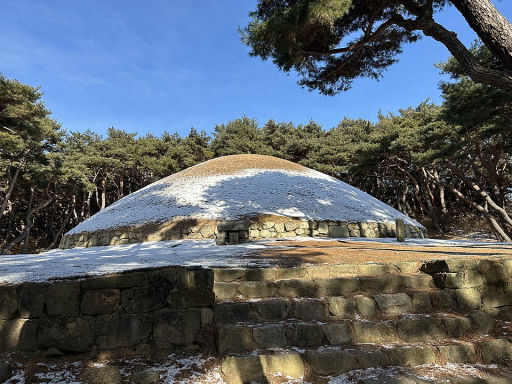
Queen Seondeok died in 647 after guiding Silla through external threats and internal factionalism. Her death opened the way for Queen Jindeok, and Seondeok’s reign remained a touchstone for female sovereignty in Korean historical memory.