간략 정보
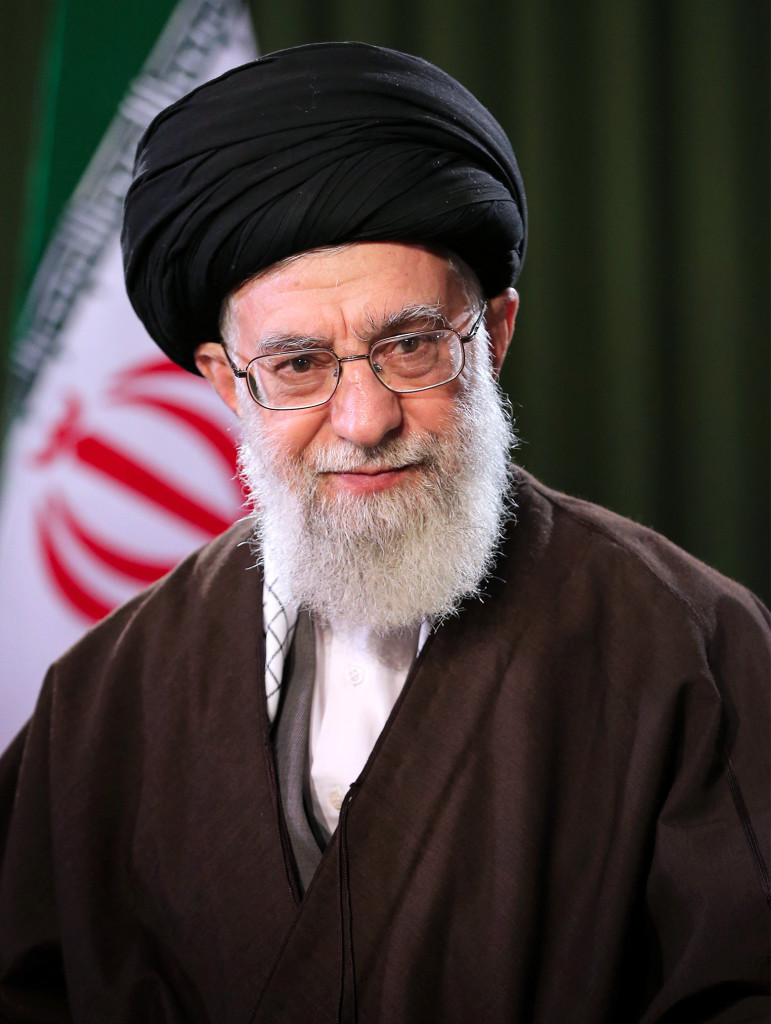
The Supreme Leader of Iran who has been the country's highest political and religious authority since 1989, following the Iranian Revolution.
대화 시작하기
인생 여정
Ali Khamenei was born in the holy city of Mashhad into a religious family of Azeri descent. His father, Sayyid Javad Khamenei, was a cleric and Islamic scholar, providing an early religious upbringing.
He commenced his early education at a traditional religious school (Maktab) in Mashhad, learning the Quran and basic religious texts. This early training laid the foundation for his future clerical career.
Khamenei enrolled at the seminary (Hawza) in Mashhad to pursue formal clerical studies under prominent scholars. This marked the beginning of his dedicated path toward becoming a Shia Islamic cleric.
He traveled to Najaf, Iraq, and later settled in Qom, Iran, to study under the leading Shia scholars of the era, including Ayatollah Borujerdi. In Qom, he became a student of Ayatollah Ruhollah Khomeini, which was pivotal.
Following Khomeini's arrest and exile, Khamenei became an active member of the anti-Shah opposition, organizing sermons and distributing political literature. His activities led to multiple arrests by the Shah's secret police, SAVAK.
He married Mansoureh Khojasteh Bagherzadeh, who came from a religious family. The couple would go on to have six children together, four sons and two daughters.
Khamenei was a founding member of the Combatant Clergy Association (Jame-ye Rowhaniyat-e Mobarez), a key clerical organization that played a central role in orchestrating the Iranian Revolution. This solidified his position within the revolutionary leadership.
Following the success of the Islamic Revolution, Ayatollah Khomeini appointed Khamenei as Deputy Minister of Defense and a member of the Revolutionary Council. He was also appointed as the Friday Prayer Imam of Tehran, a highly influential position.
Khamenei survived an assassination attempt when a bomb hidden in a tape recorder exploded during a press conference. The attack severely injured his right arm and vocal cords, causing permanent damage.
Following the assassination of President Mohammad-Ali Rajai, Khamenei was elected as the third President of the Islamic Republic, winning over 95% of the vote. He became the first cleric to hold the presidency, serving until 1989.
Shortly after becoming President, Supreme Leader Khomeini appointed him as a member of the newly formed Expediency Discernment Council. This body was created to resolve disputes between the Parliament and the Guardian Council.
As President and a close confidant of Khomeini, Khamenei was instrumental in convincing the Supreme Leader to accept UN Security Council Resolution 598, which led to a ceasefire ending the eight-year Iran-Iraq War. This was a momentous national decision.
Following the death of Ayatollah Khomeini, the Assembly of Experts elected Ali Khamenei as the new Supreme Leader (Vali-e Faqih). His appointment was controversial as he was not a widely recognized Grand Ayatollah (Marja') at the time.
Following the deaths of several senior Grand Ayatollahs, Khamenei was promoted to the rank of Marja' (source of emulation) by a group of conservative clerics. This solidified his religious authority to match his political power as Supreme Leader.
Despite the landslide election of reformist President Mohammad Khatami, Khamenei used the institutions under his control—the judiciary, military, and Guardian Council—to check the reformist agenda, establishing a pattern of dual governance.
After the disputed re-election of Mahmoud Ahmadinejad sparked the massive Green Movement protests, Khamenei gave a decisive Friday sermon endorsing the official results. This led to a severe crackdown on protesters and solidified his support for the hardline faction.
Khamenei provided cautious, conditional approval for the nuclear negotiations that led to the Joint Comprehensive Plan of Action (JCPOA) with world powers. He set strict 'red lines' for the Iranian negotiators, reflecting his ultimate authority over foreign policy.
Khamenei underwent successful surgery for an enlarged prostate at a hospital in Tehran. The procedure and his swift return to work were widely publicized to quell rumors about his health and demonstrate his continued fitness to lead.
Following the U.S. assassination of Qasem Soleimani, Khamenei ordered a direct missile strike on U.S. forces in Iraq. He also publicly ruled out any direct negotiations with the United States, reinforcing a policy of 'resistance.'
Surpassing Sultan Qaboos of Oman, Khamenei became the longest-serving head of state in the modern Middle East, marking over 33 years as Supreme Leader. His tenure has shaped Iran's domestic and foreign policy for generations.
Following the helicopter crash that killed President Ebrahim Raisi, Khamenei oversaw the constitutional succession process, ensuring stability. He appointed Vice President Mohammad Mokhber as acting president and called for swift new elections.