Kurzinfo
Duerer: Meister-Graveur, Schoepfer der "Betenden Haende", revolutionierte die Druckgrafik.
Gesprächseinstiege
Lebensweg
Albrecht Dürer wurde als Sohn eines ungarischen Goldschmieds und seiner deutschen Frau geboren. Er war das dritte von achtzehn Kindern und zeigte früh außergewöhnliches künstlerisches Talent.
Mit nur dreizehn Jahren zeichnete Dürer sein erstes Selbstporträt in Silberstifttechnik und bewies damit bemerkenswerte technische Fähigkeiten und ein frühes Interesse an Selbstdarstellung.
Dürer begann eine dreijährige Lehre bei Michael Wolgemut, dem führenden Maler und Holzschnittkünstler Nürnbergs. Hier erlernte er die Grundlagen der Malerei und des Druckens.
Nach Abschluss seiner Lehre begab sich Dürer auf seine Gesellenjahre und reiste durch Deutschland und möglicherweise die Niederlande, um von anderen Meistern zu lernen.
Dürer heiratete Agnes Frey, Tochter eines angesehenen Nürnberger Handwerkers. Obwohl die Ehe kinderlos blieb, führte Agnes nach seinem Tod erfolgreich die Geschäfte seiner Werkstatt.
Dürer reiste zum ersten Mal nach Venedig und studierte die italienische Renaissancekunst. Er wurde von der Perspektivenlehre und den klassischen Proportionen zutiefst beeinflusst.
Nach seiner Rückkehr aus Italien eröffnete Dürer seine eigene Werkstatt in Nürnberg. Er begann, Drucke zu produzieren, die seinen Ruf in ganz Europa begründen sollten.
Dürer veröffentlichte seine revolutionäre Serie von fünfzehn Holzschnitten zur Offenbarung des Johannes. Die dramatischen Bilder setzten neue Maßstäbe für die Druckkunst.
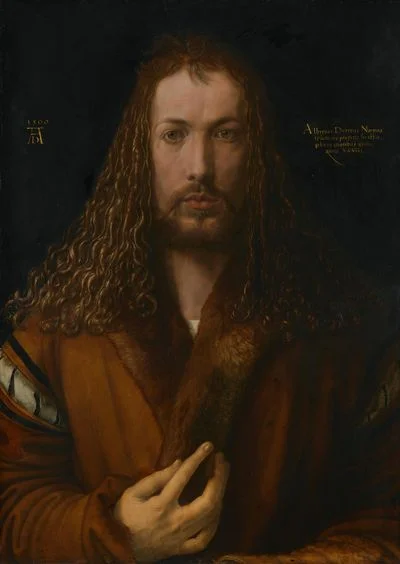
Dürer malte sein berühmtes frontales Selbstporträt mit christusähnlicher Bildsprache, eine kühne Aussage über die Würde des Künstlers und seiner göttlichen Schöpfergabe.
Dürer schuf seine berühmte Aquarellstudie eines Hasen und demonstrierte damit seine außergewöhnliche Beobachtungsgabe und technische Meisterschaft in der Naturdarstellung.
Dürer fertigte seinen meisterhaften Kupferstich von Adam und Eva an, der ideale menschliche Proportionen nach klassischen Maßstäben und eigenen mathematischen Studien zeigt.
Dürer kehrte nach Venedig zurück, nun als gefeierter Meister. Er malte bedeutende Werke, darunter das Rosenkranzfest für die deutsche Kaufmannsgemeinde, und tauschte sich mit Giovanni Bellini aus.
Dürer wurde zum offiziellen Künstler des Heiligen Römischen Kaisers Maximilian I. ernannt. Er schuf monumentale Holzschnittzyklen zur Verherrlichung des Kaisers.
Dürer stach dieses Meisterwerk, das einen christlichen Ritter zeigt, der standhaft an Tod und Teufel vorbeireitet. Es verkörpert das Ideal christlicher Tugend und stoischer Entschlossenheit.
Dürer schuf sein rätselhaftes Meisterwerk, das eine grübelnde geflügelte Gestalt umgeben von Symbolen der Geometrie und des Handwerks zeigt. Es gilt als tiefgründigste Darstellung kreativer Melancholie.
Basierend auf schriftlichen Beschreibungen schuf Dürer seinen berühmten Holzschnitt eines Nashorns. Obwohl er das Tier nie sah, beeinflusste das Bild die europäische Vorstellung für Jahrhunderte.
Dürer reiste in die Niederlande, um seine Pension vom neuen Kaiser Karl V. zu sichern. Er wurde überall als der größte Künstler nördlich der Alpen gefeiert und traf die führenden Humanisten.
Dürer malte sein letztes Meisterwerk, die Vier Apostel, und schenkte es seiner Heimatstadt Nürnberg. Die monumentalen Tafeln verbinden religiöse Andacht mit reformatorischem Gedankengut.
Dürer starb in seiner Heimatstadt und hinterließ ein gewaltiges Werk, das die europäische Kunst transformierte. Seine Theorien über Proportionen und Perspektive beeinflussten Generationen von Künstlern.