Chumi
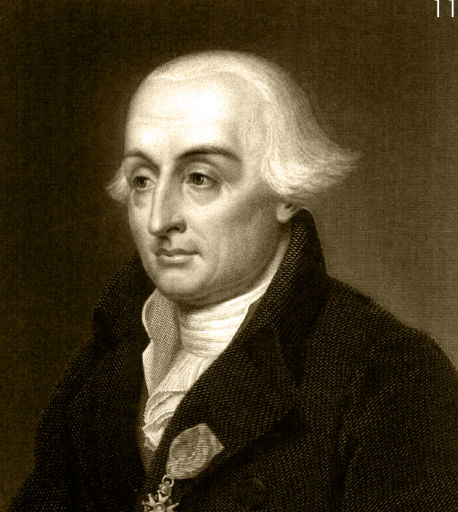
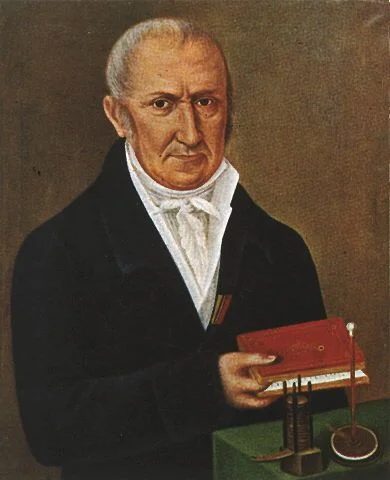
Alessandro Volta

Alessandro Volta

Physicist

Start Chat

AI Personality

Quick Facts

Voltaic Pile (first battery)
Discovery of methane
Volt unit named after him

Life Journey

1745Born in Como, Duchy of Milan

Alessandro Giuseppe Antonio Anastasio Volta was born into a noble family in Como. His father was a member of the local nobility, and the family had strong connections to the Catholic Church.

1757Enters Jesuit School

Volta began his formal education at a local Jesuit school, where he developed interests in both languages and natural philosophy despite his family's expectations for a career in law or the church.

1763Publishes First Scientific Paper

At just 18, Volta published his first scientific paper on the attractive force of electricity. He began corresponding with leading European scientists, demonstrating his precocious understanding of electrical phenomena.

1769Publishes Major Work on Electricity

Volta published 'De vi attractiva ignis electrici' on the attractive force of electrical fire. This work established his reputation as a serious scientist and led to correspondence with eminent physicists across Europe.

1774Appointed Professor of Physics

Volta was appointed Professor of Physics at the Royal School in Como. This position gave him resources to pursue his experimental investigations into electrical phenomena.

1775Invents the Electrophorus

Volta invented the electrophorus, a device for producing static electricity. This simple but ingenious instrument became widely used in electrical experiments and could store electrical charge indefinitely.

1776Discovers Methane Gas

While studying marsh gases at Lake Maggiore, Volta discovered methane. He demonstrated that the gas could be ignited by an electric spark, pioneering the study of combustible gases.

1777Develops the Eudiometer

Volta improved the eudiometer, an instrument for measuring the composition of air. His innovations allowed more precise analysis of gases and contributed to understanding atmospheric chemistry.

1779Appointed Chair at University of Pavia

Volta became Professor of Experimental Physics at the University of Pavia, one of the most prestigious positions in Italian science. He would hold this chair for nearly forty years.

1782Scientific Tour of Europe

Volta undertook an extensive scientific tour, meeting leading scientists including Laplace, Lavoisier, and Benjamin Franklin. These encounters enriched his understanding and expanded his international reputation.

1791Responds to Galvani's Frog Experiments

Following Luigi Galvani's publication on animal electricity, Volta began investigating the phenomenon. He initially accepted Galvani's theory but would soon develop a revolutionary alternative explanation.

1793Challenges Galvani's Theory

Volta publicly challenged Galvani's theory of animal electricity. He demonstrated that the electricity came from the contact of different metals, not from the animal tissue, beginning a famous scientific debate.

1799Invents the Voltaic Pile

Volta created the first true electric battery - the voltaic pile. Made of alternating discs of zinc and copper separated by brine-soaked cloth, it produced a steady flow of electricity, revolutionizing science.

1800Announces Invention to Royal Society

Volta communicated his invention to the Royal Society of London in a famous letter. The voltaic pile was immediately recognized as one of the most important scientific discoveries of the age.

1801Demonstrates Battery to Napoleon

Volta demonstrated his battery to Napoleon Bonaparte, who was deeply impressed. The emperor made Volta a Count and Senator of the Kingdom of Italy, showering him with honors.

1805Receives the Legion of Honor

Napoleon awarded Volta the Legion of Honor and a gold medal. These recognitions reflected the extraordinary importance of his invention for both scientific progress and practical applications.

1815Appointed Director of Philosophical Faculty

The Austrian government appointed Volta as Director of the Philosophical Faculty at the University of Padua. This was largely an honorary position recognizing his distinguished career.

1819Retires to Como

Volta retired from public life and returned to his birthplace of Como. He lived quietly with his wife and sons, enjoying his estates and corresponding with scientists who sought his wisdom.

1827Dies in Como

Alessandro Volta died at his home in Como. His invention of the electric battery opened the age of electrical science, and the unit of electrical potential, the volt, was named in his honor.

Chat