Quick Facts
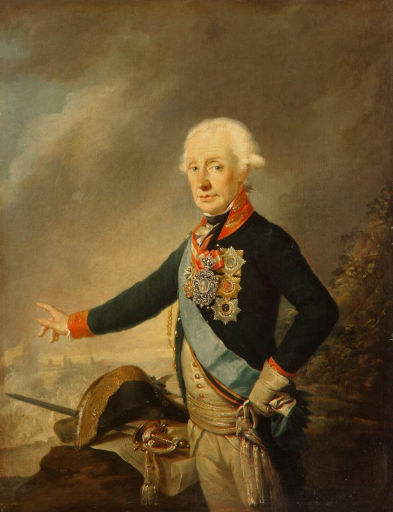
Legendary Russian commander famed for relentless discipline, rapid marches, and audacious victories against stronger European armies.
Conversation Starters
Life Journey
Born in Moscow to Vasily Ivanovich Suvorov, an officer linked to the imperial service. Growing up among soldiers and court officials, he absorbed stories of Peter the Great’s reforms and Russia’s expanding wars.
He joined the elite Semenovsky Life Guards, a prestigious unit close to the imperial court in Saint Petersburg. Frail in youth, he pursued rigorous self-training—drill, languages, and fieldcraft—to harden himself for service.
He started regular service as Russia positioned itself for renewed European conflict. Observing logistics, fortification work, and discipline in garrison life, he built the habits that later defined his famously demanding command style.
During the Seven Years’ War he gained experience in reconnaissance, staff work, and rapid movement across difficult terrain. Campaigning in Central Europe exposed him to Prussian methods and sharpened his belief in speed and shock action.
He led aggressive detachments and raids that emphasized surprise and close combat. These actions reinforced his conviction that initiative at the small-unit level could decide battles before slower commanders even formed their lines.
After Catherine II seized the throne, he benefited from the empire’s renewed focus on professional officers and frontier wars. He cultivated a reputation for strict training, personal austerity, and an ability to inspire exhausted troops to march farther.
He entered the Russo-Turkish War and began building fame against Ottoman forces along the volatile steppe frontier. Operating near rivers and fort lines, he combined scouting, fast marches, and decisive bayonet assaults to break enemy cohesion.
At Turtukai he struck Ottoman positions with coordinated attacks and relentless pursuit. The victory showcased his preference for attacking first, seizing initiative, and turning tactical success into operational advantage along the Danube line.
As the conflict moved toward the Treaty of Küçük Kaynarca, he continued to pressure Ottoman forces and protect Russian gains. His performance strengthened his standing with senior commanders and court patrons who valued reliable battlefield results.
He was used to stabilize volatile regions after major campaigns, reflecting the empire’s need to control newly affected territories. These duties honed his administrative toughness and his ability to impose order while keeping troops supplied and ready.
With another Russo-Turkish War, he was again pushed toward the Black Sea theaters where fortresses and river crossings dominated strategy. He worked alongside leaders like Grigory Potemkin, navigating both battlefield demands and court politics.
Fighting beside Prince Josias of Saxe-Coburg-Saalfeld, he defeated larger Ottoman forces at Focșani and Rymnik. The wins cemented his European reputation for rapid concentration of forces and aggressive attacks that shattered enemy morale.
He stormed the heavily fortified Ottoman stronghold of Izmail after intense preparation, drills, and morale-building sermons to the troops. The brutal victory, achieved on the Danube’s edge, became a symbol of his doctrine: train hard, strike fast, finish decisively.
Sent against the Polish uprising, he captured Praga during the assault on Warsaw, an episode marked by heavy civilian suffering. The action crushed organized resistance and reshaped Poland’s fate amid the partitions driven by Russia, Prussia, and Austria.
Under Paul I, his blunt independence and disdain for parade-ground formalism clashed with new court preferences. He was sidelined and effectively exiled, a sharp reversal for a commander accustomed to direct access and operational autonomy.
Recalled to command coalition forces, he drove French armies out of key areas in northern Italy through rapid maneuver and relentless pressure. Fighting across cities like Milan and Turin, he revived anti-French hopes while balancing Austrian coordination and rivalry.
He attempted a bold Alpine crossing through the St. Gotthard region while facing French forces and unreliable coordination with allies. Despite severe weather and supply shortages, he extricated much of his army, turning a strategic setback into a celebrated feat of endurance.
After returning to Russia, he encountered renewed court tension despite his battlefield prestige. He died soon after, leaving a legacy of uncompromising training, leadership by example, and an aura of invincibility that shaped Russian military memory.