Quick Facts
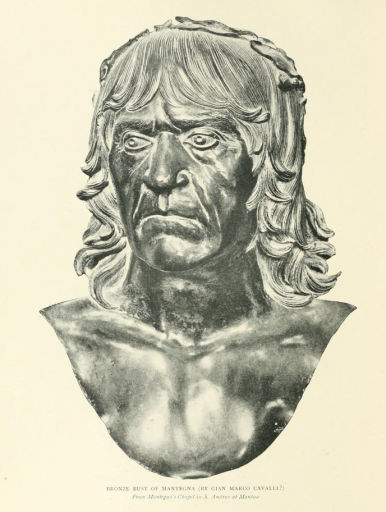
Renaissance painter and engraver who fused classical archaeology with rigorous perspective, creating dramatic, sculptural court imagery.
Conversation Starters
Life Journey
Born in Isola di Carturo near Padua, within the Republic of Venice’s mainland territories. His modest rural origins later contrasted with the erudite, antiquarian culture he sought in Paduan workshops.
Entered the Paduan studio-school of Francesco Squarcione, famous for drawing from antique fragments and casts. The workshop’s emphasis on sculptural form and Roman motifs set Mantegna’s lifelong aesthetic direction.
By his late teens he was documented as working independently, signaling confidence and early acclaim. Padua’s humanist circles and proximity to Donatello’s innovations sharpened his hard-edged, carved style.
Joined the team painting the Ovetari Chapel in the Church of the Eremitani, depicting scenes of St. James and St. Christopher. His rigorous perspective and antique architecture stood out, though much was later destroyed in 1944.
He pursued legal action to end dependence on Squarcione, arguing over earnings and control of commissions. The dispute reflected his ambition to command his own projects and reputation in the competitive Paduan market.
Married Nicolosia Bellini, sister of Giovanni and Gentile Bellini, forging a lasting artistic alliance with Venice’s leading painters. The union helped channel Venetian color and patron networks into his otherwise austere Paduan vision.
Brought key scenes in the Ovetari Chapel closer to completion, refining dramatic foreshortening and stone-like figures. His architectural settings read like reconstructed Roman stages, appealing to Paduan humanist taste for antiquity.
Created the celebrated San Zeno Altarpiece for the Basilica di San Zeno, integrating a convincingly illusionistic classical loggia. The work influenced Northern Italian altarpiece design and showcased his command of perspective and relief-like modeling.
Accepted appointment at the court of Ludovico III Gonzaga, relocating from Padua to Mantua. As a court painter, he gained steady patronage and the chance to create ambitious cycles matching Gonzaga dynastic propaganda.
Started the Camera degli Sposi in the Ducal Palace, designing an immersive illusionistic room with court scenes and classical allusions. The daring ceiling oculus and trompe-l’oeil architecture redefined what a painted interior could do.
Finished the Camera degli Sposi, weaving portraits of the Gonzaga family into a persuasive theatrical space. Its combination of meticulous detail, perspective mastery, and political imagery made it a landmark of Renaissance court art.
Expanded work in engraving, helping transmit his severe line, antique motifs, and spatial daring beyond Mantua. Prints allowed collectors and artists across Italy to study his compositions without traveling to Gonzaga territories.
Produced works such as the dramatically foreshortened Christ lamentation imagery, pushing the viewer into unsettling proximity. The cold clarity of anatomy and stone-like drapery heightened the emotional shock of death and sacred tragedy.
Went to Rome to work for Pope Innocent VIII at the Vatican, entering the center of papal patronage and antique ruins. The encounter reinforced his archaeological imagination, even though much of the Vatican work was later altered or lost.
Returned to Mantua and continued as a leading artistic voice at the Gonzaga court amid shifting Italian politics. He balanced court ceremony, religious commissions, and learned classicism as Mantua competed with larger cultural capitals.
Advanced the monumental Triumphs of Caesar paintings, staging Roman military spectacle as a dynastic mirror for Mantua. The series drew on antique reliefs, inscriptions, and objects, presenting history as vivid pageantry and power.
In his final years he maintained prestige in Mantua while managing a workshop and family responsibilities. Younger artists absorbed his linear discipline and antique vocabulary, even as tastes began shifting toward softer High Renaissance ideals.
Died in Mantua after decades shaping the visual language of Renaissance courts through perspective, classicism, and portrait-like observation. His frescoes, altarpieces, and prints became essential references for later Northern Italian artists.