Chumi
BackChat
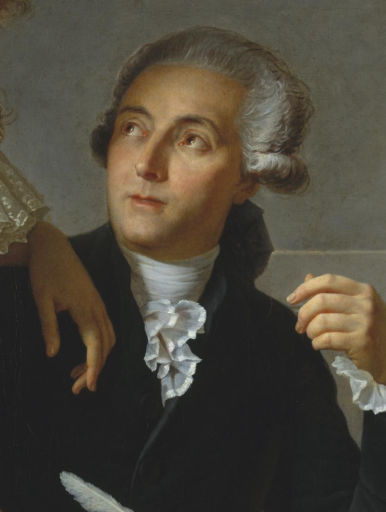
Antoine-Laurent Lavoisier

Antoine-Laurent Lavoisier

Chemist

Start Chat

AI Personality

Quick Facts

Law of Conservation of Mass
Oxygen theory of combustion
Modern chemical nomenclature

Life Journey

1743Born into a Parisian bourgeois family

Born in Paris to a well-to-do family connected to the legal profession. Early security and education in the capital later enabled expensive experiments and international scientific correspondence.

1761Completed classical studies at the College Mazarin

Studied at the Collège des Quatre-Nations (Collège Mazarin) in Paris, receiving broad training in mathematics and natural philosophy. The school’s intellectual culture encouraged disciplined note-taking and experimental curiosity.

1763Earned law degree while pursuing science privately

Qualified in law to satisfy family expectations, yet devoted his free hours to chemistry, geology, and physics. He attended lectures and began building contacts among Parisian savants who valued quantification and instruments.

1766Won Academy prize for a plan to improve city lighting

Submitted a study on improving public illumination and received recognition from the Académie des Sciences. The award raised his profile in Paris and demonstrated his habit of linking practical problems with careful measurement.

1768Elected to the French Academy of Sciences

At only twenty-five, he was elected to the Académie Royale des Sciences in Paris. Membership gave him institutional credibility, access to elite networks, and a platform to challenge prevailing chemical doctrines.

1768Joined the Ferme Générale as a tax farmer

Became an investor and administrator in the Ferme Générale, the private consortium collecting indirect taxes for the French crown. The income financed precision balances, glassware, and assistants for a modern laboratory in Paris.

1771Married Marie-Anne Paulze, a key scientific collaborator

Married Marie-Anne Paulze, who became his partner in research, translation, and illustration. She rendered English works by Joseph Priestley and others into French, strengthening their ability to debate Europe’s leading chemists.

1774Reinterpreted Priestley’s gas as oxygen, not ‘dephlogisticated air’

After learning of Joseph Priestley’s experiments, he argued the gas supported combustion because it was a distinct substance. He named it as a new component of air and used it to undermine the phlogiston theory in Paris debates.

1775Appointed to the Royal Gunpowder and Saltpeter Administration

Took a leading role in the Régie des poudres et salpêtres, applying chemistry to national defense. He improved production control and quality, showing how standardized procedures and measurements could serve the state.

1777Published arguments against phlogiston and for oxygen-based combustion

Issued influential memoirs explaining burning and calcination as combination with oxygen rather than release of phlogiston. By tracking mass changes with precise balances, he reframed combustion as a measurable chemical reaction.

1783Demonstrated that water is a compound of hydrogen and oxygen

With collaborators such as Pierre-Simon Laplace, he analyzed the formation of water from inflammable air (hydrogen) and oxygen. The result overturned the idea of water as an element and strengthened a new definition of elements.

1784Built a calorimeter with Laplace to study respiration and heat

Constructed an ice calorimeter with Laplace to measure heat from combustion and animal respiration. Their work suggested respiration resembled slow combustion, tying chemistry to physiology with quantitative, instrument-driven evidence.

1787Co-authored a new chemical nomenclature system

With Louis-Bernard Guyton de Morveau, Claude-Louis Berthollet, and Antoine-François de Fourcroy, he promoted systematic naming based on composition. The reform made chemistry more teachable and helped unify European scientific language.

1789Published 'Traite elementaire de chimie,' founding modern chemistry

Released his landmark textbook presenting oxygen theory, clear definitions, and careful experimental tables. The book popularized conservation of mass in reactions and provided a coherent framework that reshaped chemical education across Europe.

1791Led revolutionary reforms of weights and measures

Served on commissions advancing uniform measures that would become the metric system, working with leading French scientists. He argued that reliable commerce and science required shared standards, traceable measurements, and public trust.

1793Arrested during the Terror for Ferme Générale associations

As revolutionary politics radicalized, his ties to the Ferme Générale made him a target despite scientific service to France. He was detained as the Terror intensified, and friends struggled to separate his science from fiscal politics.

1794Tried and executed by guillotine; scientific community mourned

Tried by the Revolutionary Tribunal and executed at the guillotine in Paris, alongside other former tax farmers. Afterward, figures like Joseph-Louis Lagrange lamented the loss, noting how quickly the Revolution destroyed a rare mind.

Chat