Quick Facts
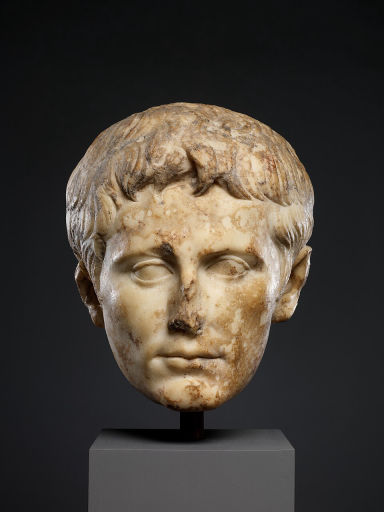
Rome’s first emperor who transformed civil war’s chaos into lasting institutions, propaganda, and an enduring imperial peace.
Conversation Starters
Life Journey
Born on the Palatine Hill into an equestrian family connected to the Julii through his mother Atia. His great-uncle Julius Caesar watched the talented boy’s rise in Rome’s fiercely competitive elite politics.
As a teenager he delivered a formal speech at his grandmother Julia’s funeral, displaying poise before Rome’s aristocracy. He was educated in rhetoric and leadership while observing the Republic’s growing factional violence.
After Caesar’s triumph in the civil war, Octavius received public recognition and opportunities typically reserved for older nobles. Caesar quietly drew him closer, signaling trust amid Rome’s shifting loyalties and power struggles.
While Octavius trained and traveled under Caesar’s patronage, Caesar finalized a will adopting him posthumously as Gaius Julius Caesar Octavianus. The decision positioned him to inherit a vast network of clients, money, and legitimacy.
After Julius Caesar was murdered on the Ides of March, Octavian rushed from Apollonia to Italy to claim his adoption and inheritance. He navigated a tense Rome where Marcus Antonius and the Liberators contested control of the state.
Octavian struck a legal power-sharing pact with Mark Antony and Marcus Lepidus, sanctioned by the Lex Titia. Their regime unleashed proscriptions to fund war, costing figures like Cicero his life and reshaping Rome through terror.
The Triumvirs defeated the Republican armies of Marcus Junius Brutus and Gaius Cassius Longinus, ending organized resistance to Caesar’s heirs. After the battle, Octavian and Antony divided the Roman world, deepening their rivalry.
Conflict erupted when Lucius Antonius and Fulvia challenged Octavian over veteran land confiscations, culminating in the siege of Perusia. The harsh settlement exposed the social costs of demobilization and Octavian’s resolve to dominate Italy.
To relieve grain shortages caused by Sextus Pompey’s naval blockade, Octavian negotiated a temporary settlement granting him territories. The truce bought time while Octavian rebuilt fleets and political support among Rome’s hungry populace.
With Agrippa’s naval skill, Octavian crushed Sextus Pompey at Naulochus, restoring sea lanes and grain supplies. Soon after, he sidelined Lepidus by accusing him of disloyalty, concentrating Western power in his own hands.
As Antony aligned with Cleopatra and promoted Caesarion, Octavian framed the conflict as Rome versus an Eastern queen. He secured Antony’s will and used it politically, turning the Senate and public opinion toward decisive confrontation.
Agrippa commanded Octavian’s fleet against Antony and Cleopatra off Actium, forcing their retreat and unraveling their coalition. The victory became a cornerstone of Octavian’s legitimacy, celebrated as the end of civil war and disorder.
Octavian entered Alexandria after Antony and Cleopatra’s suicides, seizing Egypt’s immense treasury and grain resources. He made Egypt his personal domain, carefully controlling access to protect Rome from rivals enriched by its wealth.
In the so-called First Settlement, Octavian theatrically returned powers to the Senate, then accepted supreme provincial commands. The Senate awarded him the name Augustus, masking monarchy with republican forms while he controlled armies and money.
After illness and political tension, Augustus resigned the consulship but gained tribunician power and greater imperium. These tools let him propose legislation, veto rivals, and command provinces, providing flexible authority without a crown.
Augustus promoted the Lex Iulia and related laws to encourage marriage, increase births, and punish adultery among elites. He cast the program as restoring mos maiorum, blending social control with a public narrative of renewal.
Augustus died after arranging succession for his stepson Tiberius, aiming to prevent renewed civil war. His body was brought to Rome for state honors, and his Res Gestae promoted a carefully curated account of his achievements.
The Ara Pacis Augustae was dedicated to commemorate peace after campaigns in Gaul and Spain, presenting Augustus as Rome’s benefactor. Its reliefs linked dynasty, religion, and civic harmony, reinforcing rule through art and ritual.
Three legions under Publius Quinctilius Varus were annihilated in the Teutoburg Forest by Arminius and allied Germanic forces. The defeat forced strategic retrenchment and haunted Augustus, who reportedly cried, 'Varus, give me back my legions!'
The Senate and people bestowed the honorific Pater Patriae, recognizing Augustus as guardian of the Roman state. The title crowned decades of careful image-making, balancing humility in speech with unmatched control in practice.