Quick Facts
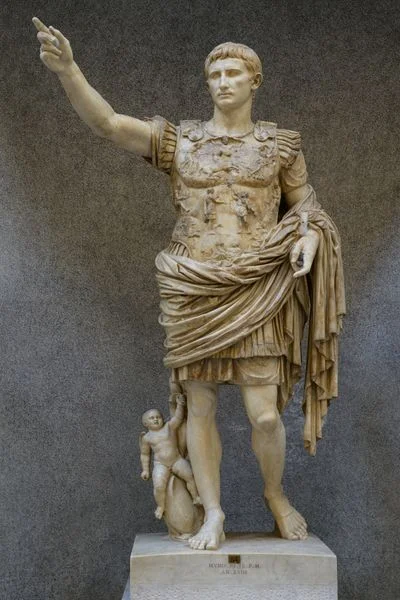
I found Rome brick, I leave it marble." First Roman Emperor.
Conversation Starters
Life Journey
The Senate, equestrian order, and people of Rome unanimously granted Augustus the title Pater Patriae, the highest honor recognizing his role in saving and rebuilding Rome.
After the deaths of his grandsons Gaius and Lucius, Augustus reluctantly adopted his stepson Tiberius as heir, securing the succession despite their difficult relationship.
After Lepidus's death, Augustus became chief priest of Roman religion, uniting political and religious authority. This title would be held by all subsequent emperors.
Augustus died peacefully on August 19, reportedly saying 'Have I played my part well?' The Senate deified him. His reign of 41 years transformed Rome from republic to empire.
The constitutional settlement of 23 BC gave Augustus tribunician power and superior imperium, creating the legal framework for imperial rule while respecting republican traditions.
The Senate conferred the honorific title 'Augustus' (the revered one), marking the symbolic beginning of the Roman Empire. He carefully maintained republican appearances while holding supreme power.
Following the suicides of Antony and Cleopatra, Octavian annexed Egypt as a Roman province, gaining immense wealth and eliminating the last threat to his power.
Octavian's forces, commanded by Agrippa, defeated the combined fleets of Antony and Cleopatra in a naval battle that decided the fate of the Roman world.
With his general Agrippa commanding the fleet, Octavian decisively defeated Sextus Pompey's naval forces, eliminating a major rival and securing grain supplies for Rome.
The triumvirs defeated Caesar's assassins Brutus and Cassius at Philippi. Though Antony led the military effort, Octavian secured his position as a legitimate avenger of Caesar.
Octavian formed the Second Triumvirate with Mark Antony and Lepidus, legally dividing control of Rome. This alliance was sealed by ruthless proscriptions that eliminated political enemies.
After Julius Caesar's assassination on the Ides of March, 18-year-old Octavian boldly traveled to Rome to claim his inheritance despite warnings, beginning his political rise.
Julius Caesar formally adopted Octavius in his will and named him heir. This adoption transformed the young man's destiny, making him Gaius Julius Caesar Octavianus.
At just twelve years old, Octavius delivered a public funeral speech for his grandmother Julia, demonstrating his early oratorical abilities and political presence.
After his father's death, young Octavius was raised by his grandmother Julia, sister of Julius Caesar, giving him close connections to the most powerful man in Rome.
Born on September 23 to Gaius Octavius and Atia Balba Caesonia. His great-uncle was Julius Caesar. Born into a wealthy equestrian family with political connections.