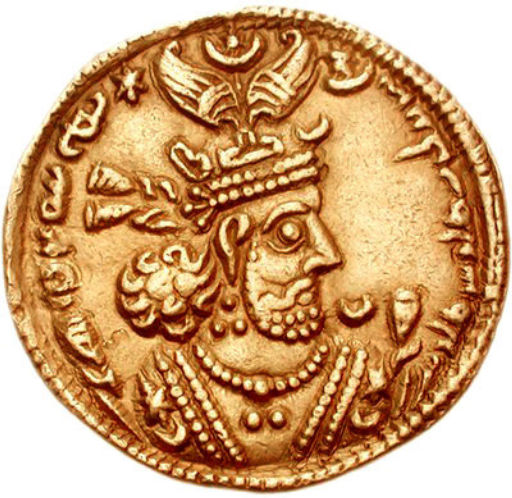
Quick Facts
Law and order: Darius built Persia, Royal Road, weights, and measures.
Conversation Starters
Life Journey
Darius was born around 550 BC into the Achaemenid royal family, son of Hystaspes, satrap of Parthia and Hyrcania. Though connected to the royal line through a cadet branch, he was not in the direct line of succession to the throne.
Young Darius received the traditional Persian education in riding, archery, and telling the truth. He trained in military arts and administration, preparing for a role in the imperial service as befitted his noble birth.
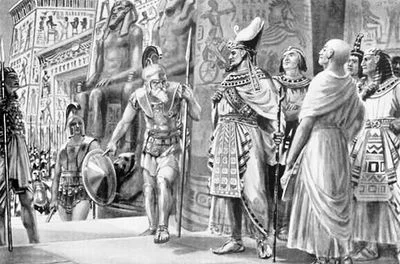
Darius accompanied King Cambyses II on his conquest of Egypt, serving as his lance-bearer, a prestigious position in the royal court. This campaign gave him valuable military experience and brought him close to the center of power.
When a Magian named Gaumata seized the throne claiming to be Cambyses' brother Bardiya, Darius joined six other Persian nobles in a conspiracy to overthrow him. This bold act would change the course of Persian history.
Darius and the conspirators killed Gaumata, and Darius was chosen as the new king. He claimed legitimacy through his descent from Achaemenes and marriage to Cyrus the Great's daughter Atossa, founding a new dynasty.
Darius faced rebellions across the empire as nineteen rebels claimed kingship. In a single year, he fought nineteen battles and captured nine kings, demonstrating his military genius and consolidating his power.
Darius commissioned the Behistun Inscription, carved on a cliff face in three languages, proclaiming his victories and right to rule. This massive monument remains a crucial source for understanding ancient Persian history.
Darius reorganized the empire into twenty satrapies, each with a governor, military commander, and tax collector. He standardized taxation and created an efficient bureaucracy that became a model for later empires.
Darius expanded the empire to its greatest extent by conquering territories in the Indus Valley. This eastern expansion brought enormous wealth and made the Achaemenid Empire the largest the world had yet seen.
Darius began building Persepolis, the ceremonial capital that would become the crown jewel of the Persian Empire. The massive complex of palaces, halls, and treasuries showcased the empire's wealth and power.
Darius led a massive army across the Bosphorus and Danube into Scythian territory. Though the Scythians refused pitched battle and the campaign achieved little, it demonstrated Persian ambitions in Europe.
Darius completed the Royal Road stretching from Susa to Sardis, over 2,500 kilometers with 111 post stations. This engineering marvel enabled rapid communication and troop movement across the vast empire.
Greek cities in Ionia, supported by Athens and Eretria, revolted against Persian rule. Darius eventually suppressed the revolt by 494 BC, but the Athenian involvement sparked his determination to punish Greece.
Darius sent an expedition to punish Athens and Eretria for supporting the Ionian Revolt. The Persian force was defeated by the Athenians at Marathon, a stunning setback that tarnished the empire's reputation for invincibility.
Determined to avenge Marathon and conquer Greece, Darius began massive preparations for a new invasion. He gathered troops and resources from across the empire, but death would prevent him from leading this campaign.
Darius died in October 486 BC while preparing his Greek campaign, possibly during a revolt in Egypt. His son Xerxes I inherited the throne and the unfinished war against Greece. Darius was buried at Naqsh-e Rostam near Persepolis.