Quick Facts
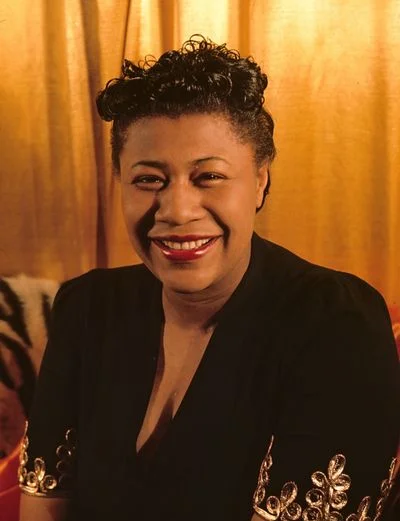
First Lady of Song," scat queen, voice that defined jazz.
Conversation Starters
Life Journey
Ella Jane Fitzgerald was born to William and Temperance Fitzgerald. Her parents were unmarried, and her father soon left the family. She would become known as the 'First Lady of Song' and one of the most influential jazz vocalists in history.
Ella moved with her mother and stepfather Joseph Da Silva to Yonkers, New York. She grew up in poverty but found joy in music, listening to jazz records and dreaming of becoming a dancer.
Ella's mother Temperance died from injuries sustained in a car accident. Ella was sent to live with her aunt in Harlem and later placed in a reform school after running numbers for a gambling ring.
Ella won first place at the Apollo Theater's Amateur Night, originally planning to dance but choosing to sing instead when she saw the previous dance act. Her rendition of 'Judy' and 'The Object of My Affection' launched her career.
Bandleader Chick Webb hired Ella to sing with his orchestra at the Savoy Ballroom. Webb became her legal guardian and mentor, helping her develop the vocal technique that would make her famous.
Ella co-wrote and recorded 'A-Tisket, A-Tasket,' which became a nationwide hit and sold over a million copies. The nursery rhyme adaptation showcased her innovative style and established her as a major star.
After Chick Webb's death from tuberculosis, Ella took over leadership of his orchestra, renaming it 'Ella Fitzgerald and Her Famous Orchestra.' She led the band for three years before going solo.
Ella married Benny Kornegay, a convicted drug dealer. The marriage was quickly annulled when she discovered his criminal background, though she later said she married him out of loneliness.
Ella began her long association with impresario Norman Granz, touring with Jazz at the Philharmonic. Granz became her manager and fiercely protected her from racial discrimination throughout her career.
Ella married renowned jazz bassist Ray Brown. They adopted a son, Ray Brown Jr., but divorced in 1953 due to the strains of their touring schedules, though they remained friends and occasional collaborators.
Norman Granz founded Verve Records largely to showcase Ella's talents. This began the most productive period of her career, including the legendary Songbook series that would define American popular music.
Ella released 'Ella Fitzgerald Sings the Cole Porter Songbook,' the first in her series of Songbook albums. These meticulously arranged recordings helped elevate popular songs to the status of American art.
Ella won her first Grammy Awards, taking home Best Female Vocal Performance and Best Individual Jazz Performance. She would go on to win 13 Grammys, more than any other female artist at that time.
Ella's legendary live recording of 'Mack the Knife' at the Berlin Deutschlandhalle became one of the most famous performances in jazz history. She famously forgot the lyrics and improvised brilliantly.
Despite changing musical tastes, Ella continued to record successfully and tour worldwide. She collaborated with Duke Ellington, Count Basie, and other jazz legends, maintaining her status as the premier jazz vocalist.
Ella underwent quintuple coronary bypass surgery, which temporarily slowed her career. Despite health challenges, she continued to perform, demonstrating the remarkable resilience that characterized her life.
Due to complications from diabetes, Ella had both legs amputated below the knee. This ended her performing career, and she spent her final years in Beverly Hills, largely out of the public eye.
Ella Fitzgerald died at her home in Beverly Hills from complications of diabetes. She left behind a legacy of over 200 albums and countless live recordings, forever earning her title as the 'First Lady of Song.'