Chumi
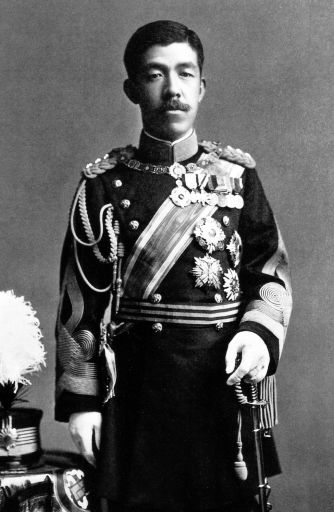
Emperor Taisho

Emperor Taisho

Emperor of Japan

Start Chat

AI Personality

Quick Facts

Reigning during the Taisho era
Taisho democracy and party government
Japan's participation in World War I

Life Journey

1879Born as Prince Yoshihito at the imperial residence

Born Prince Yoshihito during the reign of Emperor Meiji, he entered a court balancing ancient ritual with rapid modernization. His mother, Yanagihara Naruko, was a court lady, and his early years unfolded within Tokyo's tightly controlled palace world.

1880Entrusted to foster care outside the palace

In keeping with imperial custom, the young prince was raised for a time away from his birth mother, under the care of trusted guardians. The arrangement aimed to protect his upbringing and health, but his recurring illnesses soon worried court physicians and attendants.

1887Began formal education under court tutors

His schooling combined classical Japanese learning with new Meiji-era curricula that emphasized modern statecraft and military discipline. Tutors reported that fatigue and weakness often interrupted lessons, shaping expectations about how much public duty he could sustain.

1889Meiji Constitution promulgated as he came of age

The Meiji Constitution established a constitutional framework in which the emperor reigned as sovereign while cabinets and the Diet handled politics. Growing up under this system, Yoshihito was prepared for symbolic leadership even as real power increasingly flowed through institutions and parties.

1898Invested as Crown Prince of Japan

He was formally named Crown Prince, positioning him as the public face of dynastic continuity for a modernizing empire. Court ceremonies in Tokyo reinforced imperial prestige, but officials privately acknowledged that his health might limit travel and extended appearances.

1900Marriage to Princess Sadako of the Kujō family

He married Princess Sadako (later Empress Teimei), a daughter of the aristocratic Kujō house, strengthening ties within the court nobility. The union produced four sons, including Hirohito, and Sadako would later become a stabilizing figure amid concerns over his condition.

1901Birth of first son, Prince Hirohito

Their first son, Prince Hirohito, was born, securing the imperial succession at a time of rapid expansion and military reform. Courtiers and ministers treated the birth as reassurance that continuity would endure even if the Crown Prince's health deteriorated further.

1904Japan entered the Russo-Japanese War during his crown prince years

As Japan fought Russia, the Crown Prince served as a national symbol of unity while military leaders like Ōyama Iwao and Admiral Tōgō Heihachirō gained fame. The conflict amplified imperial legitimacy, yet Yoshihito's limited public role highlighted the court's dependence on ceremonies and proxy appearances.

1912Acceded to the throne as the Taisho Emperor

After Emperor Meiji's death, Yoshihito became emperor, and the era name changed to Taishō, signaling a new reign. Ministers, genrō elders, and the Imperial Household Agency sought to project stability while quietly adapting schedules to his fragile health.

1914Japan joined World War I on the Allied side

Japan entered World War I and moved against German holdings in East Asia, including the siege of Tsingtao. The Taishō court endorsed war aims as part of alliance diplomacy, while cabinet leaders used the moment to expand Japan's international standing and economic influence.

1915Government issued the Twenty-One Demands to China

Prime Minister Ōkuma Shigenobu's government pressed the Twenty-One Demands on Yuan Shikai's China, seeking extensive privileges. The episode stirred international suspicion and Chinese resentment, illustrating how policy was driven by cabinets and bureaucrats rather than the emperor's personal initiative.

1918Rice Riots erupted amid inflation and shortages

Nationwide Rice Riots broke out as wartime inflation raised food prices and strained urban and rural households. The unrest helped bring down the Terauchi Masatake cabinet and marked a turning point toward party-led government under Hara Takashi.

1919Japan at the Paris Peace Conference and League of Nations

Japan emerged as a major power at the Paris Peace Conference and became a founding member of the League of Nations. Debates over a proposed racial equality clause revealed both Japan's diplomatic ambitions and the limits imposed by Western opposition, shaping Taishō-era nationalism.

1921Crown Prince Hirohito appointed regent

As the emperor's health worsened, Crown Prince Hirohito was appointed sesshō (regent), transferring day-to-day imperial functions. The regency formalized what elites already practiced: using the throne as constitutional authority while governance flowed through cabinets, the Diet, and elder statesmen.

1923Great Kanto Earthquake devastated the capital region

The Great Kantō Earthquake destroyed large parts of Tokyo and Yokohama, killing many and triggering fires and social panic. Under the regency, the state coordinated relief and reconstruction, while the disaster intensified political tensions and fears of radicalism.

1925Universal manhood suffrage enacted during the regency

The General Election Law expanded voting rights to most adult men, a landmark associated with Taishō democracy and party politics. Passed alongside the Peace Preservation Law, it showed the era's dual track of political inclusion paired with tighter controls on dissent and leftist movements.

1926Death and transition to the Showa era

He died after years of illness, and Hirohito succeeded to the throne, inaugurating the Shōwa era. The imperial funeral rites in Tokyo blended court tradition with a modern state's pageantry, closing a reign remembered for cultural openness and shifting constitutional politics.

Chat