Quick Facts
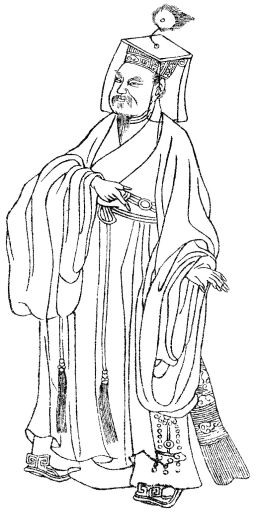
A fierce Tang dynasty essayist who championed classical prose, Confucian revival, and principled opposition to Buddhist influence.
Conversation Starters
Life Journey
Han Yu was born in Heyang in Henan, as the Tang court worked to restore authority after the An Lushan Rebellion. Growing up amid regional militarization and fiscal strain shaped his later belief that moral order underpinned political stability.
After losing close family members early, Han Yu relied on relatives and local teachers for education and support. The experience hardened his resolve to succeed through learning and to defend Confucian social obligations as a practical ethic.
As a young man he entered the orbit of Chang'an and Luoyang’s literati, seeking recognition through the civil service pathway. He studied canonical texts and refined an assertive prose style while navigating the competitive world of Tang officials.
Han Yu earned the prestigious jinshi degree, the key credential for advancement in Tang bureaucracy. The accomplishment opened doors to posts and patrons, but also placed him in a court culture where rhetoric, faction, and principle collided.
In early service he wrote forceful memorials and letters that criticized policy failures and moral laxity. His distinctive advocacy for clear, classical prose positioned him against ornate parallel style and earned both admirers and dangerous enemies.
Han Yu argued that guwen—plain, ancient-style prose—best conveyed ethical reasoning and sound statecraft. By linking style to Confucian substance, he attracted younger writers who saw literature as a tool for restoring public virtue.
He cultivated a network of protégés and allies, encouraging them to write with moral purpose and historical grounding. This circle helped spread his aesthetic and philosophical program beyond court politics into broader Tang intellectual life.
With shifting imperial leadership, policy priorities and factions realigned, affecting scholar-official careers. Han Yu used the moment to press for Confucian governance, warning that spiritual fads and rhetorical excess weakened state legitimacy.
Han Yu composed influential essays that defended Confucian transmission of the Way against what he saw as Buddhist and Daoist distortions. He framed learning as disciplined moral cultivation, not merely examination technique or clerical ritual.
During Xianzong’s efforts to curb powerful regional governors, Han Yu’s memorials emphasized central authority rooted in ethical norms. He argued that only principled governance could unify the realm after decades of militarized provincial autonomy.
When a Buddha relic was brought to court for public veneration, Han Yu warned Emperor Xianzong that state-sponsored devotion endangered Confucian order. The memorial enraged the court; he was stripped of rank and exiled far from the capital.
Posted to a harsh southern jurisdiction, he encountered unfamiliar climate, administrative challenges, and the realities of Tang frontier governance. The exile tested his resolve, yet he continued writing, turning personal danger into moral exempla.
After Xianzong’s death, political winds shifted and Han Yu’s sentence eased, allowing a return toward central service. His case became a cautionary tale about remonstrance, but also a symbol of integrity within the scholar-official ideal.
Back in government, he balanced administrative responsibilities with sustained advocacy of guwen and Confucian doctrine. His writings circulated among officials and students, shaping norms for memorial writing and essay composition across the empire.
By late life, Han Yu’s prose and polemics were widely copied, debated, and used as models for argumentation. His blend of sharp logic, historical allusion, and ethical urgency helped define what later critics called Tang classical mastery.
Han Yu died in the Tang capital region after decades of service, controversy, and literary innovation. Later generations canonized him as a master of prose and a forerunner to Neo-Confucian revival, influencing education and state ideology.