Quick Facts
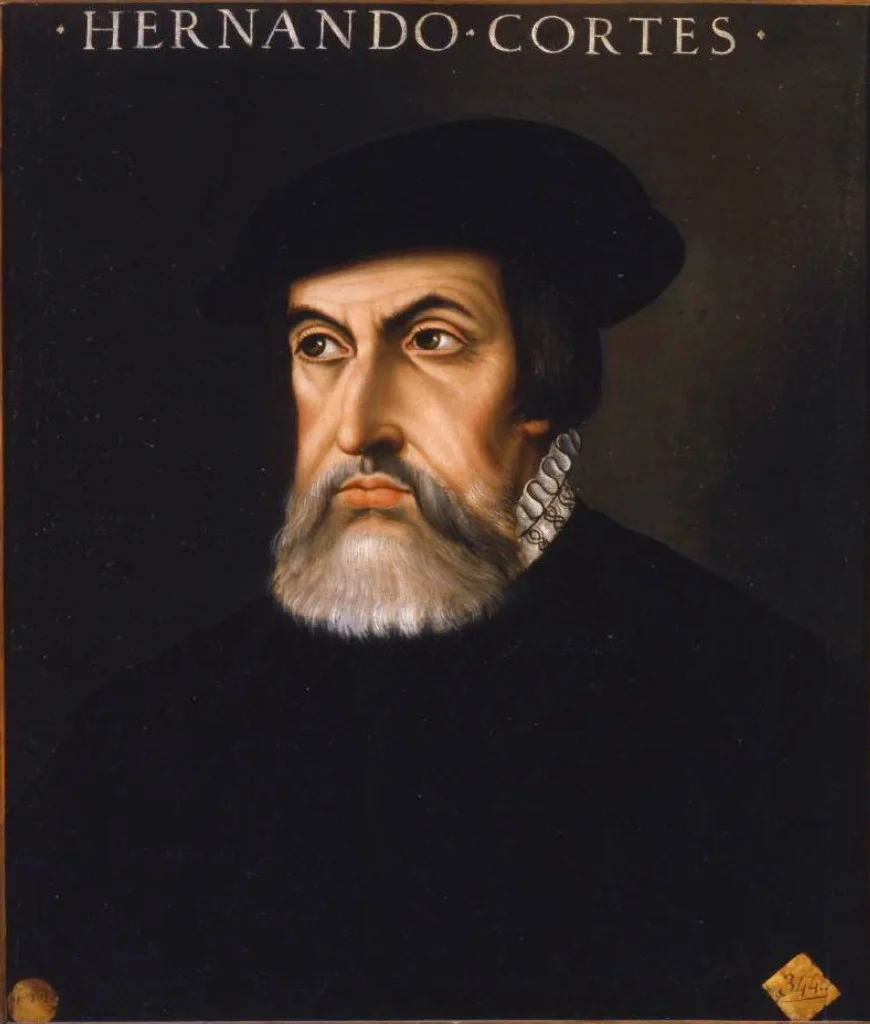
Conquistador who toppled the Aztec Empire with 500 men, horses, and audacity.
Conversation Starters
Life Journey
Hernan Cortes was born into a family of lesser nobility in southwestern Spain. His father was an infantry captain, and the family had modest means but good social standing.
Cortes was sent to study Latin and law at the University of Salamanca. Though intelligent, he found academic life tedious and returned home after two years.
Cortes sailed to Hispaniola seeking fortune in the New World. He registered as a citizen and received land and indigenous laborers through the encomienda system.
Cortes served under Diego Velazquez in the conquest of Cuba. He gained military experience and was appointed alcalde of Santiago, establishing himself in colonial administration.
Governor Velazquez appointed Cortes to lead an expedition to Mexico. However, suspicious of Cortes's ambitions, Velazquez tried to revoke the commission at the last moment.
Cortes landed on the Mexican coast and founded the city of Veracruz. He famously scuttled his ships to prevent any thought of retreat among his men.
After defeating the Tlaxcalans in battle, Cortes formed a crucial alliance with them. These indigenous allies would prove essential in the campaign against the Aztec Empire.
Cortes and his forces entered the Aztec capital as guests of Emperor Montezuma II. The Spaniards were awed by the city's size and sophistication, rivaling any in Europe.
The Spanish were driven from Tenochtitlan during a violent Aztec uprising. Cortes lost hundreds of soldiers and most of his treasure during the desperate nighttime retreat.
After a brutal 75-day siege, Tenochtitlan fell to Cortes and his native allies. The conquest ended the Aztec Empire and established Spanish dominion over Mexico.
King Charles V appointed Cortes as Governor and Captain-General of New Spain. He oversaw the rebuilding of Mexico City on the ruins of Tenochtitlan.
Cortes led a grueling overland expedition to Honduras to deal with a rebellious subordinate. The journey nearly killed him and damaged his reputation in Spain.
Cortes returned to Spain to defend himself against political enemies. Charles V received him honorably and granted him the title Marques del Valle de Oaxaca.
Cortes led an expedition that explored the Baja California peninsula. Though he found no riches, he established the first European settlement in California.
Cortes returned permanently to Spain, his influence in New Spain diminished by political rivals. He spent his final years seeking recognition and rewards from the Crown.
Cortes died near Seville while preparing to return to Mexico. His remains were eventually moved to Mexico City, where they rest today in a church he had founded.