Quick Facts
A pioneering Meiji-era painter who revitalized Nihonga with atmospheric realism, lyrical nature studies, and daring technique.
Conversation Starters
Life Journey
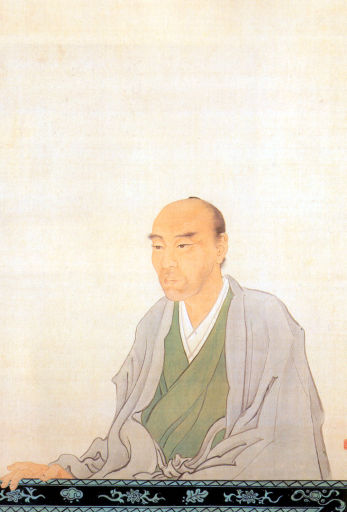
Born as Hishida Mitsuzō in Iida, Nagano, during Japan’s rapid Meiji modernization. The region’s mountains and seasonal light later informed his poetic landscapes and animal studies.
As a teenager he relocated to Tokyo to seek serious training in painting. The capital’s new schools and exhibitions exposed him to debates about tradition versus Western-style yōga.
He entered the Tokyo School of Fine Arts (Tōkyō Bijutsu Gakkō), a key Meiji institution for shaping modern Japanese art. There he studied under respected Nihonga masters and refined brush and pigment control.
He became a devoted student of Hashimoto Gahō, absorbing disciplined Kano-based drawing and composition. The studio emphasis on classical models gave him a foundation for later experimentation and soft-focus effects.
He drew the attention of Okakura Kakuzō (Tenshin), who advocated a renewed Japanese-style painting for a modern nation. This mentorship connected Shunsō to like-minded artists seeking new subjects and techniques.
He formed a crucial peer relationship with Yokoyama Taikan, another rising star of Nihonga. Their exchange of ideas pushed both toward bolder composition, atmospheric space, and modern exhibition strategies.
After completing his studies, he stayed in Tokyo where new salons and government-supported exhibitions shaped reputations. He worked intensively to distinguish his voice within a crowded field of emerging Nihonga talent.
He joined Okakura’s newly formed Japan Art Institute (Nihon Bijutsuin), created to advance innovative Nihonga outside conservative structures. The group’s exhibitions offered Shunsō a platform for daring, modern themes and technique.
He helped refine moro-tai, a style minimizing hard outlines to create misty atmosphere and volume. Critics sometimes attacked it as “blurry,” yet it offered a compelling Japanese alternative to Western realism.
He accompanied Okakura and colleagues on overseas travel that broadened his sense of global art currents. Museums and international audiences reinforced his goal: make Nihonga modern without abandoning Japanese materials and spirit.
Back in Japan, he intensified close observation of animals, trees, and weather, translating them into lyrical compositions. His controlled mineral pigments and subtle gradations made living forms feel present yet dreamlike.
In the early 1900s he created paintings that balanced solid structure with soft atmospheric edges. The combination of careful drawing and fog-like tonal transitions became a signature admired by younger Nihonga artists.
Regular Nihon Bijutsuin exhibitions elevated him as a central figure in the movement’s public identity. Reviews highlighted his sensitivity to light and texture, even as conservative critics questioned the new softness.
Years of strenuous work and chronic illness started to limit his stamina, yet he continued painting relentlessly. Friends in the Nihonga circle worried as he pushed through symptoms to meet exhibition deadlines.
He deepened his atmospheric method with richer layering that softened forms while preserving structure. The result was a quiet, enveloping space that made birds, cats, and autumn fields feel emotionally resonant.
Despite frail health, he remained an influential presence around the Institute and its exhibitions. His solutions for modern realism using Japanese pigments became practical lessons for the next generation.
He died young, ending a career that had helped reframe Nihonga as a living modern art. Colleagues like Yokoyama Taikan and admirers in Tokyo’s art world regarded his innovations as foundational for the movement.