Quick Facts
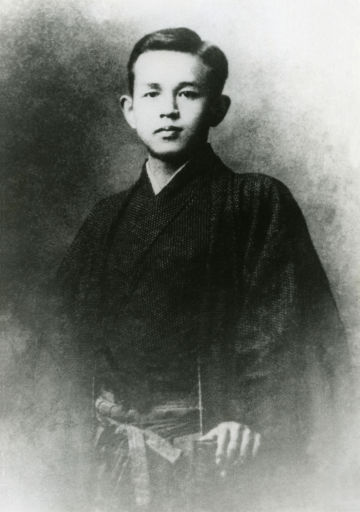
A fiercely candid modern Japanese poet whose tanka and diaries capture poverty, longing, and restless urban life.
Conversation Starters
Life Journey
He was born as Ishikawa Hajime in what is now Morioka, Iwate Prefecture, during Japan's rapid Meiji modernization. Raised in a Jodo Shinshu priest's family, he absorbed temple culture alongside new public schooling.
His family relocated to Shibutami, placing him amid rural northern life and harsh winters. The contrast between village poverty and Meiji-era ideals later became a recurring tension in his poems and notebooks.
As a gifted student, he began writing poetry and submitting pieces to local outlets, gaining early confidence. He devoured contemporary literature and started imagining a life in letters beyond the constraints of provincial society.
He sought broader horizons by leaving Iwate for study, pursuing contacts in literary communities. The decision strained finances and family relations, sharpening his lifelong sense of guilt, hunger, and aspiration.
He released 'Akogare,' a youthfully intense collection shaped by Romanticism and personal yearning. Appearing just after the Russo-Japanese War, it reflected a generation wrestling with modern identity and national change.
He took teaching posts but repeatedly clashed with institutions and resigned or was dismissed. The instability deepened debt and self-reproach, while daily observations of ordinary people began edging his style toward realism.
He married Ishikawa Setsuko, forming a household marked by affection, conflict, and chronic money trouble. His letters and later diaries reveal how domestic responsibilities intensified both his tenderness and his bitterness.
He relocated to Tokyo, throwing himself into journalism to survive in the capital's crowded modern life. The city’s poverty, street scenes, and political ferment gave him sharper subjects than the provincial world he left behind.
He worked at the Asahi Shimbun in a demanding proofreading role, learning discipline and the rhythms of mass print culture. Close contact with reporters and editors pushed him toward concise expression and topical awareness.
He began crafting tanka in an unusually colloquial, confessional voice, capturing fleeting sensations and moral unease. By treating the 31-syllable form as a diary of modern nerves, he helped reshape popular poetry in Japan.
The 1910–1911 High Treason Incident, which led to executions of anarchists like Kotoku Shusui, chilled political speech. In this climate he wrote with heightened social consciousness, balancing fear, sympathy, and self-censorship.
He published 'Ichiaku no Suna,' a landmark tanka collection that spoke bluntly of fatigue, desire, and shame. Its plain diction and urban sensibility made intimate suffering feel representative of a modern generation.
He followed with 'Kanashiki Gangu,' continuing to compress autobiography into sharp, singable tanka. The work’s emotional candor and attention to the poor and powerless broadened the social reach of short-form poetry.
Years of undernourishment, overwork, and stress worsened his tuberculosis, forcing periods of bedrest. Even as his body failed, he kept writing with urgency, recording pain and resentment alongside moments of calm clarity.
He died at twenty-six in Tokyo, his career cut short just as his influence was spreading. Friends and editors preserved his poems and diaries, which later defined him as a symbol of modern candor and vulnerable lyricism.