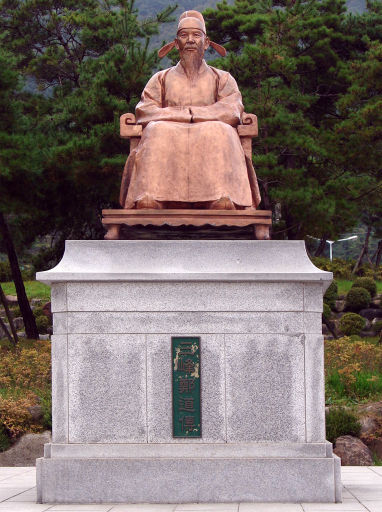
Informações rápidas
Arquiteto da arte de governar do Estado de Joseon, que fundiu ideais neoconfucionistas com reformas pragmáticas, remodelando os alicerces políticos da Coreia.
Iniciadores de conversa
Jornada de vida
Nasceu durante a turbulência do final de Goryeo, quando a influência mongol diminuía e facções competiam pelo poder. A sua origem familiar e a educação inicial colocaram-no no mundo dos eruditos-funcionários, moldado pelo estudo confucionista.
Em jovem, entrou em círculos que promoviam o neoconfucionismo de Zhu Xi como resposta à corrupção e instabilidade de Goryeo. Essas redes ligavam estudantes das províncias a elites reformistas na capital e em grandes academias.
Ganhou reconhecimento através dos exames gwageo, abrindo caminho para a vida oficial e para debates de política. O sucesso nos exames também o ligou a patronos e pares que mais tarde liderariam a coligação fundadora de Joseon.
Defendeu que abusos de terras e redes privadas de poder estavam a esvaziar as receitas do Estado e a confiança pública. Em memoriais e discussões, pressionou por uma administração central mais forte e por responsabilização moral entre os titulares de cargos.
Ao observar as propriedades de templos e o patronato da corte, sustentou que o budismo se tinha enredado em exploração fiscal. Os seus textos apresentaram a governação neoconfucionista como uma ética pública, e não apenas uma filosofia pessoal.
A política do final de Goryeo oscilava entre reformistas e facções conservadoras, e ele enfrentou afastamento e pressões à medida que alianças mudavam. Esses contratempos reforçaram a convicção de que eram necessárias mudanças institucionais sistémicas, e não correções pontuais.
Cultivou laços com Yi Seong-gye, um comandante militar em ascensão cuja influência crescia nas frentes do norte e do oeste. A parceria combinou autoridade militar com uma justificação ideológica para uma nova ordem política.
Quando Yi Seong-gye recuou da campanha de Liaodong em Wihwado, Jeong ajudou a enquadrar a decisão como um resgate do povo de uma guerra imprudente. O episódio acelerou o colapso da legitimidade de Goryeo e abriu caminho para a mudança dinástica.
Promoveu reformas destinadas a restaurar as finanças do Estado e a conter as propriedades privadas que dominavam a vida rural. Trabalhando com reformistas em torno de Yi Seong-gye, ajudou a articular políticas que mais tarde sustentariam a administração de Joseon.
Coordenou o apoio dos eruditos-funcionários a Yi Seong-gye, apresentando a arte de governar neoconfucionista como um mandato ético. Por meio de nomeações e persuasão, fortaleceu os laços entre reformistas, elites regionais e o centro emergente.
Com a entronização de Yi Seong-gye como rei Taejo, tornou-se um dos principais designers dos ideais de governo da nova dinastia. Defendeu instituições que disciplinassem o poder real por meio da lei, de ministérios e de uma burocracia moral.
Apoiou a transferência da capital para Hanyang para simbolizar a ruptura com Goryeo e melhorar a governação estratégica. O plano de mudança conciliou debates de geomancia com preocupações práticas, como defesa, logística e administração da corte.
Trabalhou na codificação de procedimentos para ministérios, nomeações, tributação e disciplina pública, com o objetivo de estabilizar o novo Estado. Os seus escritos de governação, associados a textos como o Joseon Gyeonggukjeon, procuravam regras previsíveis em vez de improvisação faccional.
Em obras associadas ao Bulssi Japbyeon, atacou a riqueza institucional budista e argumentou que ela enfraquecia a ética familiar e a responsabilidade do Estado. Pretendia redirecionar recursos para a educação, a agricultura e uma esfera pública moral confucionista.
Defendeu uma arquitetura política em que ministros e lei restringissem o arbítrio, moldando a forma como a sucessão deveria proteger a estabilidade institucional. Essa posição agravou o conflito com o príncipe Yi Bang-won, que procurava maior autoridade e influência real.
No golpe liderado por Yi Bang-won, rivais do príncipe foram visados para abrir caminho a uma nova sucessão. Jeong Do-jeon foi morto na violência que irrompeu na corte de Joseon, encerrando abruptamente o seu programa reformista.