Quick Facts
Predestination. Geneva's theocrat who made Protestantism a global force.
Conversation Starters
Life Journey
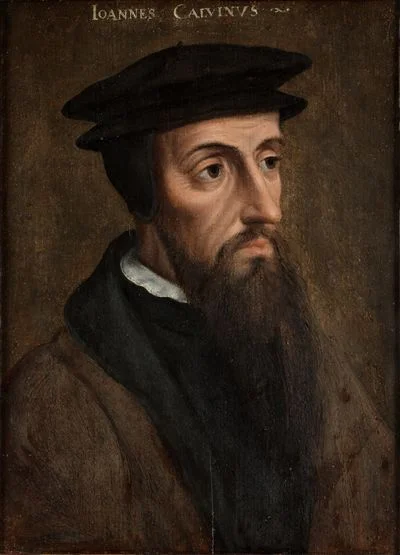
Jean Calvin was born to a prosperous family. His father was a notary for the local bishop.
Calvin received a church benefice at age twelve, funding his education as was common for talented youth.
Enrolled at the University of Paris to study theology at the College de la Marche and College de Montaigu.
Following his father's wishes, Calvin switched from theology to law at the University of Orleans.
Published commentary on Seneca's De Clementia, demonstrating his humanist scholarship and writing skill.
Calvin experienced what he called a sudden conversion to Protestant beliefs, breaking with the Catholic Church.
Escaped France after the Affair of the Placards made it dangerous for Protestant sympathizers.
Published first edition of Institutes of the Christian Religion, his masterwork of Protestant theology.
Farel convinced Calvin to stay in Geneva and help establish the Reformation there.
Calvin and Farel were expelled from Geneva over disputes about church discipline and autonomy.
Married Idelette de Bure, a widow with two children. Their only son died in infancy.
Geneva's government invited Calvin back. He returned and began restructuring the city's church and society.
Established the Ecclesiastical Ordinances governing Geneva's church structure with four offices of ministry.
His wife Idelette died after years of illness. Calvin remained a widower for the rest of his life.
Michael Servetus was executed for heresy in Geneva, a controversial event that marked Calvin's authority.
Established the Geneva Academy to train Protestant ministers, later becoming the University of Geneva.
Published the definitive final edition of the Institutes, greatly expanded from the original work.
Calvin died after prolonged illness. Per his wishes, he was buried in an unmarked grave.
Calvin founded Reformed Christianity, influencing Protestant churches worldwide with predestination theology.