Quick Facts
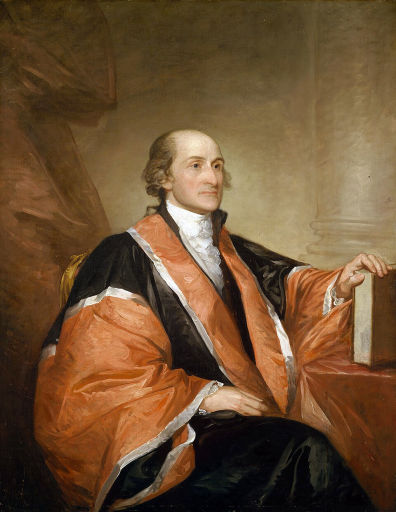
A principled American statesman who shaped early diplomacy, defended constitutional government, and established judicial independence as Chief Justice.
Conversation Starters
Life Journey
Born to Peter Jay and Mary Van Cortlandt Jay in colonial New York, he grew up in a family tied to trade and public service. The city’s cosmopolitan port culture and his Huguenot-Dutch roots shaped his outlook and networks.
He enrolled at King’s College (later Columbia University), studying classics, mathematics, and moral philosophy under an Anglican curriculum. The intellectual climate of New York and debates over empire helped form his early political instincts.
After graduating from King’s College, he read law in the office of Benjamin Kissam, a leading New York attorney. The apprenticeship immersed him in commercial disputes and colonial governance, preparing him for public leadership.
He was admitted to the bar and quickly built a respected practice serving merchants and landholders. His careful reasoning and reputation for integrity brought him into elite civic circles as imperial tensions deepened after the Stamp Act era.
As resistance escalated, he became active in New York’s committees and was chosen as a delegate to the First Continental Congress. In Philadelphia, he favored firm constitutional arguments against Parliament while still seeking a lawful settlement.
During the upheaval of independence, he played a major role in shaping New York’s 1777 constitution, emphasizing balanced government and the rule of law. The document organized wartime authority while guarding against unchecked power in Albany.
He became New York’s first Chief Justice, overseeing courts during a period of invasion threats and political suspicion. The post demanded legal steadiness as Loyalist property cases and wartime security concerns tested the new state’s institutions.
Chosen to preside over the Continental Congress, he managed diplomacy, finance, and coordination with General George Washington’s army. Though the office had limited executive power, he helped sustain national direction amid shortages and factional disputes.
He was sent as U.S. minister to the Spanish court, aiming to secure recognition, funds, and support against Britain. In Madrid, he negotiated under tight secrecy and encountered Spanish reluctance over American claims to the Mississippi River.
He traveled to Paris to join Benjamin Franklin and John Adams in negotiating peace with Great Britain. Insisting on direct talks rather than exclusive reliance on France, he helped secure favorable terms on boundaries and independence recognition.
He signed the Treaty of Paris (1783), formally ending the war and establishing U.S. independence with expansive territorial boundaries. The agreement reflected hard bargaining over fisheries, debts, and Loyalist claims in a volatile postwar climate.
Returning home, he served as Secretary for Foreign Affairs, trying to manage trade conflicts and western issues with limited federal authority. Frustrated by the Articles of Confederation, he argued for a stronger national government to protect credibility.
During the ratification struggle, he collaborated with Alexander Hamilton and James Madison on The Federalist Papers. His essays defended union and stable constitutional government, even after an injury from a street attack curtailed his public appearances.
George Washington appointed him the first Chief Justice, and he helped establish the Supreme Court’s procedures and authority in the new federal system. Riding circuit and hearing early cases, he emphasized impartial justice and national legal coherence.
Sent to London as special envoy, he negotiated the Jay Treaty to resolve disputes over forts, debts, and trade after the Revolution. Though denounced by critics as too pro-British, the agreement stabilized relations and protected fragile American commerce.
Elected governor, he administered a rapidly growing state and supported internal improvements and public order. He backed gradual emancipation policies and used the office to press for reforms that aligned civic stability with a moral opposition to slavery.
In retirement, he became the first president of the American Bible Society, promoting widespread distribution of scriptures. The role reflected his belief that civic virtue and education undergirded republican government in a rapidly expanding nation.
He died at his family farm after decades of service in law, diplomacy, and statecraft from the Revolution through the early republic. As a founder of U.S. judicial and diplomatic traditions, his legacy endured in constitutional governance.