Quick Facts
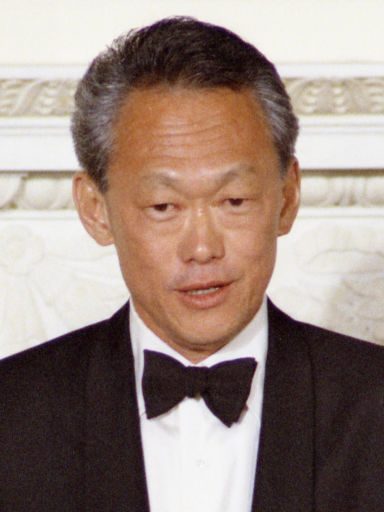
Singapore’s nation-building prime minister who fused hard-nosed pragmatism, clean governance, and long-term economic planning into global influence.
Conversation Starters
Life Journey
Born in Singapore to a Straits-born Chinese family during the British colonial era. His early upbringing in a multicultural port city shaped his emphasis on order, education, and meritocratic advancement.
He lived through the Japanese occupation of Singapore, witnessing scarcity, fear, and the collapse of British authority. The experience hardened his belief that security and effective governance were prerequisites for national survival.
After World War II, he traveled to Britain to study law, immersing himself in debates on decolonization and self-government. He began forming networks and arguments that later anchored his anti-colonial political strategy.
He completed law at the University of Cambridge, earning high distinctions and recognition for disciplined study. The intellectual rigor and exposure to British institutions influenced how he later designed Singapore’s civil service and courts.
Back in Singapore, he practiced law and became known for sharp courtroom advocacy and organizing skill. He also worked closely with trade unions, learning mass politics and the realities of working-class grievances.
He co-founded the People’s Action Party with colleagues including Toh Chin Chye and Goh Keng Swee, aiming to win self-government. The party blended anti-colonial nationalism with disciplined organization and a focus on clean administration.
He won a seat in the Legislative Assembly, quickly emerging as a formidable opposition voice. His speeches targeted colonial limits and corruption, while building credibility as a leader who could govern, not merely protest.
After the PAP’s electoral victory, he became Prime Minister, leading a new self-governing administration under British oversight. He prioritized disciplined civil service, housing, and jobs to build legitimacy among a diverse population.
Internal conflicts with left-wing factions escalated, reshaping Singapore’s political landscape and union alliances. He pushed for a tighter, security-focused state, arguing communist influence threatened stability and economic confidence.
Singapore entered the Federation of Malaysia alongside Malaya, Sabah, and Sarawak, seeking a larger common market and security. The move unfolded during Konfrontasi, as Indonesia opposed the new federation and regional politics turned volatile.
After intense political and communal disputes, Singapore separated from Malaysia and became an independent republic. He addressed the nation with visible emotion, then turned to urgent tasks: security, jobs, housing, and diplomatic recognition.
His government established National Service and strengthened the Singapore Armed Forces to deter threats after British withdrawal. He emphasized disciplined institutions, rule enforcement, and a professional bureaucracy to compensate for small size.
Singapore deepened export-led growth by courting multinational firms and expanding industrial parks via the Economic Development Board. He worked with leaders like Goh Keng Swee to align wages, skills training, and infrastructure with investment needs.
The opposition won a parliamentary seat in a by-election, signaling rising political diversity and public scrutiny. He responded by tightening performance standards and emphasizing that legitimacy depended on delivery, not rhetoric.
He resigned as Prime Minister after three decades and transferred leadership to Goh Chok Tong in a carefully managed succession. Remaining in cabinet, he aimed to preserve policy continuity while mentoring the next generation of leaders.
He published the first volume of his memoirs, recounting decolonization, union politics, and the high-stakes decisions around Malaysia. The book strengthened his reputation as a strategic realist and offered an insider view of state-building.
When Lee Hsien Loong became Prime Minister, he took the role of Minister Mentor, advising on governance and long-term strategy. His influence remained significant, especially on international affairs and the importance of institutional integrity.
He left the cabinet, marking the end of his formal executive role after more than half a century at the center of power. Public debate increasingly reassessed his legacy, praising prosperity while questioning limits on dissent.
He died after a prolonged illness, prompting a massive public mourning period and international tributes from leaders worldwide. State ceremonies reflected his central role in shaping Singapore’s institutions, economy, and global standing.