Quick Facts
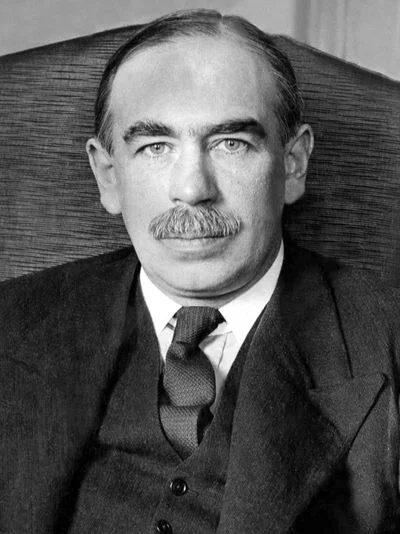
Invented macroeconomics. Economist who saved capitalism from itself.
Conversation Starters
Life Journey
John Maynard Keynes was born to an academic family. His father was an economics lecturer at Cambridge.
Won a scholarship to Eton College, excelling in mathematics and developing interests in history and classics.
Entered King's College Cambridge to study mathematics, later shifting focus to economics.
Elected to the secret intellectual society Cambridge Apostles, forming lifelong friendships with Bloomsbury figures.
Entered the India Office after placing second in the civil service examination, beginning his government career.
Returned to Cambridge as an economics lecturer, funded by his mentor Alfred Marshall.
Became editor of the Economic Journal, a position he held for over 30 years shaping economic discourse.
Published Indian Currency and Finance, establishing his reputation as an expert on international monetary systems.
Joined the Treasury as war began, advising on war finance and becoming a key government economist.
Attended Versailles as Treasury representative but resigned in protest over harsh German reparations.
Published his critique of Versailles, predicting economic catastrophe from punitive reparations. It became a bestseller.
Married Russian ballerina Lydia Lopokova despite Bloomsbury friends' initial disapproval. A happy marriage ensued.
Published A Treatise on Money, developing his theories on monetary economics and business cycles.
Published The General Theory of Employment, Interest and Money, revolutionizing macroeconomics.
Suffered a serious heart attack but continued working on wartime economic policy despite poor health.
Instrumental in founding the Arts Council of Great Britain, reflecting his commitment to cultural patronage.
Led British delegation at Bretton Woods, helping design the postwar international monetary system.
Keynes died of heart failure at his country home, exhausted from wartime service and loan negotiations.
Keynes revolutionized economic thinking, with Keynesian economics influencing government policy worldwide.