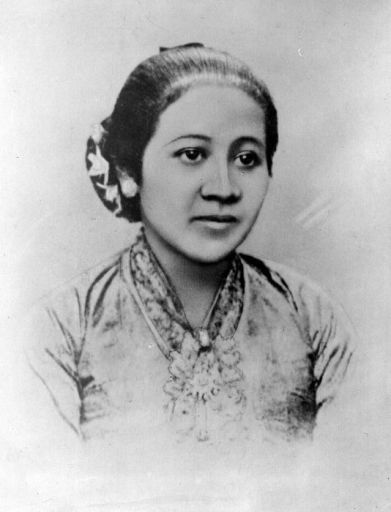
Quick Facts
A pioneering Javanese reformer who championed girls’ education and women’s rights under Dutch colonial rule.
Conversation Starters
Life Journey
Born as Raden Adjeng Kartini to Raden Mas Adipati Ario Sosroningrat, a Jepara regent, and Ngasirah. Growing up in a priyayi household exposed her to Dutch colonial administration and strict Javanese court etiquette.
She attended a Europese Lagere School, learning Dutch alongside a small number of elite Javanese children. This early schooling opened access to European books and ideas uncommon for girls in colonial Java.
As she approached adolescence, Kartini was confined at home under pingitan, a tradition preparing noble girls for marriage. The isolation sharpened her awareness of how custom limited women’s freedom and education.
During seclusion she read Dutch newspapers, novels, and reformist writings, building a private intellectual world. She refined her Dutch prose and began drafting letters that questioned gender inequality and colonial hierarchies.
Kartini began sustained exchanges with Dutch acquaintances such as Rosa Abendanon, connecting her to European feminist and ethical debates. The letters became a lifeline, letting her test ideas despite social restrictions at home.
She argued that educating women would uplift families and society, not merely individuals, challenging prevailing assumptions in colonial Java. Her writing linked literacy, economic dignity, and moral agency for Javanese girls.
Her correspondence reached J.H. Abendanon, Director of Education, Religion, and Industry in the Dutch East Indies, who took her ideas seriously. Kartini’s critiques aligned with emerging Ethical Policy discussions about reform and “welfare” in the colony.
Kartini considered advanced education and teacher training, hoping to gain tools to build schools for girls. Negotiating permission within aristocratic family expectations revealed how reform required both strategy and patience.
She wrote about early marriage, polygamy, and the constrained legal status of women, tying these issues to social progress. Her letters balanced respect for Javanese culture with a sharp insistence on dignity and choice.
Kartini married Raden Adipati Joyodiningrat, the Regent of Rembang, in an arranged union typical of priyayi politics. In her new household, she sought ways to keep advancing education for girls while navigating court protocol and public scrutiny.
With support from her husband and family, she organized instruction for local girls, emphasizing literacy, practical skills, and confidence. The effort modeled how women-led education could operate even within colonial and aristocratic constraints.
Kartini’s only child, Soesalit, was born as she continued to manage household duties and educational ambitions. Motherhood deepened her belief that educated women could shape healthier, more resilient families and communities.
She died at just twenty-five, likely from complications following delivery, ending a brief but influential life. Her passing shocked her correspondents and reform-minded officials who had seen her as a rare bridge between worlds.
J.H. Abendanon compiled and published her Dutch letters, presenting Kartini’s voice to a wide European audience. The book framed her as a moral and intellectual critic of injustice, inspiring debates about education and colonial responsibility.
Educational initiatives labeled “Kartini Schools” expanded for Javanese girls, linking her reputation to practical institutional change. Though shaped by colonial policy, these schools helped normalize the idea that girls deserved formal learning.
After Indonesian independence, Kartini’s life and writings were reinterpreted as part of a broader struggle for dignity and modern nationhood. Her emphasis on education and conscience resonated with leaders promoting social reform and unity.
Indonesia officially recognized 21 April as Kartini Day, encouraging schools and civic groups to honor women’s empowerment. The commemoration cemented her as an enduring reference point for debates on equality, tradition, and progress.