Quick Facts
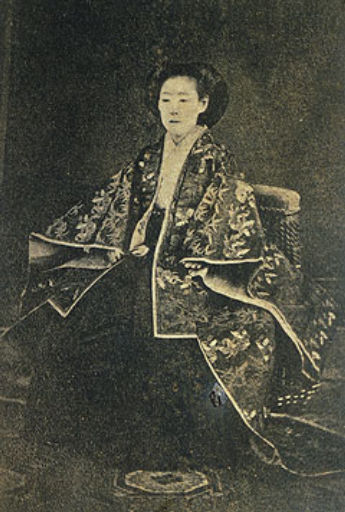
An imperial princess whose political marriage to the shogun symbolized uneasy unity during Japan’s turbulent Bakumatsu era.
Conversation Starters
Life Journey
Born in the Kyoto Imperial Palace as a daughter of Emperor Ninkō, she entered a court defined by ritual, poetry, and rank. Her early world was insulated, yet Japan faced mounting foreign pressure after Western naval incursions.
Tutors and court ladies trained her in waka poetry, calligraphy, and formal etiquette central to the Heian-derived imperial tradition. These skills later shaped her public image as a refined princess amid political upheaval.
The Ansei Treaties signed by the Tokugawa bakufu intensified court–shogunate friction and stirred anti-foreign activism. In Kyoto, imperial politics hardened, setting the stage for using marriage as a tool of national alignment.
As supporters of Kōbu gattai sought reconciliation between Kyoto and Edo, proposals emerged to marry her to Shogun Tokugawa Iemochi. The plan aimed to stabilize governance while domains like Satsuma and Chōshū challenged bakufu authority.
Despite reluctance and court resistance, she accepted marriage to the young shogun as an act of imperial-bakufu statecraft. The agreement included provisions for her courtly status and attendants, reflecting Kyoto’s insistence on dignity and influence.
Her journey along the Tōkaidō drew extraordinary attention, with guards, officials, and onlookers treating it as a public symbol of unity. The move also signaled that imperial authority was reasserting visibility in national politics.
Inside Edo Castle, she navigated the Ōoku’s hierarchy, rivalries, and strict protocol overseen by senior ladies. Her imperial prestige altered the balance of influence, compelling bakufu household officials to accommodate Kyoto customs and rank.
As calls to “revere the emperor, expel the barbarians” spread, violence and factionalism destabilized the shogunate’s legitimacy. Her position became a delicate bridge, with messages and expectations flowing between Emperor Kōmei’s court and Edo leaders.
Events such as the Kinmon Incident and clashes involving Chōshū exposed the fragility of political compromise. In Edo, she maintained ceremonial steadiness, while the shogunate faced rising military and diplomatic crises with foreign powers.
With Tokugawa Iemochi’s youth and the bakufu’s weakening authority, her imperial connection offered a rare source of moral capital. Courtly rituals, correspondence, and carefully staged appearances helped project continuity amid accelerating change.
Iemochi died in Osaka while the bakufu confronted military pressure and instability, leaving her widowed at a pivotal national moment. His death weakened the alliance strategy and hastened succession struggles that soon pulled Japan toward revolution.
Following custom for elite widows, she became a nun under the title Seikan-in, signaling withdrawal from marital status while retaining stature. The new identity allowed her to maintain networks and moral authority without direct political office.
The death of Emperor Kōmei and the rise of Emperor Meiji coincided with Tokugawa Yoshinobu’s weakening position and moves toward restoring imperial rule. As an imperial-born Tokugawa widow, she embodied the contradictions of a country in transition.
With imperial forces advancing, Saigō Takamori and Katsu Kaishū negotiated Edo’s peaceful surrender to avoid mass bloodshed. Amid the collapse of the Ōoku’s world, she worked to preserve dignity and safety for Tokugawa household members.
After the Tokugawa were relocated and redefined under the new Meiji state, she remained a respected figure associated with restraint and continuity. Her courtly presence helped manage social transitions for former bakufu affiliates adjusting to the new order.
In the new era’s rapid modernization, she continued composing waka and sustaining refined court practices among former retainers and ladies-in-waiting. These activities preserved a living link to late Edo elite culture amid sweeping institutional change.
As Japan centralized authority and dismantled old class structures, her personal health reportedly weakened, limiting public visibility. Even so, her life story increasingly served as a remembered emblem of the attempted court–shogunate reconciliation.
She died in Tokyo during the same year as the Satsuma Rebellion, a final convulsion of samurai-era conflict in the new Japan. Her death closed a life that had been shaped by diplomacy, duty, and the collapse of Edo governance.