Quick Facts
Kushite warrior-king who conquered Egypt, founding the Twenty-fifth Dynasty and uniting the Nile Valley under Nubian rule for the first time.
Conversation Starters
Life Journey
Piye was born into the royal family of the Kingdom of Kush at Napata, near the sacred mountain of Gebel Barkal. His family had ruled Kush for generations, maintaining strong connections to Egyptian religious traditions and the worship of Amun.
Young Piye received his royal education at the great temple complex of Amun at Gebel Barkal. He studied Egyptian hieroglyphics, religious texts, military strategy, and the administration of a kingdom, preparing him for future rule.
Piye completed his military training, mastering chariot warfare, archery, and cavalry tactics that would later prove decisive in his Egyptian campaigns. The Kushite army was renowned for its skilled archers and disciplined infantry.
Piye succeeded his father Kashta as king of Kush, inheriting a kingdom that already controlled Upper Egypt to Thebes. He immediately began consolidating power and planning for the eventual unification of the entire Nile Valley.
Piye installed his sister Amenirdis I as the 'Divine Adoratrice of Amun' at Thebes, a position of immense religious and political power. This strategic move strengthened Kushite influence over Upper Egypt and its powerful priesthood.
Tefnakht, ruler of Sais in the Nile Delta, formed a coalition of Lower Egyptian princes and began expanding southward, threatening Kushite-controlled Upper Egypt. This challenge would ultimately trigger Piye's great military campaign.
Learning that Tefnakht had captured Hermopolis and was besieging Herakleopolis, Piye dispatched his army northward. When initial forces proved insufficient, he personally led reinforcements, determined to crush the rebellion completely.
Piye's forces decisively defeated Tefnakht's coalition at Herakleopolis after a brilliant river campaign. The Kushite navy destroyed the enemy fleet while the army routed their land forces, opening the path to the Delta.
Piye besieged Hermopolis, where King Nimlot had allied with Tefnakht. After the city's surrender, Piye famously visited the royal stables first, enraged that the horses had been starved during the siege - revealing his deep love for horses.
Piye captured the ancient capital of Memphis after a daring assault during the Nile flood. His troops scaled the walls using ships brought close by the high waters, taking the heavily fortified city in a stunning military feat.
Following the fall of Memphis, the Delta kings submitted to Piye one by one. Even the defiant Tefnakht eventually sent emissaries to swear allegiance, though he never appeared in person. Piye had unified Egypt under Kushite rule.
Piye made a pilgrimage to the great sun temple at Heliopolis, performing rituals to Ra as the legitimate pharaoh of Egypt. This religious act was crucial to legitimizing his rule in the eyes of the Egyptian priesthood and population.
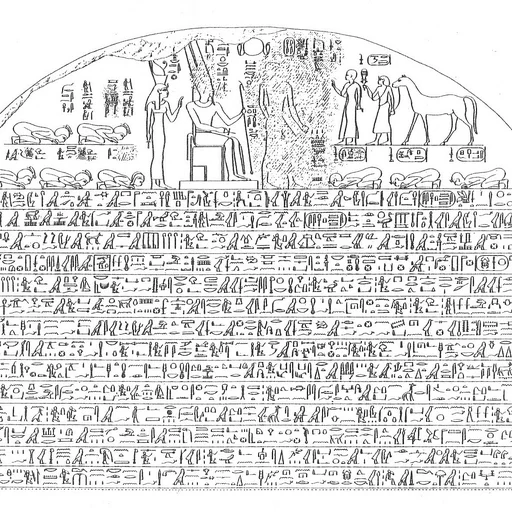
Piye commissioned the famous Victory Stele at Gebel Barkal, one of the longest texts from ancient Egypt. Written in elegant hieroglyphics, it details his entire campaign with remarkable candor, including both military triumphs and personal emotions.
After his triumphant campaign, Piye returned to his beloved capital of Napata, leaving Egypt under the rule of local vassals who acknowledged his supremacy. He preferred his homeland to ruling directly from Egypt.
Piye devoted considerable resources to expanding and beautifying the temple of Amun at Gebel Barkal. His building projects demonstrated his deep piety and desire to honor the god he credited with his military victories.
In his later years, Piye ensured a smooth succession by designating his brother Shabaka as his heir. He also arranged for his sons to hold important positions, maintaining family control over the unified Nile Valley kingdoms.
Piye celebrated over three decades of rule, during which he had transformed Kush from a regional power into the ruler of the entire Nile Valley. His reign marked the peak of Kushite power and influence in the ancient world.
Piye died after a reign of approximately forty years and was buried in a pyramid at El-Kurru, the royal cemetery of the Kushite kings. His horses, which he had loved dearly, were buried standing in a nearby tomb with full honors.