Quick Facts
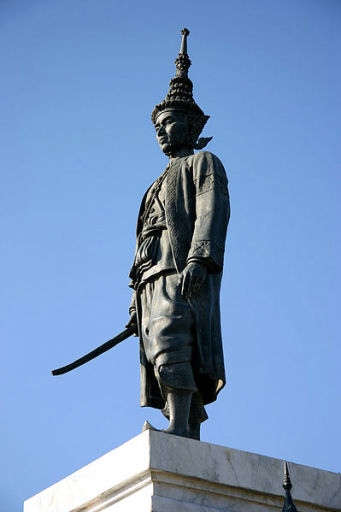
Visionary Siamese monarch who modernized diplomacy, welcomed global trade, and navigated intense court politics in Ayutthaya.
Conversation Starters
Life Journey
Born into the elite circles of the Ayutthaya Kingdom during an era of booming regional commerce. Court intrigue, rival princes, and foreign merchant communities shaped the political world he would later rule.
As a young prince, he studied Buddhist kingship ideals, palace administration, and the etiquette of royal audiences. Exposure to Persian, Chinese, and European traders in Ayutthaya broadened his sense of global power.
He became king after a violent succession struggle in the Ayutthaya court, consolidating authority over rival factions. Early in his reign he emphasized stability, revenue collection, and control of key officials and ports.
He strengthened the crown’s role in regulating overseas commerce that flowed through Ayutthaya’s river ports. Dutch, Persian, and Chinese merchant networks competed for privileges, prompting careful negotiations and taxation policies.
He developed Lopburi as a strategic inland center, reducing vulnerability to river-based threats and court pressures. The city’s palaces and ceremonial spaces reinforced his image as a powerful, mobile monarch.
The Dutch East India Company sought stronger monopolies and leverage over Siam’s trade. Narai navigated coercive tactics and treaty demands while trying to preserve autonomy and keep multiple foreign partners in competition.
Catholic missionaries and European representatives increasingly appeared at court, bringing maps, scientific instruments, and political proposals. Narai treated them as diplomatic channels and sources of knowledge rather than mere guests.
He used appointments, ceremonies, and royal gifts to bind nobles and officials to the throne. By rewarding loyalty and rotating responsibilities, he reduced the risk of powerful families building independent factions.
Constantine Phaulkon, a Greek adventurer linked to foreign trade networks, rose into royal service through linguistic skill and commercial expertise. Narai relied on him for negotiations and for navigating European diplomatic styles.
Seeking balance against Dutch dominance, Narai explored closer ties with France under King Louis XIV. French merchants, missionaries, and diplomats offered alliance talk, military assistance, and prestige at the global stage.
A high-profile French mission arrived with lavish gifts and proposals linking Siam to Louis XIV’s court and Catholic networks. Narai hosted complex audiences and negotiations that displayed Ayutthaya’s wealth and diplomatic sophistication.
Siamese envoys traveled to France, drawing European attention to Ayutthaya’s monarchy and trade potential. Their reception at Versailles symbolized Narai’s ambition to engage world powers as near-equals in diplomacy.
French military forces were stationed in sensitive areas, reflecting the high-risk bargaining of late Narai diplomacy. The move inflamed suspicion among Siamese nobles who feared foreign control and Phaulkon’s growing influence.
As Narai fell gravely ill, a faction led by Phra Phetracha seized power, arrested Phaulkon, and attacked pro-French policies. Foreign garrisons were pressured, and the court shifted toward expelling French influence from Siam.
Narai died during the coup period, with succession contested and court alliances collapsing around him. His death marked the end of an outward-facing diplomatic era and the start of a more guarded policy toward Europeans.
After his reign, Ayutthaya elites reassessed the risks of deep European military involvement while keeping trade alive through controlled channels. Narai’s reign remained a benchmark for cosmopolitan diplomacy and fragile court politics.