Quick Facts
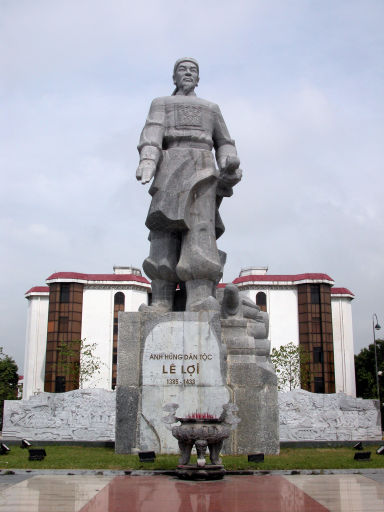
A village magnate turned liberator-king who led Vietnam’s Lam Son uprising to expel Ming rule and restore independence.
Conversation Starters
Life Journey
Born in Lam Son, Thanh Hoa, into a locally influential family during the late Tran-era turmoil. The frontier setting and regional networks later helped him gather followers and supplies for resistance.
As the Ho dynasty replaced the Tran, central authority weakened and factional conflict spread across Dai Viet. The unrest shaped his view that local leadership and military organization were essential for survival.
Ming forces defeated Dai Viet and imposed direct administration, extracting labor and resources while suppressing local elites. The occupation radicalized many communities and created the conditions for armed resistance leaders.
He quietly built alliances among Thanh Hoa clans, veterans, and mountain communities, stockpiling rice, weapons, and horses. These preparations created a durable rear base for a long war against Ming garrisons.
At Lung Nhai, he and key companions swore an oath of mutual loyalty, binding the movement’s leadership together. The pledge helped coordinate recruitment, discipline, and strategy across scattered rebel bands.
He raised the banner of revolt in Lam Son and declared himself Binh Dinh Vuong, signaling a national cause against Ming rule. Early campaigns were harsh, forcing his forces into mobile warfare and survival tactics.
Ming counterattacks pushed the rebels into forests and mountains, where supply shortages threatened collapse. He reorganized units, relied on local support, and used ambushes to erode enemy control over the countryside.
He cultivated ties with upland groups and neighboring power brokers, turning terrain knowledge into strategic advantage. These alliances broadened manpower and improved intelligence on Ming movements and vulnerable outposts.
Facing exhaustion, he pursued a pause in fighting that allowed time to recruit, farm, and rearm. The breathing space helped the Lam Son leadership refine strategy and prepare for a renewed, larger offensive.
He shifted operations into Nghe An, taking key positions and cutting Ming supply lines away from the Red River heartland. The campaign transformed the rebellion from survival to expansion, attracting new recruits and officials.
Rebel forces consolidated Thanh Hoa and pushed control southward, weakening Ming-held corridors and isolating garrisons. The widening base provided粮, taxes, and troops, enabling sustained multi-front operations.
He sent armies north toward the Red River Delta, aiming to encircle Ming strongholds and encourage uprisings. The push brought the struggle to the political center and forced the Ming court to commit major reinforcements.
Rebel victories against Ming relief armies shattered hopes of an easy reconquest and tightened the siege around key cities. The defeats pressured commanders to negotiate, while Vietnamese morale and recruitment surged.
With strategist Nguyen Trai shaping proclamations and correspondence, he offered terms that allowed an orderly withdrawal and reduced further devastation. The settlement ended formal Ming occupation and restored Vietnamese autonomy.
He ascended the throne as Le Thai To, re-establishing a Vietnamese monarchy after two decades of upheaval. His court promoted rebuilding administration, rewarding loyalists, and reasserting legitimacy across provinces.
The new regime standardized offices, issued appointments, and distributed lands and titles to key supporters to stabilize rule. He also worked to curb warlordism by integrating commanders into a central hierarchy.
His policies emphasized restoring agriculture, repairing local governance, and repopulating devastated areas through resettlement. The priority was to revive tax capacity and social order without reigniting factional conflict.
He died with the Later Le state largely stabilized, leaving successors a functioning court and a renewed claim to national independence. His legacy endured as a model of liberation leadership and dynastic restoration.