En bref
Tolstoi : Maitre du realisme russe, "Guerre et Paix" a redefini le roman epique.
Sujets de conversation
Parcours de vie
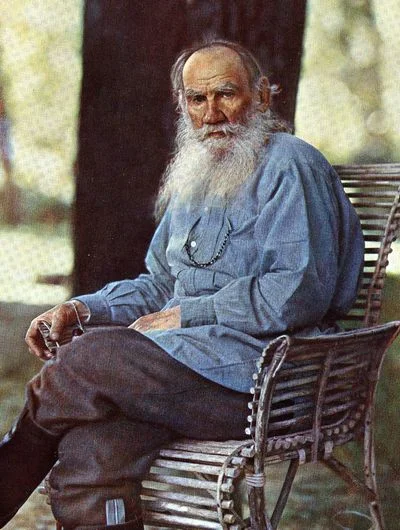
Le comte Lev Nikolaïevitch Tolstoï naquit dans l'aristocratie russe au domaine familial de Iasnaïa Poliana. Il vécut la majeure partie de sa vie dans ce domaine, qui devint central pour son identité d'écrivain et de penseur.
La mère de Tolstoï, Maria Nikolaïevna, mourut alors qu'il n'avait que deux ans. Bien qu'il n'eût aucun souvenir d'elle, son image idéalisée influença profondément sa conception de la féminité et de la maternité dans ses écrits.
Le père de Tolstoï mourut soudainement, laissant le jeune comte orphelin. Lui et ses frères et sœurs furent élevés par des parents, et cette perte précoce contribua à sa préoccupation de toute une vie pour la mort et le sens de la vie.
Tolstoï s'inscrivit à l'Université de Kazan pour étudier les langues orientales puis le droit. Il fut un étudiant indifférent, plus intéressé par la société et l'amélioration de soi que par l'éducation formelle, et partit sans obtenir son diplôme.
Tolstoï rejoignit l'armée russe dans le Caucase, cherchant l'aventure et fuyant son mode de vie dissolu. Ses expériences militaires fournirent la matière de ses premiers récits et façonnèrent ses vues pacifistes ultérieures.
Pendant la guerre de Crimée, Tolstoï servit au siège de Sébastopol et écrivit ses fameux 'Récits de Sébastopol'. Ces histoires de guerre réalistes lui apportèrent la reconnaissance littéraire et établirent sa réputation de grand écrivain.
Tolstoï démissionna de l'armée et entra dans les cercles littéraires de Saint-Pétersbourg. Il fit connaissance avec les principaux écrivains dont Tourgueniev, bien que son esprit indépendant l'ait souvent conduit à des conflits avec la société littéraire.
Tolstoï établit des écoles pour les enfants de paysans sur son domaine, développant des méthodes éducatives innovantes basées sur la liberté et l'apprentissage naturel. Ce travail reflétait sa préoccupation croissante pour la justice sociale et la réforme.
Tolstoï épousa Sophie Andreïevna Behrs, de dix-huit ans sa cadette. Leur mariage produisit treize enfants et fut marqué à la fois par un profond partenariat et des conflits amers, surtout dans les dernières années.
Tolstoï acheva 'Guerre et Paix', son roman épique de l'ère napoléonienne. Ce chef-d'œuvre dépeignant la société russe pendant l'invasion française est considéré comme l'un des plus grands romans jamais écrits.
Tolstoï publia 'Anna Karénine', sa profonde exploration de l'amour, de la famille et de la société. La profondeur psychologique et la complexité morale du roman confirmèrent son statut parmi les plus grands romanciers du monde.
Tolstoï connut une profonde crise spirituelle, questionnant le sens de la vie malgré sa renommée et son succès. Cette crise conduisit à sa conversion religieuse et au développement de sa philosophie chrétienne unique.
La 'Confession' de Tolstoï fut publiée, décrivant son voyage spirituel du désespoir à la foi. Cette œuvre autobiographique marqua sa transformation de romancier célèbre en penseur religieux et moral.
Tolstoï publia 'La Mort d'Ivan Ilitch', une nouvelle explorant la mort et le sens de la vie. Cette œuvre puissante exemplifia sa nouvelle orientation morale et reste l'une de ses œuvres courtes les plus admirées.
Tolstoï renonça aux droits d'auteur de ses œuvres post-1881, reflétant son rejet de la propriété et du privilège. Cette décision causa des conflits familiaux mais démontra son engagement envers ses principes.
L'Église orthodoxe russe excommunia Tolstoï pour ses écrits religieux qui rejetaient la doctrine de l'Église. L'annonce fit de lui un symbole de résistance à l'autorité et augmenta sa renommée mondiale.
À 82 ans, Tolstoï quitta secrètement son domaine, incapable de supporter le conflit entre ses principes et son mode de vie privilégié. Ce départ dramatique choqua le monde et refléta sa lutte de toute une vie pour l'authenticité.
Tolstoï mourut à la gare isolée d'Astapovo après être tombé malade pendant sa fuite. Sa mort attira l'attention mondiale, et des milliers de personnes se rassemblèrent pour pleurer l'un des plus grands écrivains et philosophes moraux de l'histoire.