Chumi
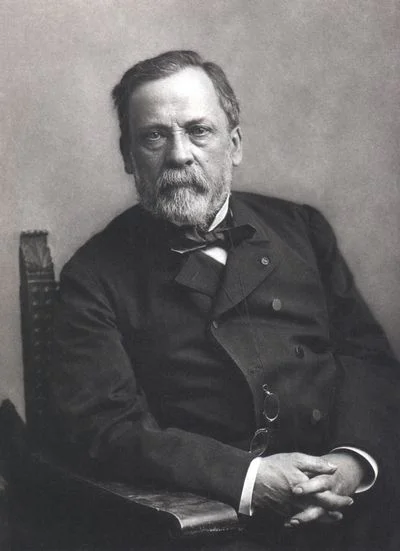
Louis Pasteur

Louis Pasteur

Chemist

Start Chat

AI Personality

Quick Facts

Pasteurization
Germ Theory
Vaccines

Life Journey

1822Born in Dole, France

Louis Pasteur was born to a tanner's family in Dole, Jura. His family later moved to Arbois, where he spent most of his childhood. Though an average student initially, he showed talent in art before discovering his passion for science.

1839Enters Royal College of Besancon

Pasteur entered the Royal College of Besancon to prepare for the Ecole Normale Superieure. He earned his Bachelor of Letters and Bachelor of Science degrees, showing increasing dedication to scientific studies.

1843Admitted to Ecole Normale Superieure

Pasteur was admitted to the prestigious Ecole Normale Superieure in Paris. He studied under chemist Jean-Baptiste Dumas, who sparked his lifelong interest in chemistry and crystallography.

1847Earns Doctorate in Chemistry

Pasteur earned his doctorate with groundbreaking research on molecular asymmetry and tartaric acid crystals. His discovery of molecular chirality laid the foundation for stereochemistry and established his scientific reputation.

1848Becomes Professor at Strasbourg

Pasteur was appointed professor of chemistry at the University of Strasbourg. There he continued his crystallography research and met Marie Laurent, daughter of the university rector.

1849Marries Marie Laurent

Pasteur married Marie Laurent, who became his devoted partner and scientific collaborator. She supported his research throughout his career and they had five children, though three died of typhoid fever.

1854Becomes Dean at Lille University

Pasteur was appointed Dean of the Faculty of Sciences at the new University of Lille. Local industries' problems with fermentation prompted his research that would revolutionize understanding of microorganisms.

1857Publishes Germ Theory of Fermentation

Pasteur published his theory that fermentation was caused by living microorganisms, not spontaneous chemical reactions. This revolutionary discovery challenged conventional scientific thinking and began the germ theory of disease.

1861Disproves Spontaneous Generation

Through elegant swan-neck flask experiments, Pasteur conclusively disproved the theory of spontaneous generation. His experiments proved that microorganisms came from other microorganisms, not from non-living matter.

1863Develops Pasteurization Process

Pasteur developed the pasteurization process to prevent wine spoilage by heating it to kill harmful bacteria. This technique was later applied to milk and other beverages, saving countless lives.

1865Suffers Stroke

Pasteur suffered a severe stroke that left him partially paralyzed on his left side. Despite this setback, he continued his research with remarkable determination for the remaining thirty years of his life.

1867Saves French Silk Industry

Pasteur identified the parasites causing silkworm disease that threatened France's silk industry. His research methods to control the disease saved the industry and demonstrated practical applications of microbiology.

1877Studies Anthrax Disease

Pasteur began researching anthrax, proving that specific bacteria caused the disease. His work laid the groundwork for understanding infectious diseases and developing vaccines.

1880Develops Chicken Cholera Vaccine

Pasteur accidentally discovered that weakened bacteria could provide immunity when his assistant used old cultures on chickens. This breakthrough established the principle of vaccine attenuation.

1881Demonstrates Anthrax Vaccine

In a famous public experiment at Pouilly-le-Fort, Pasteur successfully demonstrated his anthrax vaccine on sheep. The dramatic success proved vaccination worked and made him an international celebrity.

1885First Successful Rabies Vaccination

Pasteur administered the first successful rabies vaccine to nine-year-old Joseph Meister, who had been bitten by a rabid dog. The boy survived, proving the vaccine's effectiveness against this deadly disease.

1888Pasteur Institute Opens

The Pasteur Institute was inaugurated in Paris, funded by international donations honoring his achievements. The institute became a world center for infectious disease research and continues his legacy today.

1895Dies in Marnes-la-Coquette

Louis Pasteur died of complications from his strokes, surrounded by family. He was given a state funeral and buried in the Pasteur Institute. His discoveries in microbiology and immunology revolutionized medicine and saved millions of lives.

Chat