Chat
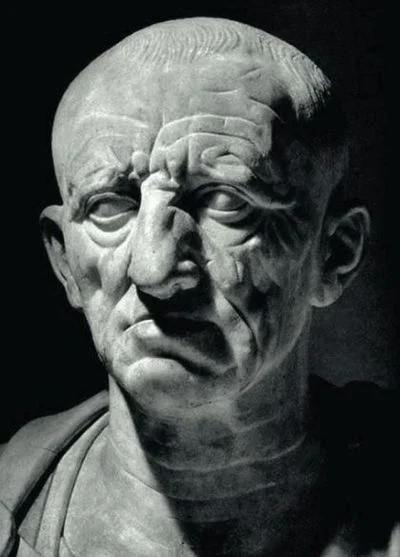
Marcus Porcius Cato

Marcus Porcius Cato

Statesman

Start Chat

AI Personality

Quick Facts

Advocacy for traditional Roman values
Role in the Punic Wars
Opposition to the Gracchi

Carthage must be destroyed!" Cato, Roman values champion, Punic Wars player.

Conversation Starters

Life Journey

234 BCBorn in Tusculum, Latium

Marcus Porcius Cato was born to a wealthy family in Tusculum, Latium, during a period of significant Roman expansion.

218 BCServes in the Second Punic War

Cato enlists in the Roman army and serves in the Second Punic War against Hannibal, gaining valuable military experience.

214 BCBegins Political Career

Cato begins his political career by serving as a military tribune, demonstrating his leadership and oratory skills.

211 BCQuaestor in Sicily

Cato is appointed as a quaestor in Sicily, where he gains administrative experience and builds a reputation for integrity.

205 BCOpposes Scipio Africanus

Cato opposes Scipio Africanus's plan to invade Africa, advocating for a more cautious approach in the Second Punic War.

204 BCElected Plebeian Tribune

Cato is elected as a plebeian tribune, using his position to advocate for traditional Roman values and oppose corruption.

202 BCMarries Licinia

Cato marries Licinia, a woman from a respected Roman family, solidifying his social and political standing.

199 BCElected Praetor

Cato is elected praetor and serves as a judge, further demonstrating his commitment to justice and traditional values.

195 BCElected Consul

Cato reaches the pinnacle of his political career by being elected consul, one of the two most powerful positions in the Roman Republic.

194 BCCommands in Spain

As consul, Cato commands a military campaign in Spain, successfully subduing rebellious tribes and expanding Roman control.

191 BCCensors Public Conduct

Cato is appointed censor, where he rigorously enforces moral and financial discipline, purging the Senate and reforming public finances.

187 BCOpposes the Gracchi Brothers

Cato emerges as a leading opponent of the Gracchi brothers, who propose radical land reforms and challenge the traditional power structure.

184 BCRetires to Farming

Cato retires from public life to his farm in Tusculum, where he writes extensively on agriculture and continues to influence Roman politics through his writings.

180 BCPublishes 'De Agri Cultura'

Cato publishes 'De Agri Cultura,' a treatise on agriculture that becomes a foundational text on farming and land management.

174 BCContinues Writing and Advising

Cato continues to write and advise on political matters, maintaining his influence through his eloquence and moral authority.

149 BCDies in Rome

Cato dies in Rome, leaving behind a legacy as a staunch defender of traditional Roman values and a significant political figure.

Similar Figures