Quick Facts
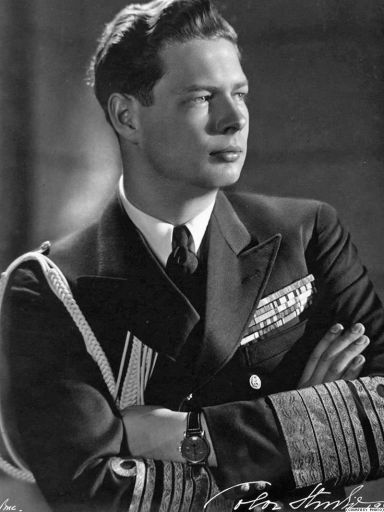
A young king forced between dictators and occupiers, he chose a risky coup that reshaped Romania's wartime fate.
Conversation Starters
Life Journey
Born as Mihai to Crown Prince Carol and Princess Helen of Greece and Denmark, he entered a Europe still reshaped by World War I. His early years unfolded under the public expectations of the House of Hohenzollern-Sigmaringen.
After King Ferdinand I died, Michael was proclaimed king because his father Carol had renounced the throne. A regency council governed in his name, reflecting Romania's political fragility and factional competition in Bucharest.
Carol returned from abroad and took the throne as King Carol II, sidelining Michael and redesignating him as Crown Prince. The episode exposed the monarchy's dependence on elite bargaining and public opinion during the interwar crisis years.
Michael was styled Grand Voivode of Alba Iulia, a symbolic title tying him to the 1918 union narrative of Greater Romania. Court tutors and military advisers shaped his education, stressing duty, discipline, and constitutional tradition.
Carol II imposed an authoritarian royal dictatorship, weakening parties and concentrating power at the palace. Michael remained a constrained heir, watching Romania drift amid rising Nazi influence and regional instability across Eastern Europe.
Following Romania's 1940 territorial losses and Carol II's abdication, Michael returned to the throne as Ion Antonescu took real control. The new regime tied Romania to Germany, while the young king navigated a perilous ceremonial role.
Romanian forces joined Operation Barbarossa alongside Nazi Germany, aiming to retake Bessarabia and Northern Bukovina from the USSR. Michael watched Antonescu expand the war beyond recovery goals, deepening Romania's exposure to catastrophe.
As Romanian troops suffered severe losses at Stalingrad, confidence in Antonescu eroded among politicians and officers. Michael maintained discreet contacts with opposition figures, preparing options as the Red Army moved westward.
With support from key politicians and military officers, Michael confronted Antonescu at the palace and ordered his arrest. The coup announced Romania's break with Germany and sought an armistice as Soviet forces approached the capital.
Michael addressed the nation by radio, calling for an end to fighting the Allies and urging resistance to German reprisals. Romania subsequently fought against Axis forces, a dramatic reversal that changed operations across the Balkans.
He was awarded the U.S. Legion of Merit and later received Soviet recognition, reflecting the coup's strategic value to the war's final phase. Despite honors, Soviet-backed communists tightened control, shrinking the monarchy's room to act.
Michael refused to sign laws and decrees in protest of Prime Minister Petru Groza's Soviet-supported cabinet, demanding a more representative government. Western support proved limited, and the communists consolidated power through security forces.
Michael married Princess Anne in a ceremony abroad after complex diplomatic and religious negotiations. The union became a stabilizing partnership during exile, grounding the former king amid the upheavals of postwar Europe.
Under pressure from communist leaders and Soviet influence, Michael signed an abdication act on 30 December and the People's Republic was proclaimed. He left Romania soon after, marking a decisive break in the country's constitutional history.
Settling in Western Europe, he lived without state support and worked in private enterprises, including aviation-related and business roles. Exile required careful diplomacy with Romanian emigres while maintaining the monarchy's claim and memory.
The Romanian Revolution ended the dictatorship of Nicolae Ceausescu and reopened debates about legitimacy, democracy, and the monarchy. Michael positioned himself as a moral symbol for continuity, while avoiding calls that could inflame unrest.
He visited Romania for Easter and drew massive crowds, revealing lingering public affection and curiosity about the monarchy. Authorities soon restricted further visits, underscoring how contested history and power remained in the new republic.
The Romanian state restored his citizenship and allowed more stable returns, enabling him to engage publicly and charitably. He used interviews and speeches to promote Euro-Atlantic integration and democratic norms without direct political ambition.
Michael died after a long life spanning monarchy, world war, communist rule, and democratic transition. His funeral rites drew national attention and international royals, reflecting his enduring role in Romania's contested memory.