Quick Facts
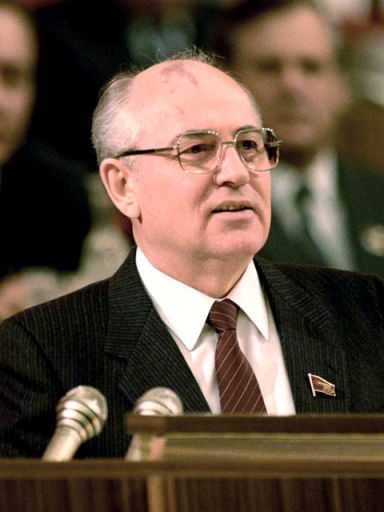
Reform-minded Soviet leader who loosened censorship, reshaped Cold War diplomacy, and inadvertently hastened the USSR's collapse.
Conversation Starters
Life Journey
Born into a peasant family in Privolnoye in southern Russia, amid the upheavals of early Soviet collectivization. His rural upbringing and family hardships later shaped his belief that the system needed humane reform.
As a teenager, he worked on combine harvesters during postwar agricultural drives and was honored for exceptional output. The state award brought early recognition and strengthened his path into Komsomol and Party structures.
Admitted to Moscow State University, where he studied law and absorbed debates about Soviet legality after Stalin’s era. In Moscow he built networks that later proved crucial as he rose through Party ranks.
Married Raisa Titarenko, a fellow student whose intellect and public presence became central to his political image. Their partnership stood out in Soviet leadership culture for its visibility and modern style.
Completed his law degree and returned to the Stavropol region, choosing practical Party work over a legal career in Moscow. He advanced quickly through Komsomol posts, learning local governance and agricultural management.
Appointed First Secretary in Stavropol, giving him broad authority over a key agricultural territory and resort region. The role connected him with influential visitors and patrons, including senior officials in Moscow.
Moved to Moscow to serve as a Central Committee Secretary, focusing on agriculture and national policy implementation. His reputation for energy and managerial competence distinguished him during the stagnation of the late Brezhnev era.
Elected a full member of the Politburo, entering the small circle that directed Soviet strategy at home and abroad. He became identified with younger reformist currents as aging leaders cycled through rapid successions.
Chosen General Secretary after Konstantin Chernenko’s death, becoming the youngest Soviet leader in decades. He began pushing restructuring and openness, confronting economic stagnation and public cynicism toward official propaganda.
After the Chernobyl nuclear accident, public anger over secrecy reinforced his push for greater transparency. Glasnost widened space for journalists and citizens to criticize state failures and demand accountability from ministries.
Met U.S. President Ronald Reagan to finalize the INF Treaty, eliminating an entire class of nuclear missiles from Europe. The agreement built trust for further arms reductions and symbolized a thaw in Cold War confrontation.
Oversaw competitive elections for the new Congress of People’s Deputies, allowing real debates to be televised nationwide. Reformers like Boris Yeltsin gained prominence, while Communist authority faced unprecedented scrutiny.
As communist governments fell across Eastern Europe, he rejected large-scale Soviet military intervention. The policy shift helped enable the fall of the Berlin Wall and signaled the end of the Brezhnev Doctrine.
Assumed the new office of Soviet President while political pluralism and nationalist movements accelerated. Awarded the Nobel Peace Prize for reducing Cold War tensions and pursuing negotiated change over coercion.
Hardline officials attempted a coup while he was at his dacha in Crimea, aiming to stop reforms and preserve centralized rule. The coup collapsed after mass resistance in Moscow, boosting Boris Yeltsin and weakening Gorbachev’s authority.
Resigned on December 25 as republic leaders formed the Commonwealth of Independent States and the USSR formally ended. His televised address marked the close of Soviet superpower status and a new era for Russia and its neighbors.
Entered the 1996 Russian presidential election, arguing for democratic reforms without shock-therapy chaos. He received a small share of the vote, illustrating how unpopular the Soviet legacy and early transition hardships remained.
Expanded the work of the Gorbachev Foundation, promoting archival research, policy discussion, and civil society initiatives. The organization became a hub for debates on perestroika’s legacy and post-Soviet development paths.
Died in Moscow after a long illness, prompting global reassessments of his reforms and their unintended consequences. Tributes emphasized his role in easing nuclear confrontation and allowing political change without large-scale war.