En bref
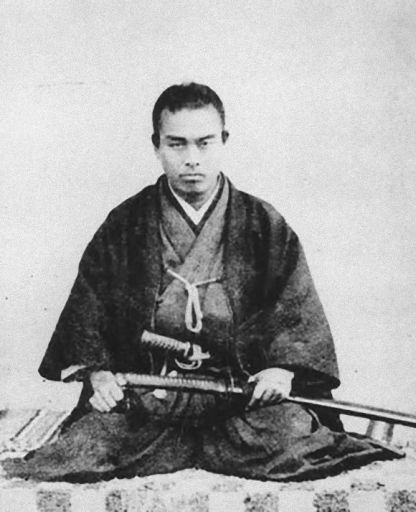
Réformateur audacieux de la fin du shogunat, il forgea des alliances, défendit la modernisation et mourut en poursuivant l’avènement d’un Japon nouveau.
Sujets de conversation
Parcours de vie
Né dans un village de montagne du domaine de Tosa, il grandit au sein d’une hiérarchie stricte et dans les difficultés du monde agricole. Une exposition précoce aux idées d’études occidentales et aux troubles politiques nourrit son désir de réformer l’ordre féodal.
La nouvelle de l’arrivée des navires noirs du commodore Perry parvint à Tosa alors qu’il atteignait l’âge adulte, attisant les débats sur la défense et la souveraineté. La crise le poussa vers l’activisme hostile au shogunat et vers l’idée qu’il fallait un leadership national plus fort.
Il poursuivit un entraînement martial tout en étudiant la politique de la fin de l’ordre Tokugawa, assimilant des arguments en faveur du rétablissement impérial. Dans le climat tendu de Tosa, de jeunes samouraïs débattaient avec une urgence croissante de réforme, de châtiment et de loyauté.
Il fréquenta des militants influencés par des figures comme Takechi Hanpeita, où la rhétorique hostile au shogunat se mêlait à des projets d’action directe. Ces réseaux reliaient les samouraïs de Tosa à la politique impériale volatile de Kyoto et à d’autres domaines réformateurs.
Les rues de Kyoto étaient agitées par la violence des rônin, la pression de la police du shogunat et l’évolution des alliances à la cour. Il comprit que la négociation, le secret et le sens du moment comptaient autant que l’habileté au sabre dans les affrontements de pouvoir.
Alors que le shogunat renforçait la surveillance après des incidents répétés à Kyoto, il se rapprocha davantage de la collaboration entre loyalistes impériaux. La fracture grandissante entre la gouvernance Tokugawa et les domaines réformateurs l’amena à s’engager pleinement pour le changement national.
Après des affrontements impliquant Choshu et la politique de la cour, il approfondit ses contacts avec des dirigeants cherchant des alliés. Il en vint à considérer la coopération entre domaines comme indispensable pour résister aux représailles du shogunat et refaçonner le gouvernement.
Il développa un partenariat de travail avec Sakamoto Ryoma, autre réformateur de Tosa favorable à la puissance maritime et à l’unité politique. Leur coopération associait une logistique pragmatique à une diplomatie audacieuse, afin de contourner à la fois les barrières des domaines et le contrôle du shogunat.
Jouant l’intermédiaire, il soutint des efforts qui alignèrent Satsuma et Choshu malgré une hostilité ancienne. L’alliance forma un bloc décisif contre le shogunat et modifia l’équilibre en faveur du rétablissement de l’autorité impériale.
En s’appuyant sur les circuits commerciaux de Nagasaki, il contribua à organiser le transport, le renseignement et l’accès à des armes modernes pour les forces réformatrices. Ces liens maritimes incarnaient une nouvelle politique du commerce et de la technologie, en contraste avec l’isolement traditionnel des domaines.
Avec Sakamoto Ryoma, il construisit le Kaientai comme un hybride de société commerciale, de marine et d’organisation politique plutôt que comme une unité de clan classique. L’organisation formait des hommes, acheminait des ressources et finançait l’activisme, offrant un modèle d’institutions pour un État moderne.
Il plaida pour remplacer l’autorité morcelée des domaines par un ordre politique centralisé lié à la cour impériale. Lors de rencontres avec des alliés et des marchands, il soutint que la modernisation exigeait des finances coordonnées, une réforme militaire et une participation élargie au-delà des anciens rangs.
Alors que le dirigeant Tokugawa faisait face à une pression croissante, il œuvra à maintenir les domaines réformateurs unis et disciplinés. Il insista sur le sens du moment et la gestion de coalition, craignant que des divisions internes ne gâchent l’occasion d’un transfert de pouvoir ordonné.
Alors qu’ils séjournaient dans une auberge à Kyoto, des assaillants frappèrent lui et Sakamoto Ryoma lors d’une attaque ciblée liée à la police clandestine de l’époque et aux factions rivales. Gravement blessé, il lutta pour survivre tandis que la politique s’accélérait.
Il succomba à ses blessures à Kyoto, quelques semaines seulement avant l’effondrement final du régime Tokugawa, sans voir le nouveau gouvernement auquel il avait contribué. Sa mort, au cœur de négociations et de mobilisations fébriles, fit de lui un martyr de la politique de restauration.
Après sa mort, des vétérans et des proches s’inspirèrent des méthodes du Kaientai en matière de logistique, de formation et de commerce tandis que le pays se centralisait sous le nouveau gouvernement. La mémoire entretenue à Tosa et à Kyoto le présenta comme un lien décisif, capable de transformer des idéaux en alliances.