Quick Facts
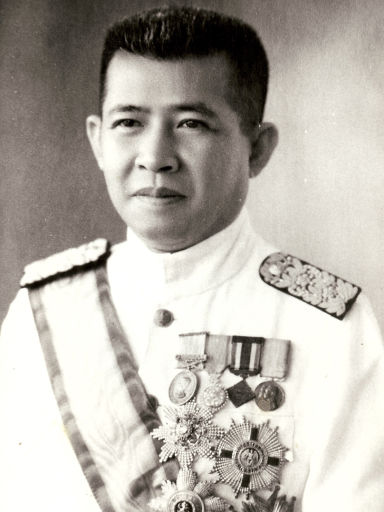
Visionary Thai statesman who led democratic reforms, shaped constitutional politics, and endured exile amid Cold War turmoil.
Conversation Starters
Life Journey
Born into a Thai-Chinese merchant family in Ayutthaya, then a quiet former royal capital of Siam. Early exposure to commerce and local administration shaped his interest in law, public finance, and modern statecraft.
Relocated to Bangkok to pursue higher education as Siam expanded modern schooling under King Vajiravudh (Rama VI). He excelled in legal studies and entered elite circles that debated constitutionalism and administrative reform.
Received a government scholarship and departed for France to study law and political economy. Living in post–World War I Paris exposed him to republican ideas, constitutional theory, and comparative public administration.
With Thai students and officers abroad, he helped form the Khana Ratsadon (People's Party) to end absolute monarchy. The group planned a constitutional transition, balancing civilian reformers with military allies for leverage.
Returned to Siam and took roles in legal and administrative work as economic pressures mounted. He quietly built networks among reform-minded officials while sharpening proposals for constitutional government and social policy.
On 24 June 1932, Khana Ratsadon seized power in Bangkok and forced acceptance of a constitution. Pridi emerged as a leading civilian strategist, articulating democratic aims and the need for accountable, modern institutions.
He advanced an ambitious National Economic Plan advocating state-led development and social welfare during the global depression. Conservative elites attacked it as radical, triggering political crisis and a period of pressure against him.
Established the University of Moral and Political Sciences (later Thammasat University) to widen access to legal and civic education. The institution became a training ground for civil servants and democratic activists in Bangkok.
As Field Marshal Plaek Phibunsongkhram rose to dominance, Pridi worked within a more authoritarian political climate. He sought to preserve constitutional principles while avoiding direct confrontation that could end reform efforts.
After Japan moved into Thailand in December 1941, the government aligned with Tokyo under intense regional pressure. Pridi maneuvered to protect Thai sovereignty and prepared for a covert resistance posture inside Bangkok.
Appointed Regent for the young King Ananda Mahidol, he gained constitutional authority during the war. He backed the Seri Thai (Free Thai) network, coordinating with Allied contacts to resist Japanese control and limit legitimacy of wartime policies.
As Japan surrendered, Pridi helped frame Thailand’s wartime stance to reduce punitive outcomes and restore international standing. Working through regency authority, he facilitated political transition and postwar diplomatic normalization.
He became Prime Minister in 1946 amid hopes for renewed parliamentary democracy and social reform. The government faced factional rivalry, economic strain, and intense debate over Thailand’s Cold War direction and internal security.
King Ananda Mahidol was found dead in the Grand Palace, sparking rumors and polarizing investigations in Bangkok. Though not proven culpable, Pridi became a central target of suspicion, deeply damaging his political position.
A military coup toppled the government and dismantled much of the postwar democratic experiment. Pridi fled Thailand to avoid arrest and reprisals, beginning decades of life abroad as Thai politics shifted rightward.
Supporters launched an anti-government bid to restore constitutional forces, but the effort collapsed amid military resistance. The failure hardened official hostility and ensured Pridi could not safely return to Thailand in the near term.
He spent years in exile as Cold War alignments reshaped Asia, finding refuge while Thailand aligned closely with anti-communist blocs. From abroad, he wrote, networked, and argued for democracy and national independence.
He settled in France, where he lived as an elder statesman-in-exile and produced essays on constitutionalism and Thai history. Paris offered distance from Thai factionalism while keeping him connected to international intellectual circles.
He died in France after decades away from the Thai political arena he helped transform in 1932. His legacy remained contested, but his role in constitutional change, education, and wartime resistance endured in public memory.