Quick Facts
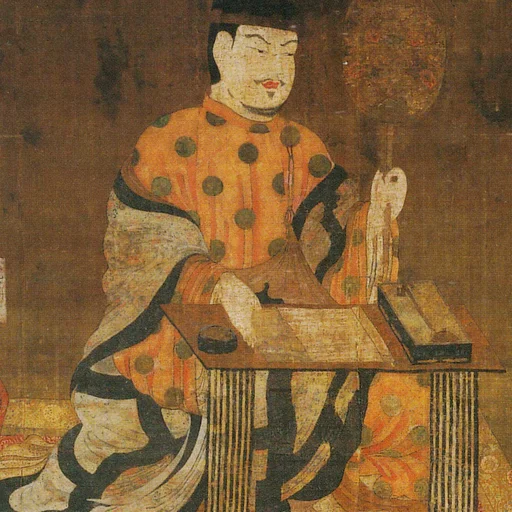
Legendary regent of Japan who authored the Seventeen-Article Constitution, championed Buddhism, and shaped the foundations of Japanese governance and culture.
Conversation Starters
Life Journey
Prince Umayado, later known as Shotoku, was born to Emperor Yomei and Empress Anahobe. Legend says he was born in front of a stable, leading to his name Umayado (Stable Door). He showed extraordinary intelligence from infancy.
The young prince began studying Buddhist sutras and Chinese classics under the guidance of Korean monks. His remarkable ability to understand complex texts amazed his tutors.
At a young age, Shotoku witnessed the violent conflict between the pro-Buddhist Soga clan and the anti-Buddhist Mononobe clan. The Soga victory would cement Buddhism's place in Japan.
Empress Suiko appointed the 19-year-old prince as regent and crown prince, entrusting him with the governance of Japan. He became the de facto ruler while the empress held the throne.
Issued an imperial edict encouraging the reverence of the Three Treasures of Buddhism: Buddha, Dharma, and Sangha. This marked the official state promotion of Buddhism in Japan.
Created a twelve-level cap rank system based on Confucian virtues rather than hereditary status. This revolutionary reform opened positions to those of talent regardless of birth.
Authored the first written law in Japanese history, the Seventeen-Article Constitution. It combined Buddhist ethics, Confucian principles, and established harmony as the supreme virtue in governance.
Dispatched Ono no Imoko as envoy to Sui Dynasty China, establishing direct diplomatic relations. The famous letter addressed the Chinese emperor as an equal, asserting Japan's sovereignty.
Commissioned the construction of Horyu-ji Temple, which would become the world's oldest surviving wooden structure. The temple became a center for Buddhist learning and art.
Completed the construction of Shitenno-ji, one of Japan's first officially administered temples. It was dedicated to the Four Heavenly Kings who had protected him in battle.
Authored the Sangyogisho, commentaries on three important Mahayana Buddhist sutras. These became foundational texts for Japanese Buddhist scholarship.
Dispatched another embassy to Sui China to continue cultural and political exchange. These missions brought back advanced knowledge in government, arts, and religion.
Built his principal residence near Horyu-ji Temple, creating a center of learning and Buddhist practice. Scholars and monks gathered here to study under his guidance.
His mother Empress Anahobe passed away. Shotoku grieved deeply and devoted himself even more to Buddhist studies and the welfare of the people.
His beloved wife Princess Kashiwade passed away. The prince's health began to decline as he mourned her loss and continued his spiritual practices.
Prince Shotoku passed away at his palace in Ikaruga. His death marked the end of an era of reform and enlightenment. He was later venerated as a manifestation of the Bodhisattva Kannon.