Datos rápidos
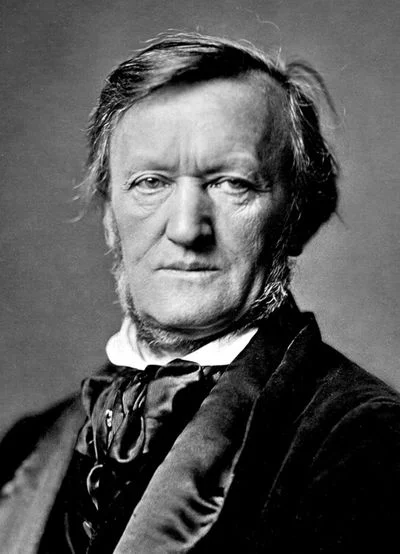
El ciclo del Anillo. Tristán. Revolucionó la ópera con la obra de arte total y la melodía infinita.
Inicios de conversación
Trayectoria vital
Wilhelm Richard Wagner nació en una familia teatral durante las Guerras Napoleónicas. Su padre oficial Carl Friedrich Wagner murió seis meses después de su nacimiento.
La madre de Wagner se casó con el actor y pintor Ludwig Geyer, posiblemente el padre biológico de Wagner. Geyer fomentó los intereses artísticos del joven Richard.
El joven Wagner quedó fascinado por las sinfonías de Beethoven y las óperas de Weber, decidiendo convertirse en músico. Se enseñó composición a sí mismo con libros de biblioteca.
Wagner se matriculó en la Universidad de Leipzig para estudiar música. Compuso su primera sinfonía y varias oberturas, mostrando talento precoz.
Wagner se convirtió en director de coro en el teatro de Wurzburgo. Comenzó a componer su primera ópera completa Die Feen.
Wagner se casó con la actriz Christine Wilhelmine Planer. Su tumultuoso matrimonio duraría hasta la muerte de ella en 1866.
Profundamente endeudado, Wagner huyó a París esperando éxito operístico. Pasó tres años empobrecidos, aunque completó Rienzi y El holandés errante.
Rienzi se estrenó triunfalmente en Dresde, estableciendo la reputación de Wagner. Fue nombrado Director de la Corte Real Sajona.
Wagner estrenó Tannhäuser en Dresde, avanzando sus ideas revolucionarias sobre el drama musical.
Wagner concibió su monumental ciclo de cuatro óperas del Anillo. El proyecto consumiría 26 años para completarse.
Wagner participó en el fallido levantamiento de Dresde y huyó de la persecución, comenzando un exilio de 12 años. Franz Liszt lo ayudó a escapar.
Inspirado por su romance con Mathilde Wesendonck, Wagner compuso Tristán e Isolda, revolucionando la armonía con su intensidad cromática.
El joven Rey Luis II de Baviera, obsesionado con la obra de Wagner, lo convocó a Múnich y pagó todas sus deudas. Esto inició su legendaria asociación artística.
Wagner se casó con Cosima, hija de Franz Liszt y ex esposa del director Hans von Bülow. Su controvertido romance ya había producido tres hijos.
Wagner inauguró su Festspielhaus construido a propósito con el estreno completo del ciclo del Anillo. El festival cumplió su sueño de la ópera como obra de arte total.
El concepto de Gesamtkunstwerk y la técnica del leitmotiv de Wagner transformaron la ópera. Su influencia se extendió a la filosofía, literatura y artes visuales.
La última ópera de Wagner, Parsifal, se estrenó en Bayreuth. Declaró que solo debía representarse allí.
Wagner murió de un ataque al corazón en el Palazzo Vendramin-Calergi. Su influencia en la música y la cultura permaneció inmensa.