Quick Facts
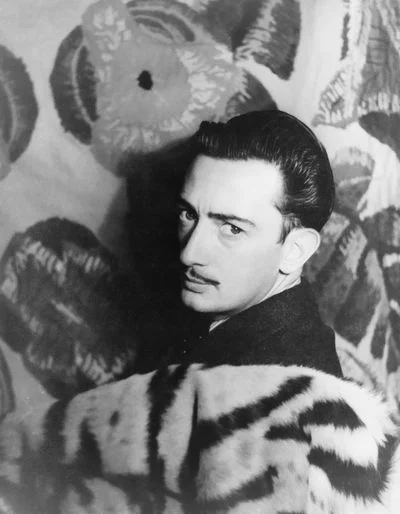
Melting clocks, bizarre dreams: Dalí painted reality, surrealistically.
Conversation Starters
Life Journey
Salvador Dalí was born in Figueres, Catalonia, to a prosperous middle-class family. His father was a strict notary while his mother encouraged his artistic talents. Nine months before his birth, his parents' first son, also named Salvador, had died, and Dalí later believed himself to be his brother's reincarnation.
Young Dalí began formal drawing lessons with Professor Juan Núñez, showing exceptional talent from an early age. His parents recognized his artistic gifts and supported his development, converting a former laundry room into his first studio where he could experiment freely with paints and materials.
During summer vacations in Cadaqués with the family of Ramon Pichot, a local artist who traveled frequently to Paris, Dalí was exposed to Impressionist painting. This encounter with modern art profoundly influenced his artistic direction and sparked his lifelong fascination with avant-garde movements.
Dalí's beloved mother Felipa died of breast cancer, devastating the seventeen-year-old artist. He later wrote that her death was 'the greatest blow I had experienced in my life.' This trauma profoundly affected his psyche and became a recurring theme in his art, particularly in works dealing with mortality and loss.
Dalí enrolled at the prestigious Royal Academy of Fine Arts of San Fernando in Madrid, where he lived at the Residencia de Estudiantes. There he befriended future filmmaker Luis Buñuel and poet Federico García Lorca, forming friendships that would profoundly influence twentieth-century art and literature.
Dalí was permanently expelled from the Royal Academy for declaring no professor competent to examine him. That same year, he made his first visit to Paris, where he met Pablo Picasso, whom he revered. Picasso was impressed by the young Catalan's work, and this encounter encouraged Dalí's avant-garde ambitions.
Dalí collaborated with Luis Buñuel on the groundbreaking Surrealist film 'Un Chien Andalou,' famous for its shocking eye-slitting scene. That same transformative year, he met Elena Diakonova (Gala), the wife of Surrealist poet Paul Éluard. Their passionate affair began immediately, and Gala became his lifelong muse and manager.
André Breton, the founder of Surrealism, formally welcomed Dalí into the movement. Dalí quickly became one of its most prominent figures, developing his 'paranoiac-critical method' to access the subconscious. His meticulously painted dream imagery brought Surrealism to unprecedented public attention.
Dalí created 'The Persistence of Memory' with its iconic melting watches draped over a barren landscape. The small painting, completed in just a few hours, became the most recognizable image of the Surrealist movement and established Dalí as a major figure in modern art. The work now hangs in New York's MoMA.
Dalí and Gala were married in a civil ceremony in Paris. Their unconventional relationship, in which Gala managed his career and finances while tolerating his eccentricities, proved remarkably durable. Dalí worshipped her obsessively, signing many paintings 'Gala-Salvador Dalí' to acknowledge their artistic union.
André Breton expelled Dalí from the Surrealist movement, ostensibly for his refusal to condemn fascism and his obsession with Hitler imagery. Dalí famously responded, 'I myself am Surrealism.' He continued creating in his distinctive style, now free from the movement's political constraints while retaining its visual vocabulary.
Fleeing World War II, Dalí and Gala emigrated to the United States, where they remained for eight years. In America, Dalí achieved celebrity status, designing magazine covers, jewelry, and advertisements. His flamboyant public persona and outrageous pronouncements made him a household name beyond the art world.
Dalí published 'The Secret Life of Salvador Dalí,' a provocative autobiography filled with outrageous claims and vivid imagery. The book became a bestseller and cemented his reputation as art's greatest showman. George Orwell famously reviewed it, calling Dalí 'a good draughtsman and a disgusting human being.'
Dalí and Gala returned permanently to Spain, settling in Port Lligat on the Catalan coast. He entered his 'Nuclear Mysticism' period, combining Catholic imagery with nuclear physics themes. Works like 'Leda Atomica' and 'Christ of Saint John of the Cross' reflected his new spiritual and scientific preoccupations.
After Gala's first husband Paul Éluard died, Dalí and Gala finally married in a Catholic ceremony at the Sanctuary of Els Àngels near Girona. This religious union was important to Dalí's increasingly mystical worldview and legitimized their relationship in the eyes of Catholic Spain.
Dalí inaugurated the Dalí Theatre-Museum in his hometown of Figueres, built on the ruins of the old municipal theater destroyed in the Spanish Civil War. He designed every detail of this surrealist monument, which houses the world's largest collection of his work and became Spain's second-most visited museum after the Prado.
Gala died at age 87, leaving Dalí devastated. He had lost his muse, manager, and reason for living. After her death, Dalí retreated to Púbol Castle, which he had given her as a gift, and attempted suicide by dehydration. His health and artistic output declined dramatically in the following years.
Salvador Dalí died of heart failure in Torre Galatea, an annex of his beloved Theatre-Museum in Figueres. Per his wishes, he was buried in the museum's crypt, beneath the stage where he had watched his first theatrical performances as a child. He left his entire estate to the Spanish state, ensuring his legacy would endure.