Quick Facts
A shrewd reformer who refined bureaucratic oversight, shaping Legalist statecraft through administrative technique and political realism.
Conversation Starters
Life Journey
Shen Buhai was born as Zhou authority fractured and rival states competed through reform, warfare, and diplomacy. Growing up amid constant state rivalry shaped his focus on practical administration over inherited ritual authority.
As a young man he studied how cases were registered, taxes assessed, and orders transmitted through scribes and local offices. The daily mechanics of paperwork and accountability became the foundation of his later theories of bureaucratic control.
Shen Buhai began work in a state bureaucracy where promotions often depended on patronage and vague titles. He observed how unclear responsibilities let ministers claim credit while shifting blame, inspiring his insistence on measurable duties.
He articulated methods to match an official’s stated claim or job-name (ming) to concrete performance (xing). By forcing comparisons between promises, written mandates, and outcomes, he aimed to reduce deception and factional manipulation at court.
Shen argued that a ruler should rely on techniques and institutional checks rather than personal trust in ministers. He emphasized audits, standard procedures, and controlled information flows, so policies survived even when personalities changed.
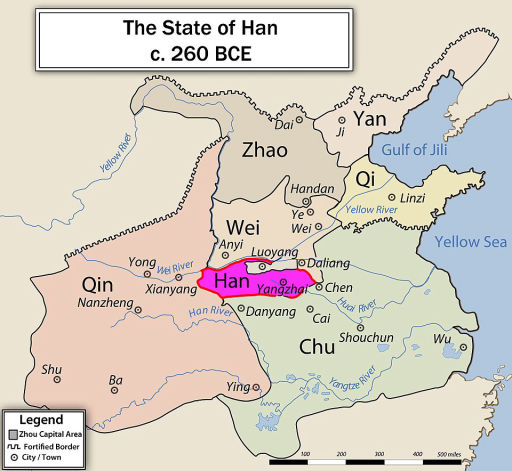
Han’s court sought reforms to compete with stronger neighbors like Qin and Wei. Shen’s reputation for disciplined administration made him valuable to rulers who needed reliable revenue, conscription, and command transmission across districts.
He rose to the top post, coordinating ministries and shaping how appointments and evaluations were conducted. Serving Marquis Zhao, he pushed governance based on clear offices and written standards rather than aristocratic privilege or moral exhortation.
Shen worked to define offices by specific tasks, limiting overlapping authority that bred intrigue. By tightening job descriptions and reporting lines, he sought to make misconduct traceable and to prevent ministers from building private power bases.
He promoted checking results against recorded mandates, rewarding deliverables and punishing shortfalls. Such auditing strengthened central control and encouraged competent administration, helping Han mobilize resources despite its relatively small territory.
Shen emphasized that rulers should regulate access to decisions through standardized memorials and verifiable records. By controlling who knew what and when, he aimed to prevent collusion among officials and reduce manipulation of the sovereign.
He advised the sovereign to remain hard to read, using procedure and comparison rather than emotional reactions. This political psychology—later echoed by Han Feizi—treated opacity as a tool to keep powerful ministers from steering policy for themselves.
Shen warned that factions flourished when offices were vague and rewards discretionary. He encouraged predictable standards, rotating responsibilities, and documented chains of command so that loyalty shifted from individuals toward the state’s institutions.
Under his chancellorship, Han worked to standardize how orders, tax quotas, and labor obligations were recorded and enforced. These routines reduced local improvisation and helped the center monitor distant officials through paperwork and inspection.
As conflicts among Qin, Wei, Zhao, and Han grew sharper, Shen’s program aimed to make Han governable and fiscally reliable. He prioritized administrative coherence so the state could levy resources quickly without depending on hereditary nobles.
Although his own writings were later fragmented, his ideas became known through political debate and citations in works like the Han Feizi. His focus on technique (shu) and accountability shaped how later thinkers defined effective rulership.
Shen Buhai died after decades shaping Han’s administrative state and influencing the broader Legalist tradition. His reforms left a model of bureaucratic control that later dynastic governments would adapt in pursuit of centralized power.